The Indian government has issued a strong diplomatic and legal protest against Sotheby’s Hong Kong over its planned auction of ancient Buddhist relics, demanding the immediate withdrawal of what it called a “sacred heritage” sale and urging their return to India. The relics, which include bone fragments and ornate ritual offerings believed to be tied to the life and reinterment of the Buddha, are set to go under the hammer on May 7.
In a statement released Monday, the Ministry of Culture confirmed that legal notices had been served to Sotheby’s and to Chris Peppe, a descendant of British colonial officer William Claxton Peppé, who originally excavated the relics from the Piprahwa Stupa in 1898. India asserts that the sale constitutes a breach of both domestic antiquities laws and international conventions on cultural heritage.
“These relics, excavated from the Piprahwa Stupa – widely recognised as the ancient city of Kapilavastu, the birthplace of Lord Buddha – hold immense historical and spiritual significance,” the ministry said, characterising the items not merely as archaeological artefacts but as sacred embodiments of the Buddha himself.
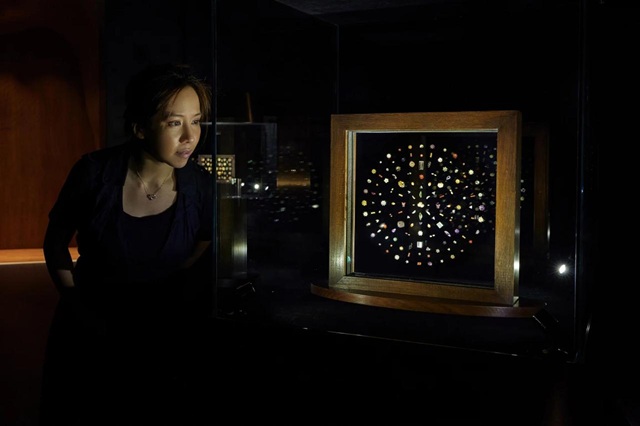
The auction, titled The Piprahwa Gems of the Historical Buddha, includes items from the Mauryan Empire, Ashokan Era, dated circa 240–200 BC. Among the lots are reliquaries made of crystal and soapstone, bone fragments, and an array of precious ornaments including pearls, garnets, amethysts, and gold. An inscription in ancient Brahmi script found on one of the reliquaries links the objects directly to the Sakya clan—the Buddha’s family.
Most of the relics were sent to the Indian Museum in Kolkata in 1899 and are now classified as ‘AA’ antiquities under Indian law, which prohibits their sale or export. A portion was gifted to King Chulalongkorn of Siam (modern-day Thailand), while some remained in the Peppé family’s possession and were passed down through generations.
India’s legal notice describes the auction as a continuation of “colonial exploitation” and argues that the relics are part of India’s “inalienable religious and cultural heritage,” protected under both Indian law and global heritage agreements including UNESCO conventions.
The culture ministry condemned the commercialisation of what it called “sacred grave goods” and reiterated that relics placed in Buddhist stupas are objects of religious veneration and not to be commodified. “These relics – referred to as ‘duplicate jewels’ – constitute the sacred body of the Buddha,” the statement read.
Sotheby’s has responded to Indian authorities, assuring that “full attention” is being given to the matter, but the auction listing remained live as of Monday evening.
Culture Minister Gajendra Singh Shekhawat raised the issue directly with UK culture secretary Lisa Nandy during a bilateral meeting last week, urging the British government to step in. Meanwhile, India’s Ministry of External Affairs has been instructed to pursue the matter diplomatically with authorities in Hong Kong and the UK. The Financial Intelligence Unit has also engaged its Hong Kong counterpart to highlight the legal ramifications of proceeding with the auction.
In parallel, India’s culture secretary convened a high-level review meeting to coordinate further actions, including possible legal proceedings in Indian and Hong Kong courts and engagement with international bodies. The ministry warned that it may also initiate a global awareness campaign against Sotheby’s, accusing the auction house of “perpetuating colonial injustice.”
Chris Peppe, now based in Los Angeles, maintains that the items are not corporeal remains of the Buddha but offerings made centuries later. He claims that legal ownership remains with his family and is unchallenged. “I have not found any Buddhists who claim the gems are corporeal remains,” he told The Guardian, downplaying their religious significance.
The Indian government, however, has firmly rejected that interpretation. It has demanded a public apology from both Sotheby’s and Mr Peppe, and has called for the disclosure of any additional relics in private possession or previously transferred to other entities.
The ministry concluded its statement with a final appeal: “We call upon Sotheby’s Hong Kong to immediately withdraw the relics from auction and cooperate with Indian authorities to return these sacred artefacts to their rightful place.”