Several countries that had already “experienced” Donald Trump during his first term as President of the United States kept their fingers crossed when he was re-elected for a second term. Since assuming office again, he has been focusing on what he calls “Make America Great Again” while also seeking to establish himself as a “global peacemaker”. Perhaps there is an additional aim of being hailed as a Nobel Laureate. Certainly, he cannot be faulted for having such lofty objectives.
There is a well-known saying that “the means should justify the ends”. President Trump’s aggressive postures and contested claims give the impression that the methods he adopts to achieve his objectives are not appropriate, as his approach is not based on a truly global and holistic view.
In recent months, a growing impression has formed in several countries that Trump’s aggressive imposition of tariffs—and his frequent threats to increase them to the almost absurd level of 200%—stems from a “big brother” attitude. Such behaviour is inevitably associated with arrogance and a tendency to take other countries for granted. This approach is bound to foster anti-American sentiment abroad, which could prove counter-productive for the US in both the short and long term.
Beyond imposing steep tariffs, Trump has made a number of pronouncements and taken actions that amount to virtually defying the established world order. After years of strenuous effort and coordination among nations, some consensus has been reached on vital issues such as climate change, global trade regulations (WTO), the non-use of nuclear energy for warfare, and the role and responsibilities of the WHO. President Trump has openly opposed several of these hard-won global agreements, causing widespread dissatisfaction.
The unilateral tariffs imposed by Trump have effectively disregarded the trade and tariff regulations evolved by the WTO through protracted multilateral discussions. The WTO has set recommendations on import–export norms and allows provisions such as anti-dumping duties or safeguard duties, which countries may invoke to protect their economic and trade interests. While these mechanisms exist, Trump has largely ignored them, imposing tariffs unilaterally and often on a whim. Though he has justified his decisions by claiming they will boost the US economy and encourage domestic manufacturing, he has failed to recognise that such measures must conform to WTO rules.
As a large consumer market, the US is of immense importance to every trading nation. So far, most countries have sought to negotiate with the American government, making every effort to reach amicable settlements over tariffs. Encouraged by this, Trump has now gone so far as to impose a 50% export tariff on India and Brazil.
It is particularly strange that the US President has justified the 50% tariff on India on the grounds that India imports crude oil from Russia. Clearly, this decision is driven by geopolitical considerations rather than economic logic. In other words, Trump is using tariffs as a political weapon rather than an economic tool.
Trump appears to believe that he is in the driving seat and can have his way with other countries at any time and in any manner he chooses. It is now evident, however, that anti-American sentiment is developing across the world, as Trump has targeted not only rivals but also traditionally friendly nations such as Canada, Japan, and those in Western Europe.
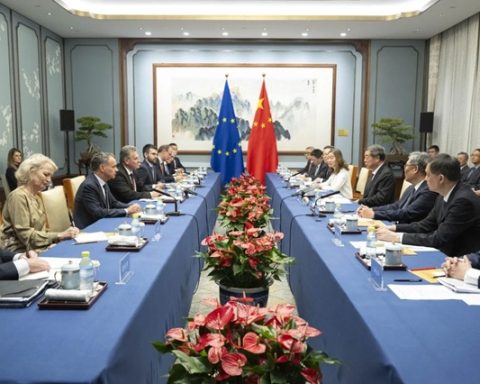
Under such circumstances, it is inevitable that global trade flows will undergo significant shifts. It is likely that the anti-American sentiment generated by Trump’s aggressive posturing will encourage countries to subtly sideline the US by developing alternative Free Trade Agreements. A classic example is the recent FTA between the UK and India, from which the US is excluded. Reports also suggest that India and Germany are planning to double their bilateral trade. In the near future, more countries are likely to strike FTAs with one another, thereby reducing their reliance on exports to the US.
The recent SCO meeting and the strengthening cooperation among BRICS nations suggest that countries are now working out strategies to expand trade among themselves while reducing US involvement where possible. There is a growing recognition that over-exposure to the US market poses a calculated risk with Trump at the helm.
Trump must now read the writing on the wall. He should abandon his aggressive postures and refrain from making insulting remarks about other nations, such as his claim that India has a “dead economy”. It is absolutely essential, in both the short and long term, that the President avoids fostering anti-American sentiment—something that could severely undermine the US itself.