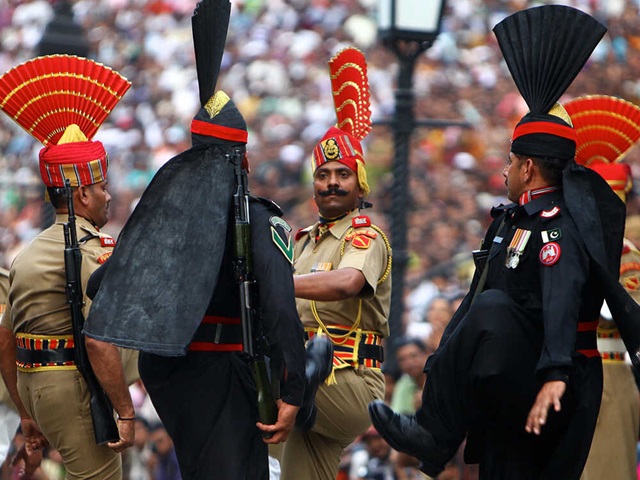
Pakistan’s Information Minister, Attaullah Tarar, raised alarm early on Wednesday regarding the possibility of imminent military action by India, following a series of escalating tensions between the two nuclear-armed neighbors. According to Tarar, Pakistan had received credible intelligence reports indicating that India was planning a military response against Pakistan within the next 24 to 36 hours, in the aftermath of a deadly terrorist attack in Pahalgam, occupied Kashmir, which India has blamed on Islamabad, albeit without providing any proof.
Tensions Following Pahalgam Attack
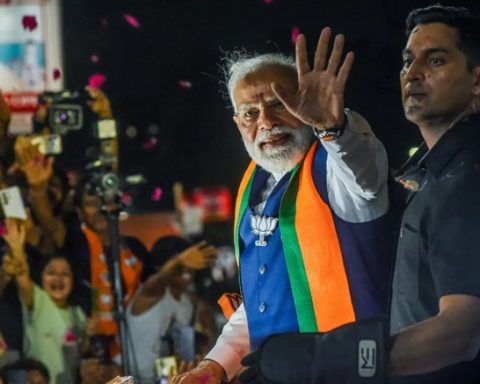
The crisis began last week after the deadly attack on a group of tourists in Pahalgam, a popular tourist spot in Indian-administered Kashmir, which left 26 people dead. India quickly accused Pakistan of being behind the assault, though it failed to provide any concrete evidence to support these claims. In a closed-door meeting with Indian military officials, Prime Minister Narendra Modi granted the Indian military “complete operational freedom” to determine the timing, mode, and targets for retaliatory action.
India’s Defense Minister, Rajnath Singh, and National Security Advisor Ajit Doval were also present at the meeting, which underscored the seriousness of the situation. A senior Indian government official disclosed that India was prepared to retaliate “with full force” against those responsible for the attack.
Pakistan’s Response: Rejection of Allegations
Speaking to the media, Information Minister Attaullah Tarar vehemently rejected India’s allegations, labeling them “baseless” and accusing India of taking on a “self-assumed hubristic role” in the region. Tarar emphasized that Pakistan, a victim of terrorism itself, condemned all forms of terrorism and called for a transparent, independent investigation into the Pahalgam attack. He offered the possibility of a neutral commission of experts to probe the incident, in stark contrast to India’s refusal to pursue an objective inquiry.
“The evasion of credible investigations is itself evidence of India’s real motives,” Tarar stated. He warned that India’s “reckless” path could lead to disastrous consequences not only for Pakistan but for the entire region. He reiterated that any Indian military action would be met with a decisive response from Pakistan.
Diplomatic Moves: UN and International Concern
As tensions rose, the United Nations Secretary-General, António Guterres, expressed his concern over the escalating situation, speaking separately with both Pakistan’s Prime Minister Shehbaz Sharif and India’s Foreign Minister. Guterres urged both nations to avoid confrontation and to pursue de-escalation, emphasizing the potential catastrophic consequences of military conflict.
During his call with Guterres, Prime Minister Shehbaz Sharif categorically denied Pakistan’s involvement in the Pahalgam attack. He called for a neutral and transparent investigation and highlighted Pakistan’s long-standing efforts to combat terrorism globally. The prime minister also condemned India’s attempts to delegitimize the Kashmiri freedom struggle by attributing terrorist actions to Pakistan and expressed deep concern over India’s actions regarding the Indus Waters Treaty, which governs water-sharing between the two countries.
“Water is the lifeline of 240 million people in Pakistan, and any attempt to weaponize it will not be tolerated,” Prime Minister Sharif stated.
Military Clashes and Rising Hostilities
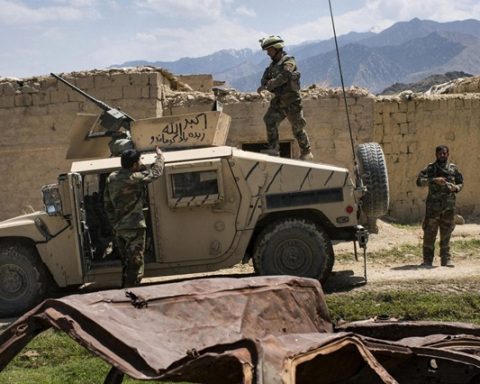
Meanwhile, both countries have been engaged in a series of military skirmishes across the Line of Control (LoC). The Indian army claimed to have exchanged fire with Pakistani troops for five consecutive nights, with each side blaming the other for the hostilities. Pakistan, however, did not confirm the gunfire exchange but reported shooting down an Indian drone, calling it a violation of its airspace.
The Pakistani military also emphasized its readiness to defend the nation’s sovereignty, with Foreign Minister Ishaq Dar stating that Pakistan would not initiate any attacks but would retaliate if provoked. Dar confirmed that Pakistan’s diplomatic efforts had been focused on conveying the country’s concerns to key international allies, including Saudi Arabia, China, and Turkey, who have expressed support for Pakistan during the crisis.
The International Community’s Role
As fears of an escalating military conflict loom large, countries around the world have called for restraint and dialogue. China, which shares a border with both Pakistan and India, has expressed concerns over the potential for war, while the United States has urged both nations to avoid further escalation. US officials, including Secretary of State Marco Rubio, have been in contact with Indian and Pakistani leaders to encourage de-escalation.
The crisis has drawn comparisons to the 2019 Pulwama attack, which also saw heightened tensions between India and Pakistan. Following that attack, both countries engaged in airstrikes across the LoC, but international pressure eventually led to a de-escalation. This time, however, the situation remains more volatile, with fears of a similar spiral into military confrontation.
Internal Political Debate in Pakistan
Back home in Pakistan, the political scene has also been shaped by the ongoing tensions with India. Foreign Minister Ishaq Dar shared details of Pakistan’s diplomatic outreach during a session in the Senate, emphasizing the country’s efforts to involve international stakeholders in resolving the crisis. Dar also rejected the Indian narrative surrounding the Pahalgam attack, stating that no evidence had been presented to link Pakistan to the incident.
Amid these political developments, lawmakers in Pakistan’s Senate have called for a united front to respond to the tensions with India, with some advocating for the inclusion of opposition leaders like Imran Khan in discussions to send a message of national unity. The Senate also unanimously passed two significant pieces of legislation, including the Biological and Toxins Weapons Convention (Implementation) Bill and the National Commission for Minorities’ Rights Bill.