A growing wave of public opposition has gathered around India’s controversial Great Nicobar Island development project, with a Change.org petition surpassing 2,09,500 verified signatures demanding its immediate withdrawal. The campaign, which falls under the “Save Earth — Stand for Change” initiative of Dr APJ Abdul Kalam PURA, has brought global attention to one of India’s most ambitious and contested infrastructure plans, as originally reported in detail by The Hindu.
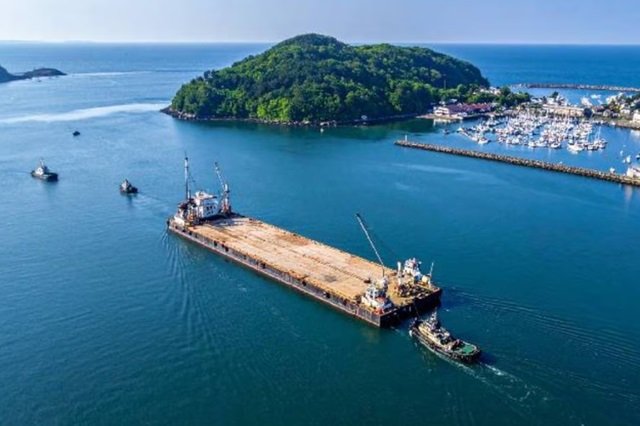
At the centre of the dispute is a ₹81,000-crore government-led development blueprint that seeks to transform the remote island in the Bay of Bengal into a strategic Indo-Pacific hub. First launched in 2021 under India’s “Holistic Development” vision, the project includes an international container transshipment terminal, a greenfield international airport, a gas and thermal power complex, and a planned township designed to eventually host up to 6.5 lakh people. Today, the island is home to just over 8,000 residents.
Opponents argue that the scale of transformation is unprecedented for such a fragile ecosystem. The petition specifically warns that the project could result in the felling of approximately 9.6 lakh trees across 130 square kilometres of primary tropical forest. It also highlights risks to some of the world’s most sensitive biodiversity zones, including coral reef systems at Galathea Bay and nesting grounds for the endangered leatherback turtle, one of the largest marine reptiles on the planet.
The ecological concerns are closely tied to human rights and indigenous survival issues. Great Nicobar is home to the Shompen, a Particularly Vulnerable Tribal Group numbering fewer than 300 individuals, as well as the Nicobarese community. Activists and tribal representatives have raised alarms over what they describe as inadequate consultation and questionable consent processes. In 2025–26, the Nicobarese Tribal Council alleged that authorities falsely certified community consent for the project, deepening mistrust over official assurances.
The government, however, maintains that all statutory safeguards have been followed. Officials have repeatedly stated that the project complies with the Forest Rights Act, 2006, and that environmental impact assessments have been conducted with “calibrated safeguards” designed to minimise ecological disruption. Authorities also argue that the project is strategically vital for India’s maritime positioning in the Indo-Pacific and for reducing reliance on foreign transshipment hubs.
The controversy reached a legal milestone in February 2026 when the National Green Tribunal declined to halt the environmental clearance process, citing the project’s strategic importance and the existence of mitigation measures. Nevertheless, litigation continues in the Calcutta High Court, where petitioners are challenging both environmental and procedural aspects of the approval process.
The debate has also drawn in senior political voices and policy experts. The opposition has been extensively documented in Indian media, including in Frontline, and was further intensified in October 2025 when more than 70 prominent experts issued an open letter questioning the government’s justification of the project’s ecological footprint and its claims of sustainability.
At the heart of the controversy is a broader question of how development is defined and measured. Government planners argue that Great Nicobar’s location near the Strait of Malacca gives it immense geopolitical significance, placing it at the crossroads of global maritime trade routes. Strengthening India’s presence in the eastern Indian Ocean, they say, is essential for national security and economic autonomy.
This strategic argument has also been echoed by defence analysts. Former Navy chief Arun Prakash has previously noted that the island’s geography provides India with a natural advantage in the region, though he has suggested that such strategic goals could potentially be achieved through more limited infrastructure expansion focused on existing defence facilities rather than large-scale civilian development.
Despite such nuance, critics argue that the current model conflates strategic necessity with large-scale urbanisation. The planned township, ports and industrial infrastructure represent not just incremental upgrades but a fundamental transformation of a previously low-density, ecologically sensitive island system.
Environmental experts warn that the risks extend beyond the number of trees cut or hectares cleared. In island ecosystems, they argue, ecological systems are tightly interdependent, meaning that damage to forests, coastal zones or breeding grounds can trigger cascading effects across biodiversity networks. Even limited interventions, depending on location, can disrupt fragile balances that cannot be easily restored.
Concerns have also been raised about how indigenous rights are being interpreted. Government assurances that the Shompen will not be physically displaced have been welcomed in principle, but activists argue that displacement is only one dimension of impact. Changes in mobility patterns, exposure to outside populations, resource access and cultural continuity can alter indigenous life even without formal relocation.
Phased development, presented by the government as a safeguard, has also come under scrutiny. While staging construction may reduce immediate environmental stress, critics argue that without clearly defined ecological thresholds, phasing can enable gradual but irreversible transformation. In this view, incremental expansion risks becoming a mechanism for normalising large-scale ecological change.
The growing petition movement reflects these concerns and has turned what was once a technical policy discussion into a broader public debate about the meaning of “balanced development.” At its core is a disagreement not just over outcomes, but over design philosophy: whether environmental and social safeguards should be added to infrastructure projects after planning, or embedded into their very structure from the beginning.
One of the key criticisms emerging from civil society and expert commentary, including in The Hindu’s coverage, is that mitigation is being treated as a substitute for redesign. In other words, safeguards are layered onto a predetermined project rather than shaping its fundamental scope, scale and location.
This distinction matters, critics argue, because mitigation alone cannot always compensate for irreversible ecological change. Once primary forests are cleared, coral systems disturbed or indigenous lifeways altered, restoration becomes partial at best. In such contexts, “balance” risks becoming a rhetorical concept rather than a practical constraint.
The government’s position remains that development and environmental protection are being carefully calibrated. Officials emphasise limited forest diversion relative to the project’s scale, alongside protections for tribal communities and environmental monitoring systems. They also stress the importance of long-term national gains in trade, connectivity and strategic presence.
Yet the intensity of public response suggests that these assurances have not fully resolved concerns. The scale of the petition, crossing 200,000 signatures, signals that opposition is no longer confined to specialist circles but has entered mainstream environmental and civic discourse.
Ultimately, the Great Nicobar project has become more than an infrastructure proposal. It now sits at the intersection of competing visions of India’s future: one driven by strategic expansion and economic integration into global trade networks, and another centred on ecological limits, indigenous rights and long-term environmental security.
As legal battles continue and public scrutiny intensifies, the question facing policymakers is no longer simply whether the project can be built, but whether it can be built without fundamentally altering one of India’s most fragile and irreplaceable ecosystems.