Salt workers in India’s Rann of Kutch, one of the world’s largest salt pans, are suffering severe health consequences from the grueling labor that underpins both the country’s domestic consumption and its lucrative export industry, Nikkei Asia has reported.
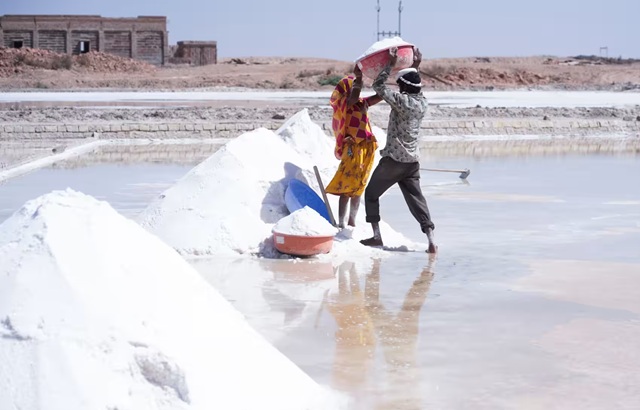
In the scorching heat of the Thar Desert, where temperatures regularly climb above 47 degrees Celsius, tens of thousands of Agariyas — members of tribal salt-working communities — spend eight to nine months a year producing salt by hand. Workers draw brine into shallow pans, rake crystals barefoot for hours, and live in makeshift desert camps with little access to water or medical care.
The toll is immense. Chronic illnesses such as heart disease, high blood pressure, kidney dysfunction and stunted growth are widespread, with doctors warning that exposure to brine and excess sodium directly damages workers’ cardiovascular systems. Skin lesions, constant eye irritation and respiratory problems are common, while women face added risks from poor sanitation, malnutrition and reproductive health complications.
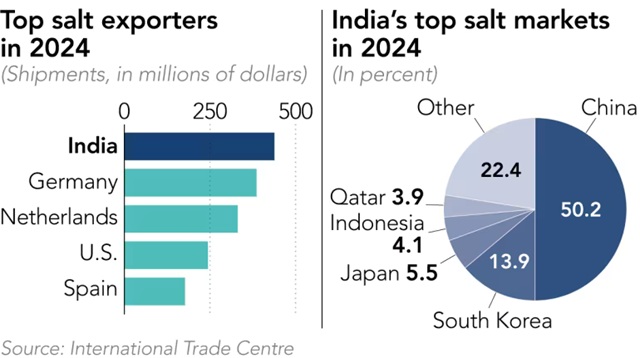
Despite these dangers, wages remain meager. According to labor advocates, most salt workers earn between $600 and $1,700 a year — just a fraction of the profits enjoyed by corporations dominating India’s $260 million branded salt market. Tata Salt, ITC’s Aashirvaad and Nirma are among the major players that benefit from aggressive marketing and vast distribution networks, exporting salt to more than 50 countries. India is now the world’s third-largest salt exporter, with nearly one in every ten kilograms consumed globally originating in Gujarat.
While the Gujarat state government has introduced measures like mobile supply vans to deliver daily essentials, campaigners say such initiatives barely scratch the surface of the long-term health crisis. Many workers are forced into debt to pay for basic medical treatment, while advocacy groups continue to push for greater legal protections and fairer wages.
For families like that of 49-year-old Raja Rahim Sultan, who collapsed from a heart attack after years of work in the salt flats, the choice is stark: endure the punishing conditions or abandon a livelihood passed down for generations. “Turning water into salt is an art our ancestors mastered,” one worker told Nikkei Asia. “We can’t let it disappear — even if it costs us our health.”