by Luxman Aravind
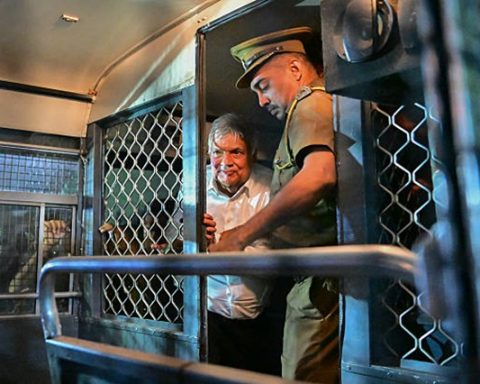
It is increasingly evident that the current government is engineering a series of incidents capable of inflaming public sentiment, in an attempt to divert attention from its domestic and international failures through what critics describe as an indecent propaganda project. This perception is reinforced, they argue, by what has been reported as the inhumane treatment of former intelligence chief Suresh Sallay, as referenced in forensic reports. In recent weeks, concerns have also been raised over economic instability, with reports indicating that foreign investors have withdrawn more than one hundred million dollars from the stock market, while claims have circulated that approximately eighty million dollars of state funds have disappeared in 2025 alone. Against this backdrop, questions persist over the government’s ability—or willingness—to address the structural problems confronting the Sri Lankan state.
At a recent press conference held to announce Cabinet decisions, Minister Nalinda Jayatissa’s attempt to justify the government’s position on the treatment of Sallay was widely described by critics as inadequate and dismissive. Attention has since turned to the conduct of the media, with the argument that journalists failed to ask two fundamental questions. First, whether the government accepts the medical findings issued by the Judicial Medical Officer regarding Sallay. Second, whether India has been formally engaged in any investigation, given claims made by a politician that Sarah Jasmine fled to India. In this context, it is argued that responsible journalism requires direct questioning in the national interest rather than the expression of personal opinion.
However, there is a growing view that the government has failed to grasp the political consequences of its handling of the Sallay matter, which is increasingly developing into a wider institutional and international issue. What was initially framed as an individual case is now being interpreted by critics as a challenge to the credibility of the state’s legal and administrative framework. It is also suggested that external pressure, including the possibility of European Union action such as a GSP suspension linked to concerns over anti-terror legislation, could significantly alter the country’s economic and diplomatic position.
Meanwhile, the government’s approach to crisis management has been compared by critics to repeatedly rebuilding temporary fixes after structural failure—repairing damage, publicising it extensively, and then distancing itself when the solution collapses again. In this context, figures such as Lakmali Hemachandra have been drawn into commentary as symbolic of political actors navigating an unstable environment, while individuals like Nilanthi Kottahachchi are similarly described as seeking direction within a rapidly shifting political landscape. It is further argued that such uncertainty among younger politicians reflects a broader absence of long-term strategic clarity within the governing framework.
The administration’s political thinking, according to critics, has become increasingly narrow and defensive, reflecting heightened insecurity at the top levels of leadership. This was further illustrated, they argue, in Minister Jayatissa’s response during the Cabinet briefing when questioned about the appointment of a controversial official as Sri Lanka’s consul in Saudi Arabia. His response was widely criticised in political commentary circles as evasive and indicative of deeper governance weaknesses.
At the same time, the government is accused of advancing narratives built around highly contested allegations involving figures such as Azad Maulana, including claims of fabricated marriages, abuse, exploitation, and coordinated escapes allegedly involving individuals linked to past investigations. Critics argue that the ongoing Easter-related investigations are increasingly perceived not as an impartial pursuit of justice, but as a politically driven process shaped by personal grievances and institutional rivalries.
Further controversy surrounds the conduct of certain investigative officials. One senior officer, aged sixty-five, has been accused in political commentary of pursuing a long-standing agenda under the guise of official duty, with claims that past transfer decisions were influenced by political intervention. It has been suggested that such actions reflect not merely administrative decisions but a deeper pattern of institutionalised vendetta, although these assertions remain contested.
Criticism has also extended, in some quarters, to segments of the Catholic Church leadership, with allegations that internal dynamics have contributed to the marginalisation of young clergy members, including those who studied abroad and were later accused of ideological affiliations. These claims are presented by critics as symptomatic of broader institutional dysfunction, where personal bias and psychological motivations distort organisational behaviour and public accountability.
Against this backdrop, it is argued that the so-called “Renaissance” project has lost coherence. The promised transformation has, according to critics, given way to political fragmentation, while slogans such as “Clean Sri Lanka” are described as having evaporated into rhetoric. In this reading, state power is increasingly shaped by political networks and individuals accused of acting on personal motivations rather than institutional principles.
The central issue is not framed solely around the treatment of Suresh Sallay as an individual. Rather, it is presented as a broader test of whether the state is being strengthened or eroded by the manner in which it exercises its authority. Critics argue that when state agents appear to undermine the very legal and administrative structures they are meant to uphold, the consequence is not merely a political dispute, but a deeper crisis of institutional legitimacy.
It is within this context that comparisons are drawn with past political eras, where similar accusations of arrogance and impunity were levelled against leaderships accused of placing survival above governance. The concern expressed in this narrative is that history may be repeating itself in a new form, with new actors and new institutions, but with familiar patterns of political conduct.
The question that now remains is whether the current trajectory represents a temporary phase of political turbulence or a more fundamental shift in the relationship between state power, accountability, and public trust in Sri Lanka.