by Our Correspondent in Doha
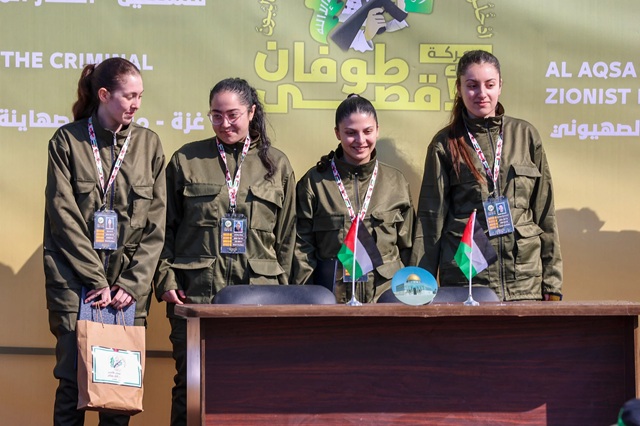
Some elements of the Israeli media seem utterly incapable of tolerating the sight of returning hostages looking anything less than emaciated, shattered, or broken. The idea that individuals who had been held captive by Hamas—a group that is rightly condemned for its heinous acts of terrorism—might appear relatively healthy upon release has apparently triggered a cascade of disbelief so profound that they’ve resorted to concocting a farcical narrative in response. Lacking any credible evidence, they now allege that Hamas employed some mysterious “accelerated rehabilitation” programme, complete with nutritious meals and stimulants, to deceive the world about the conditions of captivity.
Let’s not mince words: this narrative is not just laughable; it’s an insult to basic intelligence. Are we seriously expected to believe that days, weeks, or even months of physical and emotional deprivation can be miraculously erased in the span of a few hours? What next—claims that Hamas is in possession of a time machine, allowing them to retroactively undo the suffering they caused? Or perhaps the hostages were simply fitted with prosthetic smiles and synthetic energy, like actors in a grotesque theatrical production? It’s almost as if the media, faced with the inconvenient reality of hostages who don’t fit their preferred image of utter devastation, has decided to abandon logic altogether.
The truth, of course, is far simpler and far less dramatic. Hostages were likely provided with just enough food and care to survive their captivity. That they returned with a semblance of physical health is not evidence of some elaborate ruse but rather a testament to the bare minimum effort made to ensure their lives were preserved—whether out of cynical self-interest or basic human instinct. But this reality, however straightforward, doesn’t fit neatly into the all-or-nothing framework some elements of the media seem determined to maintain.
This fixation on appearances betrays a deeper, more unsettling problem. For some, it seems that the very idea of Hamas demonstrating even the faintest glimmer of rational behaviour—however manipulative or self-serving—must be rejected outright. The narrative must remain stark and absolute: Hamas as unthinking, unfeeling, entirely monstrous, incapable of even the smallest gesture that could be spun as humane. Anything less risks complicating the moral equation, and complexity is the enemy of propaganda.
Let us be clear: Hamas’s actions, from the horrific attacks on civilians to the taking of hostages, are indefensible. No amount of posturing or narrative spinning can erase that truth. But to insist that the relatively healthy appearance of some hostages is evidence of manipulation rather than survival is to descend into absurdity. It is to wilfully ignore the possibility that, even in the chaos of war and captivity, life is not always as black-and-white as we might wish it to be.
What makes this entire spectacle so tragic is that it detracts from the real focus: the hostages themselves. Instead of celebrating their return and prioritising their recovery, the conversation is hijacked by baseless accusations and contrived scandals. It is a grotesque prioritisation of narrative over humanity, where the condition of the hostages is twisted into yet another talking point in an endless cycle of posturing and counter-posturing.
The irony, of course, is that this very narrative inadvertently highlights a truth that some seem desperate to deny. If Hamas indeed ensured that hostages were returned alive and in reasonable health, it shows a level of calculation that is incompatible with the caricature of mindless barbarity often painted by their detractors. This is not to excuse or justify their actions but to recognise that even in the darkest corners of human conflict, complexity exists. Hostages were not killed or returned as lifeless shells; they were preserved, however minimally, and that fact alone is a reminder of the uncomfortable nuances that propaganda tries so hard to erase.
Perhaps the real issue here is not the condition of the hostages but the inability of some to process a narrative that doesn’t conform to their expectations. To see returning hostages as anything less than utterly destroyed is, for them, a failure of the script. But life is not a script, and human survival cannot always be neatly packaged into predetermined roles. Maybe it’s time for these media outlets to set aside their manufactured outrage and face a more profound truth: sometimes, reality is inconvenient. And sometimes, it challenges the stories we so desperately want to tell.