Japan is preparing to take another major step in expanding its defence capabilities, with the Defense Ministry seeking a record ¥8.9 trillion ($56 billion) for fiscal 2027 — a figure that government officials and defence experts expect could rise substantially before the final budget is settled.
The request, submitted to the government Monday, is the final instalment of a five-year, ¥43 trillion plan. Yet its significance extends well beyond the headline figure. Japan is simultaneously revising three key national security documents — the National Security Strategy, the National Defense Strategy and the Defense Buildup Program — creating the possibility that the eventual spending total could exceed ¥10 trillion.
The proposed budget combines advanced weapons, artificial intelligence, unmanned systems and new approaches to sustaining Japan’s defence capabilities during a prolonged conflict. It also signals a broader expansion of the government’s role in the defence industry and a significant internal reorganisation of the Defense Ministry.
The push comes as Japan confronts military modernisation by China and North Korea, Russia’s growing defence links with Beijing and Pyongyang while waging war in Ukraine, and changing expectations from its most important security ally, the United States.
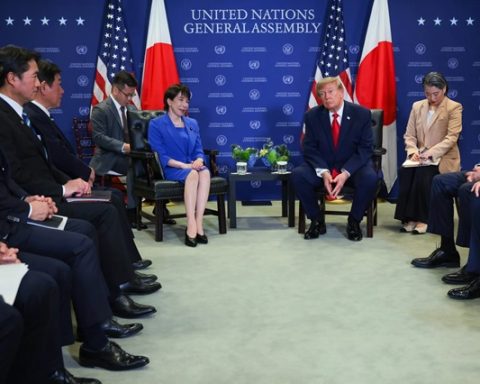
Under President Donald Trump, Washington has pressed Japan to spend 3.5% of gross domestic product on defence. Japan says it already spends around 2% of GDP. At the same time, the United States is shifting its focus from Asia to the Western Hemisphere and the Middle East, adding another complication to Tokyo’s security calculations.
The uncertainty surrounding the final Japanese figure is not accidental. The budget request contains numerous “item requests” without attached costs, a practice that can occur when major national security documents are being revised.
“In years when the budget request coincides with a revision of the three documents, it is structurally hard to avoid,” said Masashi Murano, a defense expert at the Hudson Institute think tank. “The request submitted at the end of August 2022 is the direct precedent: a headline total plus a large number of unpriced items, with everyone understanding from the outset that the final figure would come in substantially higher.”
Government officials, particularly within the Defense Ministry, have indicated that the final amount could be significantly larger. Some have suggested it could even surpass ¥10 trillion.
At the centre of the proposed expansion is a more sophisticated approach to counterstrike capabilities. Among the most striking requests is the development of “highly survivable” hypersonic cruise missiles capable of being launched from “underwater platforms”.
Ministry officials have indicated that the weapons would likely be fired through vertical-launch systems employed by the Maritime Self-Defense Force’s next-generation submarines. The ministry has not disclosed a cost, citing the ongoing discussions surrounding revisions to the three national security documents.
Japan is also seeking an undetermined amount for research into modules that could allow standoff missiles to be launched from uncrewed underwater vessels, or UUVs.
The proposals come as Japan debates the development of long-range submarine-launched missiles and “next-generation” power sources for submarines — code for nuclear powered vessels. Zack Cooper, a veteran Asia defense expert and lecturer at Princeton University, said underwater-launched standoff missiles would provide another important element of Japan’s counterstrike capabilities because they would be difficult for China to target during a conflict.
Yet the technological ambition raises practical questions. Japan must determine whether the conventional propulsion systems currently used by Maritime Self-Defense Force submarines can be improved sufficiently to provide adequate power to multiple large vertical-launch cells. There are also questions over whether even ultralarge uncrewed underwater vessels would have enough space to carry a meaningful number of VLS-fired missiles.
Artificial intelligence represents another central element of the request. Japan plans to establish an AI-based “decision support system” at the Joint Operations Command, which oversees the Maritime, Ground and Air Self-Defense Forces.
The system will initially use existing overseas technology while Japan works to strengthen its domestic AI capabilities. The ministry also plans to introduce a “sovereign cloud” system designed to securely and rapidly aggregate, share and utilise data, allowing command and control to continue during emergencies.
The costs of these technologies have not been disclosed. A defense official said no decision had yet been made on which foreign-developed AI systems would be introduced, but stressed that once Japanese systems had matured, “we’ll hand the baton over from overseas AI.”
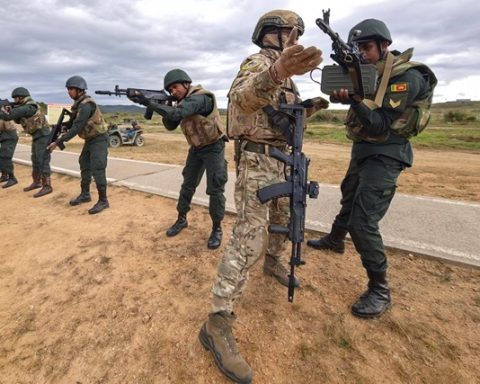
Japan intends to connect these developments with an ambition to make the Self-Defense Forces “the world’s leading organization in utilizing unmanned assets”.
That ambition is reflected in the continued expansion of drone procurement. Last year’s budget request focused on creating a drone “shield” to protect Japan’s southwestern periphery amid concerns over Chinese military activity in the area. The latest request broadens that effort.
It includes at least ¥8.7 billion for uncrewed aerial vehicles for information gathering and ¥36.3 billion for small attack drones. Roughly ¥9.5 billion is allocated for developing uncrewed ground vehicles that could assist with logistics.
But Japan’s chronic shortage of personnel presents a challenge to the transformation. Murano argued that the country must reconsider the structure of its forces if unmanned systems are to become central to operations.
“The real turning point is whether the SDF can decide to cut authorized strength in crewed platforms and shift it to uncrewed,” he said.
“Unless personnel are drawn down and redeployed from manpower-intensive assets such as older (destroyers) and maritime patrol aircraft, the people needed to operate uncrewed systems will not be found,” Murano added.
The proposed transformation extends beyond weapons and technology. The Defense Ministry also wants a larger role for the government in strengthening Japan’s defence-industrial and technological base.
Its budget explanatory document describes “productivity is deterrence” as the guiding idea behind an urgent effort to build a production and technology base capable of supporting sustained response capabilities and adapting to “new ways of fighting”.
Japan plans to establish a new state-backed entity to promote the domestic production base, defence equipment exports and innovation. Another key proposal is a shift towards a government-owned, contractor-operated, or GOCO, model for some defence-related businesses. Under this arrangement, the state would own certain production facilities while private companies would handle day-to-day operations.
Ministry officials acknowledge that permanently retaining government ownership of such facilities would require changes to existing laws. Media reports have said legislation could be submitted as early as next year.
The budget request also turns towards Japan’s Pacific flank, where many sea lanes vital to the country’s economy converge. The ministry points to “intensified” military activities in the area in recent years by “neighboring countries” and plans to strengthen intelligence-gathering and surveillance.
An MQ-9B SeaGuardian long-endurance UAV is scheduled to be deployed there in fiscal 2027, while plans to place ASDF mobile warning and surveillance radar units on Okinawa’s Kitadaitojima Island are being accelerated.
The ministry established a new office in April to address the challenge. It now plans three additional bureaus covering international policy and cooperation, defence infrastructure and logistics, and the development and operation of defence facilities.
An agency supporting retired SDF personnel and their families is also planned. The international policy bureau is expected to have around 80 staff, the infrastructure bureau around 60, the facilities bureau around 240 and the agency for retired SDF personnel roughly 110. Nearly all of the staffing requirements will be met through existing personnel.
Taken together, the ¥8.9 trillion request represents more than another increase in Japan’s defence budget. It points towards a wider transformation involving missiles, submarines, artificial intelligence, unmanned systems, industrial policy, surveillance and the structure of the ministry itself.
And because many of the most consequential requests remain unpriced while Japan rewrites its three central security documents, the number submitted this week may prove to be only the beginning.