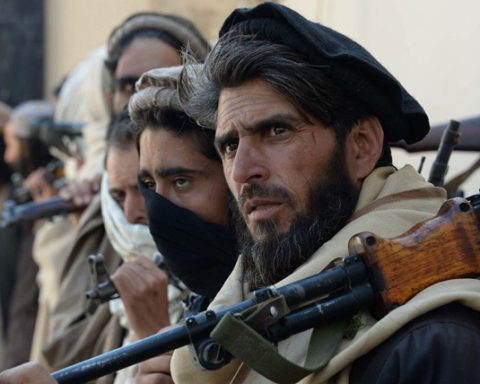
In Afghanistan today, the mere mention of the Taliban’s “Promotion of Virtue and Prevention of Vice” — the so-called religious police — is enough to send women and girls trembling. Ostensibly tasked with enforcing strict Islamist codes, the force has become a symbol of terror for half the population, a daily reminder that their lives, liberties, and even dignity are no longer their own.
Fahima’s story, reported by IPS, illustrates this brutal reality. On her way to give Eid greetings in Faizabad, she stopped to speak to a young relative, only to be seized by armed Taliban men and detained for nearly twelve hours. The trauma she experienced — the shaking, the sleepless nights, the paralyzing fear of leaving her home — is shared by countless Afghan women. Eid, a holiday meant for celebration, becomes yet another occasion for intimidation, harassment, and violence.
This is not an isolated incident. IPS reporting notes that during recent holidays in Badakhshan, dozens of girls and women were subjected to threats, insults, and beatings simply for being visible in public. Afghan women cannot go to parks, shopping venues, or entertainment spots without a male escort. They are barred from education in many fields, denied employment in key sectors, and even forbidden from visiting male doctors for essential medical care. These restrictions, now codified in at least 118 decrees since the Taliban returned to power in August 2021, are not abstract laws; they are daily realities that crush opportunity and independence.
The consequences are profound. Mental health crises among Afghan women are rising, with depression, anxiety, and suicidal tendencies increasingly common. Despair, isolation, and systemic oppression are reshaping a generation’s psyche. Families, neighbors, and communities — the few social networks left — silently acknowledge the damage, yet women have no safe avenue to speak out. Any protest or demand for rights is met with threats of imprisonment, sexual violence, or even death.
IPS reporting underscores a grim truth: the Taliban’s religious police are not merely enforcing rules; they are enforcing fear itself. Afghanistan’s women live under constant surveillance, their movements policed, their voices silenced. For them, virtue has been weaponized, and vice has become the arbitrary excuse for oppression. Fahima’s ordeal, and those of countless others, is a stark reminder that the struggle for women’s rights in Afghanistan is not about law or religion — it is about survival under a regime that has stripped them of both dignity and freedom.
The international community can no longer ignore these violations. Afghanistan’s women are not just statistics; they are individuals whose potential and humanity are being systematically crushed. As IPS reporting continues to illuminate their plight, the world must confront this moral emergency, demanding accountability and tangible support for the women whose lives are now defined by fear.