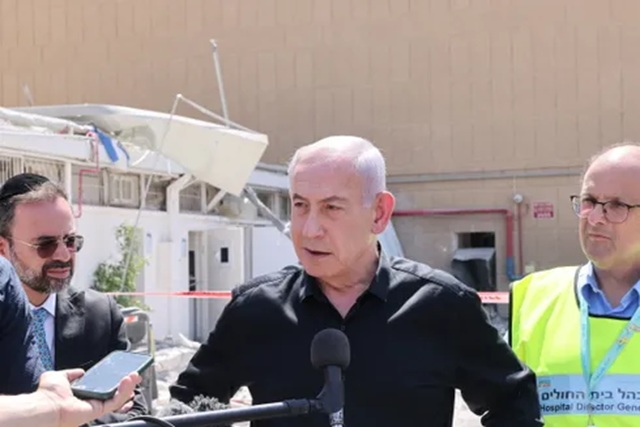
Israeli Prime Minister Benjamin Netanyahu’s office in the Kirya military compound in Tel Aviv has been evacuated and will remain out of use for at least four months due to extensive renovation work, according to a report by Israeli news outlet Walla!. The move follows recent Iranian missile strikes that targeted the area during the 12-day Israel-U.S. war against Iran.
Sources close to the prime minister confirmed that Netanyahu’s office and bureau, located in a building now known as Beit Shimon Peres, were cleared entirely of staff to allow for significant structural and infrastructure upgrades. The building, formerly known as Building 22, holds historical significance, having once served as the headquarters of the Israeli military’s general staff and the offices of senior defense officials.
The renovations come in the wake of an unprecedented missile barrage launched by Iran in late June. Tehran fired more than 200 missiles at Israeli targets, including the Kirya compound—often dubbed the “Israeli Pentagon.” While most missiles were intercepted, a notable number reportedly penetrated Israel’s multilayered air defense systems, including the much-vaunted David’s Sling system. Footage circulating on social media appeared to show explosions in and around the Kirya, raising questions about the vulnerability of even Israel’s most fortified sites.
A senior Israeli military source admitted that the defenses are “not hermetic,” echoing a Telegraph report indicating that close to 10% of Iranian missiles had evaded interception. The Israel Defense Forces (IDF) declined to release exact figures, reportedly to avoid providing intelligence to Tehran.
The Kirya building now under renovation is over 60 years old and has remained partially in use for security and procurement offices, despite the relocation of most top-level defense officials to the newer Matkal Tower decades ago.
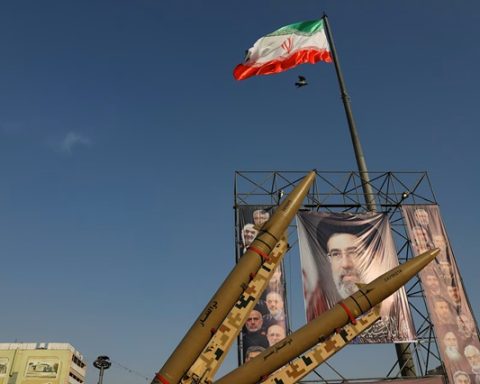
Iranian military officials have since confirmed that the missile strikes were calculated and that only a fraction of their capabilities were used. Brigadier General Ali Fazli of the Islamic Revolutionary Guard Corps (IRGC) stated that the long-range “Sejjil” missile played a key role in catching Israeli forces off guard. He emphasized that the missile deployment represented “less than 25%” of Iran’s arsenal and that the country’s full capabilities remain untapped.
Fazli also reiterated Iran’s long-held stance against pursuing nuclear weapons, stating that while the country possesses the technical knowledge, it refrains from developing such arms based on ideological grounds.
The recent conflict marked one of the most intense exchanges in years and exposed critical vulnerabilities in Israel’s defense architecture. As reconstruction begins at the heart of the country’s military establishment, security analysts warn that regional tensions remain high—and that Tehran’s evolving missile capabilities may further challenge the balance of power in the region.