
The 10th Synergia foundation’s conclave, a three-day strategic affairs forum, commenced in New Delhi on 11 March, 2026, 12 days after the joint Israeli-US attack on Iran. The meeting at the Manekshaw Centre Auditorium, New Delhi, took place a week after the US sunk an unarmed Iranian frigate just outside Sri Lanka’s territorial waters, in India’s backyard.
That calculated destruction placed India in an extremely embarrassing position as the ill-fated vessel was returning home after participating in International Fleet Review (IFR) and Milan 2026 that ended on 25 February with a closing ceremony conducted onboard India’s indigenous aircraft carrier, INS Vikrant, off the coast of Visakhapatnam.
The March conclave was the second such scene since the launch of the unprovoked Israeli-US air offensive meant to trigger a massive public-led regime change operation, which proved to be wishful thinking of the West and remnants and ardent followers of the ousted Shah Pahlavi family dynasty. The first was the 11th edition of the Raisina Dialogue, India’s flagship geopolitics and geo-economics conference that was held from 5-7 March, 2026, in New Delhi.
The Bangalore-based think tank founded in 1989 held its 9th conclave in Nov. 2023.
Over 200 persons, representing political and defence fields, participated in the Synergia conclave that took place as the unpalatable reality dawned on the aggressors and their allies that the anticipated regime change couldn’t be achieved.
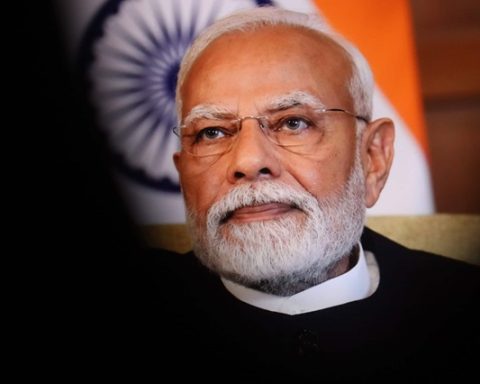
The Narendra Modi government that failed at least to express concern over Israel-US action, displayed to the world the state of actual facts when Modi rushed to Israel, on the eve of the launch of the dastardly sneaky war, as if to give his blessings to it. But when the conflagration did not go as planned by the US and Israel, with a quick military knockout blow, that decapitated much of its leadership, but Iranian fight back capabilities, with increased vigour, coupled with the failure of an expected civilian revolt in the streets to materialise to bring about a regime change, New Delhi had no other option than to reach out to Tehran. Prime Minister Modi’s call to Iranian President Masoud Pezeshkian, on 12 March, amidst political turmoil at home, in the wake of crude oil and gas supply breakdown, badly exposed India. Pocketing their pride, the desperate call by the Indian PM paved the way for ships carrying crude oil and gas to pass the Hormuz Strait unharmed once again, as by that time up to 18 India bound vessels were held up there, underscoring New Delhi’s vulnerability.
The reportage of the Synergia conclave failed to pay adequate attention to the ongoing developments in West Asia that undermined economic-political-social stability in many parts of the world. Their failure to blame the developing crisis on the Israeli-US actions is understandable though not justifiable. India, against the backdrop of its strategic partnerships with Israel and US, found itself in an unenviable position as the deteriorating situation raised questions as New Delhi perceived position as the regional leader.
The new West Asia war should be examined taking into consideration the ongoing Russia-Ukraine conflict as they impacted gravely on the global economy. The crises proved that the North Atlantic Treaty Organisation (NATO), the world’s most powerful military alliance, cannot adopt a collective stand on two raging conflicts.
Against the backdrop of NATO’s predicament, our region should be fully aware of the vulnerability of regional alliances in the face of a global crisis. Quad comprising the US, Australia, Japan and India, is a case in point. Built to counter China, Quad leader US realised that it cannot, under any circumstances, receive military backing for the re-opening of the Hormuz Strait. The crisis, and the challenge faced by the US is so overwhelming, President Donald Trump ended up seeking Chinese Naval deployment in support of Hormuz re-opening.
At the time this piece went to print, the US had declared a 15-day pause on attacks on Iranian oil infrastructure in a bid to re-open Hormuz.
The Russia-Ukraine conflict and the West Asia war proved that whatever the alliances, and regardless of their leadership, such major conflicts caused irreparable damages and placed countries in unwinnable situations.
EX-CDS perspective
Retired General Shavendra Silva, former Chief of Defence Staff (CDS) of the war-winning Sri Lankan armed forces, discussed the regional issues on the basis that South Asia remained one of the least economically integrated regions in the world that limited its collective potential. Silva asserted that this gap is not just an economic issue but a strategic vulnerability as underdevelopment and instability in one country could swiftly spill over into other countries.
It would be pertinent to mention that the NPP government abolished the post of CDS.
Underscoring the pivotal importance in recognising the failure of the region to achieve meaningful economic and political integration, Silva warned against unilateral approaches, while declaring that cooperation among the countries would be essential.
The failure on the part of the decision-makers to address the issues, at hand, could fuel instability, unemployment, inequality and lack of development, and can even lead to migration pressures, crime and extremism, General Silva warned.
Stressing the importance of, what he called, military diplomacy to overcome challenges, the wartime General Officer Commanding (GoC) the celebrated 58 Division, expressed confidence that militaries could contribute to regional stability
In his concluding remarks, Silva made reference to the Colombo Security Conclave, shared challenges and the strategic necessity among countries in the region.
Unfortunately, elected leaders of so-called advanced countries, like the USA and Israel, are now behaving more like petty gangsters, launching brutal strikes on enemies, while ostensibly conducting peaceful negotiations to settle turf disputes. The US sinking of an unarmed Iranian frigate that claimed the lives of well over 100 officers and men caused excruciating diplomatic pressure as both countries struggled to cope up with the fallout.
The US could have targeted the Iranian vessel in international waters or at a point considerable distance away from India and Sri Lanka. Yet, the US submarine that had been tasked with the first such operation, after the end of the Second World War, struck seven nautical miles outside Sri Lanka’s territorial waters. The US action can be safely described as an attempt to test Indian and Sri Lankan reactions at a time of a major crisis and their loyalty to the sole superpower. Both countries struggled to cope up with the daunting challenge of reaching consensus with the US regarding the fate of two Iranian vessels namely Bushehr (auxiliary) and frigate Lena that respectively received refuge in Colombo and Cochin harbors.
The Iranian ship affair overwhelmed little Sri Lanka as the US sought to move the Djibout-based anti-ship missile carrying aircraft, via the Mattala Mahinda Rajapaksha International Airport, to a base tasked with mounting attacks on Iran. The request made on 26 February, two days before Israel-US initiated action placed Sri Lanka in a quandary. (Djibouti, in the horn of Africa hosts both US and Chinese military bases. In addition to French, Japanese, Italian and Saudi Arabian forces. Djibouti appears to have consolidated in security by having China and competing military powers on its territory).
President Anura Kumara Dissanayake disclosed his decision to deny the US request, along with Iranian wish to undertake a goodwill visit to Colombo from 9 to 13 March. Dissanayake sought to stress the country’s neutrality by denying both US and Iranian requests.
However, Dr. Alireza Delkhosh, has, in no uncertain terms, stressed that the three-member group of Iranian ships was invited by the Commander of the Sri Lanka Navy, Vice Admiral Kanchana Banagoda,when he met the Rear Admiral Shahram Irani during IFR/Milan 2026 in Visakhapatnam. That revelation, if true, underscored Sri Lanka’s responsibility as regards the well-being of the Iranians, though the government cannot be held accountable for the reckless US action in the Indian Ocean.
When The Island sought the US Embassy response to President Dissanayake’s refusal, a mission spokesperson said: “The United States and Sri Lanka maintain a longstanding defence partnership, grounded in transparency, mutual respect, and shared interests.” The Embassy refrained from commenting on the existing Acquisition and Cross-Servicing Agreement (ACSA), signed in 2007, and extended in 2017 for another 10-year period. ACSA will be extended next year.
That response revealed that the US understood the difficulties experienced by Dissanayake’s administration in dealing with the situation. The West Asia war, in a truly global sense, is perhaps the worst direct threat on the oil market and if not resolved within a week or two can cause a massive fallout. Sri Lanka hasn’t experienced a similar challenging situation in the post-Second World War era, since obtaining independence, in 1948, from the United Kingdom.
Whether President Dissanayake likes it or not, his government cannot deviate from the US-India led chosen path that may contradict often repeated claims of neutrality. In fact, India, too, seems to be trapped in Israel-US machinations as President Trump daringly used Islamabad in a bid to reach Iranian leadership. New Delhi may find the US move offensive, particularly against the backdrop of its repeated accusations that Islamabad backed terrorism directed at India.
Sri Lanka’s predicament
General Silva’s predicament highlights the daunting challenge faced by the Sri Lankan military in clearing its name. Having commanded the 58 Division that played a significant role in the destruction of the Liberation Tigers of Tamil Eelam (LTTE) in May 2009, Silva, in February 2020, suffered a devastating slap in the face when the US sanctioned him over unsubstantiated war crimes accusations.
Out of all the GoCs of frontline fighting divisions that fought in the Vanni theatre of operations (2007-2009) to defeat the Tigers, designated by the American FBI as the most ruthless terrorist organisation in the world, the US singled out Shavendra Silva for demeaning the sanctions regime. The February 2020 US declaration deprived the distinguished commander of an opportunity to visit some parts of the world. Hence the opportunities offered by India are of importance.
However, it would be pertinent to mention that India can never absolve itself of the responsibility for sponsoring terrorism in Sri Lanka in the ’80s. That despicable Indian project caused quite significant death and destruction in Sri Lanka over a period of three decades and also resulted in the assassination of one-time Prime Minister Rajiv Gandhi, in May 1991, in South India, and an abortive bid to assassinate Maldivian President Maumoon Abdul Gayoom in November, 1988.
The UN, notorious for its double standards, ignored the Indian terrorism project but adopted a hardline approach in respect of the Sri Lankan military that paid a very heavy price to bring terrorism to an end. Seven years after the eradication of the LTTE, Sri Lanka co-sponsored the US-led accountability resolution that condemned one’s own country for the killing of over 40,000 civilians on the basis of an unsubstantiated UN report, released in March, 2011, though it contradicted another UN report prepared by its Colombo office, with the support of other NGOs/INGOs operating in the Vanni during the war.
Sri Lanka simply lacked the courage to properly defend the armed forces at the Geneva-based United Nations Human Rights Council (UNHRC) or any other forum as we were more or less led at the time by traitors.
Gen. Silva received another blow, in March, 2025, when the UK sanctioned him, along with Admiral of the Fleet Wasantha Karannagoda, retired General Jagath Jayasuriya, and former LTTE commander Karuna Amman, obviously for turning against Tiger Supremo Velupillai Prabhakaran. When the writer inquired about sanctions imposed by various foreign governments, ex-Foreign Minister Ali Sabry, PC, declared that not only individuals but entire fighting divisions have been sanctioned. That was in early September, 2022, soon after President Ranil Wickremesinghe negotiated a USD 2.9 bn loan facility with the International Monetary Fund (IMF) to stabilise the national economy.
Sri Lanka never adopted a tangible action plan to counter lies propagated by interested parties. Hounded by the West and their fellow travellers, since the crushing of the Tigers in the battlefield, even the war-winning Mahinda Rajapaksa lacked a clear strategy. In the absence of a cohesive post-war action plan, interested parties, both here and abroad, pursued narratives that demonised Sri Lanka. Successive governments neglected their responsibility to the armed forces. They were so pathetic that significant opportunities, presented by the disclosures made by wartime US Defence Attache here Lt. Colonel Lawrence Smith, in June, 2011, and Lord Naseby, in October, 2017, on the basis that UK High Commission dispatches weren’t used. Their treacherous response facilitated a high profile campaign against Sri Lanka. Instead of mounting a proper defence, political parties exploited post-war developments to reach political alliances meant to promote agendas inimical to the country.
The decision to field the then retired General Sarath Fonseka as the common Opposition candidate at the 2010 presidential election delivered a knockout blow to war crimes allegations. The Tamil National Alliance (TNA), that served the LTTE’s interests from 2001 until the very end of the war, joined the UNP and the JVP in fielding the war-winning Army Chief. That political move, within a year after the decimation of the LTTE, should have paved the way for a national campaign to counter accusations of genocide perpetrated by the Sri Lankan military. Against the backdrop of Fonseka securing all predominately Tamil speaking northern and eastern districts ,as well as Nuwara Eliya, though he lost the election by a staggering 1.8 mn votes, genocide claims were no longer tenable after the Tamils response to Fonseka. If they were serious about war crimes accusations, Fonseka couldn’t have won those districts.
Impact on military
Mahinda Rajapaksa’s defeat at the 2015 presidential election brought in the Yahapalana government that betrayed the war-winning military at the UNHRC in October, 2015. The treacherous UNP-SLFP combine had no qualms in co-sponsoring accountability resolution in line with a secret tripartite understanding reached with the US and the TNA. However, for some reason TNA bigwig M.A. Sumanthiran disclosed the agreement in Washington while having the then Sri Lanka’s Ambassador to the US, top career diplomat Prasad Kariyawasan by his side.
Action taken against the Sri Lankan military should be discussed taking into consideration the Yahapalana political strategy that weakened the military. In fact, successive governments either facilitated external actions or neglected their profound moral responsibility to safeguard the interests of the military.
Political-economic-social security agenda pursued by a particular country largely depends on its military strength and the alliances and groupings it belongs to. Although Sri Lanka signed the ACSA during the last phase of the war, it gradually tilted towards the US with the arrival of Yahapalanaya, a year after Narendra Modi led the Bharatiya Janata Party (BJP) to a historic victory. Since then, both India and Sri Lanka gradually transformed themselves as regional US allies with India pursuing its own agenda in respect of Sri Lanka.
Actually, the US project to end the Rajapaksa rule really began in 2010 with the fielding of Fonseka as the common candidate as previously mentioned. The US and India perceived the Rajapaksas’ relationship with China a serious threat to them.
In June ,2016, former Foreign Secretary and the country’s Permanent Representative at the UN in New York, H.M. G.S. Palihakkara, cautioned the Yahapalana government over its policy towards China.
Responding to the late Bandula Jayasekera on Sirasa ‘Pathikada,’ Palihakkara commended the Yahapalana government for restoring relations with the US and other western countries, following the January 2015 presidential election. Having said so, Palihakkara warned the government against undermining the country’s relations with other countries, particularly China. In no uncertain terms, he advised that Sri Lanka couldn’t, under any circumstance, antagonise any particular country or a group of countries. That advice is even applicable today as the NPP tries to deal with the developing situation caused by the reckless US President.
Obviously referring to the halting of the China funded Colombo Port City project and the controversy over accusations directed at China, regarding costly loans, the soft spoken Palihakkara asserted that the government handled the issue ‘roughly’ at the expense of longstanding relationship between Sri Lanka and China.
During Yahapalanaya, the US made an abortive bid to force Sri Lanka to sign the Status of Forces Agreement (SOFA) and Millennium Challenge Corporation (MCC) Compact. The signing of SOFA would have paved the way for positioning of US forces here. In spite of their failure to finalise SOFA and MCC, Sri Lanka gradually enhanced military cooperation with Quad countries (US, Australia, Japan and India) and today receives major assistance by way of ships, surveillance aircraft, helicopters and drones. The government has enhanced defence cooperation by signing a defence MoU with the US in November 2025. That move should be examined against the backdrop of Sri Lanka entering into a defence MoU with India in April, 2025, and the transfer of controlling shares of the Colombo Dockyard Limited to a business enterprise, directly affiliated to the Indian Defence Ministry.
Sri Lanka has now gone a step further by seeking Saudi support to enhance the capabilities of the Navy and Air Force, an unprecedented and unexpected development but seems in line with the overall US backed policy. Saudi Arabia that had been at the receiving end of Iranian counter attack, following joint Iran-US air offensive, is the major beneficiary of US armament sales outside Israel.
Sri Lanka is finding it difficult to maintain neutrality (friends of all and enemy of none policy) as West Asia conflict drags the world on a perilous path.