
Forty-two years after Operation Blue Star, the events of June 1984 remain among the most consequential and contested episodes in modern Indian history. What began as a military operation aimed at removing armed militants from the Golden Temple complex in Amritsar has evolved into something far larger than a chapter in India’s internal security history. For many Sikhs across the world, it remains a defining moment that continues to shape political identity, collective memory, and debates about justice, representation, and self-determination.
When Prime Minister Indira Gandhi authorized the deployment of the Indian Army into Sikhism’s holiest shrine, the government viewed the operation as a necessary step to restore state authority in a Punjab increasingly affected by militancy and political unrest. Yet the decision to send troops into the Golden Temple ensured that the operation would carry consequences far beyond its immediate military objectives.
For many Sikhs, the issue was never solely about the removal of militants. The symbolism of the operation mattered just as much as its tactical outcome. The Golden Temple is not merely a place of worship; it occupies a central place in Sikh history and spiritual life. The damage inflicted on the Akal Takht during the operation and the loss of life that accompanied it left a deep and enduring scar on the Sikh psyche. Even today, discussions of 1984 often evoke emotions that transcend ordinary political disagreements.
The months that followed further intensified those sentiments. The assassination of Indira Gandhi by two Sikh bodyguards in October 1984 was followed by anti-Sikh violence in Delhi and other parts of India. Thousands of Sikhs lost their lives, while many more were displaced or saw their homes and businesses destroyed. Although successive governments, courts, and commissions have addressed aspects of those events, many survivors and victims’ families continue to believe that accountability has been incomplete and delayed.
The Punjab insurgency that unfolded during the following decade brought suffering to all sides. Militancy, counterinsurgency operations, disappearances, and allegations of extrajudicial killings left a lasting imprint on the region. By the late 1990s, Punjab had largely returned to normalcy, and many observers concluded that the political questions raised during that turbulent era had been resolved.
Yet history rarely disappears simply because governments declare an issue settled.
What is striking in 2026 is not the persistence of memory within Punjab but the extent to which that memory has travelled across continents. The debate surrounding Sikh political rights and self-determination is no longer confined to India. It has become a global conversation shaped by diaspora communities in Canada, the United Kingdom, the United States, Australia, and Europe.
For many members of the Sikh diaspora, particularly younger generations born outside India, Operation Blue Star and the anti-Sikh violence of 1984 function as foundational historical experiences, even though they were not personally present when those events occurred. Family stories, community institutions, commemorative events, and digital media have ensured that the memory of 1984 remains alive long after the original participants left the stage.
This transformation has fundamentally changed the nature of the Khalistan debate. During the 1980s and early 1990s, the issue was largely associated with armed militancy and internal security concerns. Today, much of the activism takes place through public campaigns, political advocacy, lobbying efforts, social media engagement, and community mobilization within democratic societies.
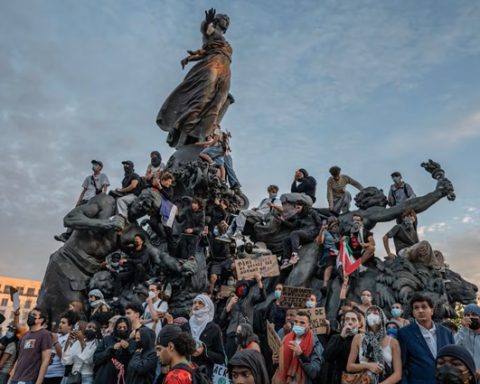
The most visible example of this shift has been the series of unofficial Khalistan referendums organized by Sikhs for Justice (SFJ). These events have attracted significant participation among sections of the Sikh diaspora in cities across North America, Europe, and Australia. Supporters view the referendums as peaceful exercises intended to demonstrate continued support for self-determination. They argue that democratic societies provide space for political expression and that Sikh communities have the right to articulate their political aspirations through nonviolent means.
The participation figures reported by organizers have drawn considerable attention. Whether one accepts the political objective behind these campaigns or not, the turnout itself has highlighted a reality that many analysts once dismissed: the Khalistan question has not disappeared. Rather, it has been transformed from a regional political issue into a transnational movement sustained by diaspora networks.
The Indian government rejects these referendums entirely. New Delhi views them as illegitimate exercises promoted by separatist organizations that challenge India’s sovereignty and territorial integrity. Indian officials consistently maintain that the Khalistan movement represents only a marginal viewpoint and does not reflect the position of the vast majority of Sikhs living in India. Successive governments have also expressed concerns about attempts to revive separatist sentiment through overseas political activism.
This disagreement reflects a broader tension that extends far beyond India. Around the world, democratic societies increasingly face difficult questions about how to balance freedom of expression with concerns about national sovereignty and security. Governments often view separatist campaigns through the lens of territorial integrity, while activists frame their demands in the language of rights, identity, and self-determination. These competing perspectives rarely meet on common ground.
As a result, the Sikh question has increasingly acquired an international dimension. Diplomatic disputes involving Sikh activism have periodically surfaced in relations between India and several Western democracies. Issues once viewed as purely domestic now intersect with debates about diaspora politics, transnational activism, free speech, and the role of historical memory in contemporary political movements.
The continued relevance of Operation Blue Star demonstrates that historical events often have consequences that extend far beyond their original context. Political movements rarely survive for decades solely because of organizational efforts. They endure because they remain connected to powerful narratives, unresolved grievances, and collective memories that are passed from one generation to the next.
Supporters of Sikh self-determination frequently draw comparisons with historical movements in places such as East Timor and South Sudan. Critics reject those comparisons, arguing that the circumstances are fundamentally different. Whatever position one takes, the comparison itself reveals how advocates increasingly frame their cause within the broader international language of self-determination rather than the rhetoric of armed struggle that dominated earlier decades.
Forty-two years after Operation Blue Star, the central question is no longer whether the operation achieved its immediate military objectives. It undoubtedly altered the security landscape of its time. The more significant question is whether the deeper political and psychological consequences of 1984 were ever fully addressed.
The persistence of the debate suggests that many people believe they were not.
A generation that never witnessed Operation Blue Star firsthand continues to organize conferences, attend commemorations, participate in political campaigns, and debate its legacy across continents. That reality alone demonstrates that the events of June 1984 have not been confined to history. What began as a crisis in Punjab has become a global Sikh question one that continues to shape political discourse, identity, and activism more than four decades later.
Whether the future brings reconciliation, renewed dialogue, or continued disagreement, one fact remains undeniable: Operation Blue Star succeeded in changing the course of Punjab’s history, but it did not end the debate over its meaning. Forty-two years later, that debate is still unfolding not only in Punjab, but in cities and communities around the world.