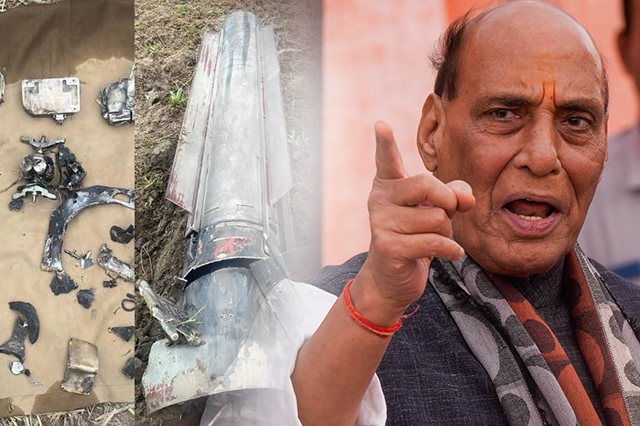
Tensions between nuclear-armed neighbours India and Pakistan have sharply escalated following India’s launch of a massive counter-terror operation, dubbed Operation Sindoor, targeting alleged terrorist hideouts in Pakistan and Pakistan-occupied Kashmir (PoK). Indian Defence Minister Rajnath Singh confirmed that over 100 terrorists have been killed so far, with the operation still ongoing.
The Indian government convened an all-party meeting Thursday to brief political leaders on the situation. Defence Minister Singh stated that while exact figures are difficult to verify due to the continuing nature of the strikes, the intent is to neutralise cross-border terror infrastructure.
“Operation Sindoor is still underway. Technical details are classified, but I can assure the country that the armed forces are acting with precision and restraint,” Parliamentary Affairs Minister Kiren Rijiju said following the meeting. He also urged the public not to fall for misinformation or “fake news” emerging from across the border.
Pakistan Responds with Force
In response, Pakistan has claimed significant military gains. The country’s Inter-Services Public Relations (ISPR) said that Pakistani forces had intercepted and destroyed 25 Israeli-made Harop drones deployed by India over multiple Pakistani cities including Lahore, Rawalpindi, Karachi, and Mianwali. The drones were downed using a combination of electronic and kinetic countermeasures.
Information Minister Ataullah Tarar described the downed drones as “war trophies” and claimed that 40 to 50 Indian soldiers were killed in Pakistani retaliatory strikes across the Line of Control (LoC). “This is a befitting response,” he declared during a speech in Pakistan’s National Assembly.
Mutual Escalation Across the LoC
The latest exchange follows a series of air and missile attacks between the two countries. On May 7 and 8, India reportedly thwarted Pakistani attempts to strike military targets in Srinagar, Amritsar, and Chandigarh using loitering munitions and other airborne assets. The Indian Air Force responded by deploying its advanced S-400 Sudarshan Chakra air defence systems, successfully neutralising the threats.
According to Indian defence sources, Indian forces retaliated by targeting Pakistani air defence units, including systems near Lahore and Rawalpindi. The Indian Ministry of Defence confirmed that at least one air defence site in Lahore was “neutralised.”
Meanwhile, Pakistan’s DG ISPR, Lt Gen Ahmed Sharif Chaudhry, accused India of “reckless military adventurism” and claimed five Indian fighter jets were also downed earlier this week. He added that drone incursions on Pakistani territory were a “desperate and panicked response.”
Civilian and Economic Fallout
Both nations reported civilian casualties and injuries from drone and missile strikes. In Pakistan, one civilian was killed in Sindh, and four military personnel were injured. India has not yet released casualty figures from Pakistani strikes.
The economic impact of the conflict is also being felt. The Indian rupee plunged to its lowest level in more than two years, closing down 1% at 85.71 against the US dollar. Benchmark equity indices in India also fell, and bond yields climbed amid investor unease.
Amid the escalating conflict, diplomatic efforts are reportedly underway behind the scenes. National Security Advisers from both countries – Lt Gen Asim Malik of Pakistan and India’s Ajit Doval – have established contact in an attempt to de-escalate tensions.
The talks are believed to be facilitated by regional and international actors. U.S. Secretary of State and NSA Marco Rubio reportedly spoke with both NSAs following the Indian missile strikes.