


A new report by Oxfam International has reignited the debate over reparations for India, revealing staggering figures that suggest Britain drained an estimated $64.82 trillion from the country between 1765 and 1900. The findings were published just ahead of the World Economic Forum in Davos, Switzerland, where global economic inequalities have been a focal point of discussion.
The report, titled Takers Not Makers: The Unjust Poverty and Unearned Wealth of Colonialism, highlights the economic impact of British rule in India, asserting that more than half of the wealth extracted during this period ended up in the hands of the wealthiest 10% of the population in Britain. Oxfam’s analysis noted that this sum could carpet the entire surface area of London with £50 notes nearly four times over.
At the heart of the report’s findings is the dramatic shift in India’s economic landscape under British colonialism. Once a global industrial powerhouse accounting for 25% of global industrial output in 1750, India’s contribution plummeted to just 2% by 1900. The report attributes this decline to British policies that stifled Indian industries, particularly the textile sector, through protectionist measures aimed at benefiting British manufacturers.
The eye-popping $64.82 trillion figure, which Oxfam claims is an updated assessment of a 2021 analysis, was initially calculated by Indian Marxist economists Prabhat and Utsa Patnaik. Their original estimate in 2018 pegged the sum at $45 trillion, using slightly different time periods and methodologies.
Despite the claims made in the report, not all experts are convinced. Tirthankar Roy, a professor of economic history at the London School of Economics, has criticized the findings, suggesting that the outflow of money from India to Britain is often exaggerated by activists. Roy asserts that the period of significant wealth transfer occurred before India was fully colonized and argues that the “methodology” used by such reports is flawed.
The report, however, emphasizes the long-lasting effects of colonialism, claiming that the economic disparity between the Global South and North, as well as the rise of today’s billionaires, can be traced back to these colonial wealth transfers. Oxfam calls for the reversal of these inequities, advocating for reparations to address the systemic injustices that continue to fuel global poverty.
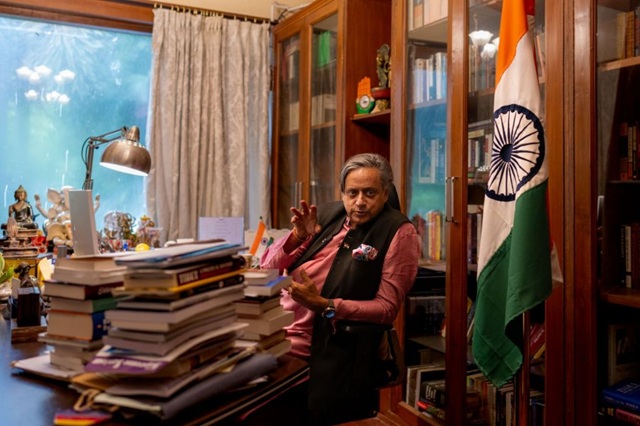
In India, the idea of reparations is not new. Prominent figures such as Congress Party politician Shashi Tharoor have long advocated for compensation, framing it as a matter of justice. Tharoor’s 2016 book An Era of Darkness strongly argued that Britain’s prosperity was built on the exploitation of India, and called for both an apology and reparations for the colonial period.
While the topic has generated intellectual debate, it remains controversial in India. Public opinion on reparations remains mixed, with many questioning the practicality and relevance of such claims in modern times. Some, like Ramesh Varma, an entrepreneur, view the issue as outdated, while others, like political commentator Parsa Venkateshwar Rao Jr., suggest that historical complexities make the matter too difficult to resolve meaningfully.
The call for reparations has also found some public support in recent high-profile moments. For instance, at a Coldplay concert in Mumbai, lead singer Chris Martin expressed gratitude for India’s warm reception, even acknowledging the wrongs of Britain’s colonial past, saying, “Thank you for forgiving us for all of the bad things that Great Britain has done.”
However, some question whether such symbolic gestures hold any real substance, with one witty social media response urging the band to “offer a free concert next time as reparations.”









