
As tensions involving Iran, Israel and the United States continue to reshape the Middle East, Pakistan is quietly positioning itself as one of the few countries capable of maintaining communication across rival geopolitical camps. Islamabad’s recent diplomatic activism reflects more than temporary crisis management. It signals a broader attempt to reposition Pakistan from a security-focused regional actor into a more consequential diplomatic stakeholder in an increasingly fragmented international order.
The current regional environment has created a widening diplomatic vacuum. Trust between rival blocs has deteriorated, traditional mediation channels have weakened, and many regional powers remain constrained by rigid alliance politics. In this environment, Pakistan has emerged as a relatively flexible actor capable of maintaining working relations simultaneously with Tehran, Washington, Beijing and the Gulf monarchies.
Pakistan’s geopolitical value has historically rested less on economic influence and more on strategic positioning. Islamabad balanced security cooperation with the United States during both the Cold War and post-9/11 periods while simultaneously deepening military and economic ties with China. It maintained functional relations with Iran despite periods of intense Gulf-Iran rivalry and preserved longstanding defence partnerships with Saudi Arabia and other Gulf states.
Islamabad is now attempting to convert that strategic geography into diplomatic leverage.
Recent mediation efforts between Washington and Tehran reflect Pakistan’s attempt to project itself internationally as a stabilizing regional actor rather than merely a state associated with security crises. Pakistani officials have consistently emphasized restraint, dialogue and negotiated settlement while avoiding the ideological rhetoric that increasingly dominates regional politics.
For Pakistan, this diplomacy is driven by both necessity and strategic calculation.
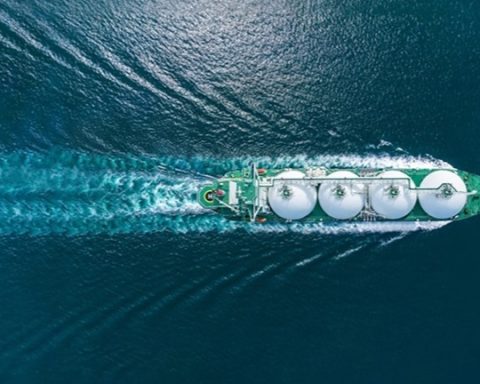
A wider Middle Eastern conflict would directly threaten Pakistan’s economic stability and energy security, particularly given its dependence on Gulf energy routes passing through the Strait of Hormuz. Regional instability would also intensify domestic economic pressures at a time when Islamabad continues to face structural financial challenges. At the same time, Pakistan’s leadership understands that an increasingly multipolar environment creates opportunities for middle powers capable of maintaining communication across competing geopolitical blocs.
The country’s military leadership has also played a visible role in this evolving diplomatic posture. High-level engagements with Tehran, Gulf capitals and Washington indicate a deliberate effort to present Pakistan not simply as a participant in regional crises but as a state capable of facilitating dialogue during periods of escalation. As the only nuclear-armed Muslim-majority country with institutional military ties extending across both Western and Middle Eastern security structures, Pakistan occupies a strategic position few regional actors can easily replicate.
Why Pakistan’s Palestine Position Still Matters
Pakistan’s expanding diplomatic relevance is closely connected to the consistency of its position on Palestine. Support for Palestinian self-determination has remained one of the few enduring constants in Pakistan’s foreign policy despite political transitions at home and shifting geopolitical alignments abroad.
Islamabad has consistently supported the establishment of an independent Palestinian state based on the pre-1967 borders, with Al-Quds Al-Sharif as its capital. Unlike several regional actors that recalibrated their positions under strategic or economic pressure, Pakistan has continued to frame the Palestine issue through the language of international law, sovereignty and United Nations resolutions.
That consistency has allowed Pakistan to retain a degree of political credibility within parts of the Muslim world.
Pakistan has repeatedly opposed illegal occupation, settlement expansion and violations of international humanitarian law while supporting Palestinian rights in international forums, including the United Nations and the Organization of Islamic Cooperation. Although Pakistan has never possessed the level of regional influence enjoyed by larger Middle Eastern powers, its position on Palestine has helped preserve diplomatic space across competing political camps.
More importantly, Pakistan’s approach reflects a broader strategic instinct that has shaped its foreign policy for decades: maintaining diplomatic flexibility without abandoning principled positions.
This balance carries growing significance in today’s Middle East.
At a time when regional politics is becoming increasingly polarized, several Muslim-majority states continue searching for diplomatic actors capable of advocating de-escalation while maintaining credibility on issues such as Palestine. Pakistan’s relatively balanced posture has strengthened perceptions among some regional actors that Islamabad can function as a credible intermediary rather than a partisan actor fully aligned with one side.
From Security Burden to Diplomatic Stakeholder
For much of the post-9/11 period, Pakistan was viewed internationally through the lens of extremism, instability and economic fragility. Its foreign policy often appeared reactive and crisis-driven rather than strategically influential. The geopolitical shifts following the US withdrawal from Afghanistan, however, created space for Islamabad to gradually redefine its regional role.
Pakistan increasingly seeks to project itself not as a geopolitical liability but as a state capable of contributing to regional stability through calibrated diplomacy and strategic restraint. Its evolving role in Middle Eastern diplomacy reflects a broader attempt to reshape international perceptions of Pakistan’s strategic relevance.
That diplomatic flexibility also gives Pakistan greater political space to advocate for Palestinian rights while maintaining engagement with competing global powers. Unlike states constrained by rigid alliance structures or normalization politics, Pakistan retains the ability to frame the Palestine issue through the language of international legality and collective security without completely isolating itself diplomatically.
None of this guarantees long-term strategic success. Pakistan continues to face serious economic vulnerabilities, domestic political polarization and governance challenges that limit its ability to convert diplomatic visibility into sustained geopolitical influence. Mediation efforts in the Middle East also remain fragile given the scale of regional rivalries and external intervention.
Even so, Pakistan’s growing diplomatic activism reflects a broader reality of the emerging international order.
In an increasingly polarized geopolitical environment, states capable of maintaining communication across rival power centres are becoming comparatively rare. Pakistan appears determined to use that diplomatic space to reposition itself from a crisis-prone security state into a more consequential regional stakeholder.
Whether Islamabad can sustain that balance may ultimately shape not only its future standing in the Middle East, but also its ability to emerge as a more influential political voice within the wider Muslim world.