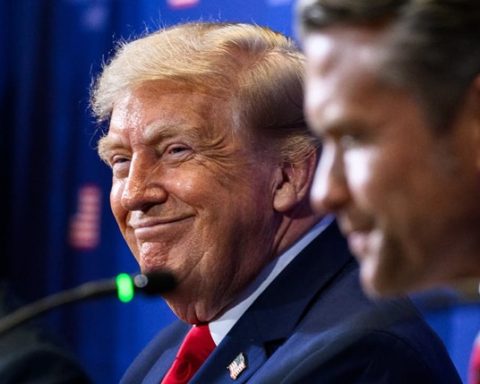
The U.S. Department of Defense has barred press photographers from attending recent Pentagon briefings after images of Defense Secretary Pete Hegseth taken during a rare appearance at the podium were judged by his staff to be “unflattering,” according to people familiar with the decision. The move has intensified concerns about press access and transparency during a critical period marked by the ongoing U.S.-Israeli military conflict with Iran.
The decision came after a March 2 Pentagon briefing held just days after a joint military strike on Iran on Feb. 28 that killed Ayatollah Ali Khamenei. The briefing was notable because it marked the first time since June 26 that Hegseth had appeared behind the Pentagon briefing room podium. Photographers from major international news agencies including the Associated Press, Reuters and Getty Images were present and captured images of Hegseth and Gen. Dan Caine, chairman of the Joint Chiefs of Staff.
According to two individuals familiar with internal discussions who spoke on condition of anonymity due to fears of retaliation, members of Hegseth’s staff expressed dissatisfaction with the way the defense secretary appeared in the photographs once they were published and distributed worldwide through licensing agreements used by news organizations. In response, aides decided to bar photographers from the next two Pentagon briefings held on March 4 and March 10.
Since that decision, only Defense Department staff photographers have been allowed to document the briefings. Independent photographers who arrived expecting access were turned away, according to people familiar with the situation. The change has effectively centralized control of official images coming out of the Pentagon during a period of heightened military activity.
In a statement addressing the restrictions, Pentagon press secretary Kingsley Wilson said the decision was related to managing space in the briefing room. Wilson stated that the department would allow only one representative per uncredentialed news outlet, excluding the pool, and noted that official photographs from the briefings are released online for public and media use. “If that hurts the business model for certain news outlets, then they should consider applying for a Pentagon press credential,” Wilson said.
The controversy comes amid a broader and increasingly tense relationship between Hegseth and the press since he was confirmed as defense secretary at the start of President Donald Trump’s second term. Hegseth, a former Fox News host, has repeatedly clashed with journalists over access and reporting practices.
Tensions escalated sharply in October when hundreds of credentialed Pentagon reporters turned in their credentials and dozens walked out of the building after refusing to sign a policy that prohibited journalists from seeking information not explicitly authorized by the government. The protest included reporters from numerous major news organizations, among them the Washington Post.
The dispute also triggered legal action. The New York Times and one of its reporters, Julian E. Barnes, filed a lawsuit against the government alleging that the policy violated constitutional protections for press freedom and due process. The case remains ongoing, with a federal judge in Washington currently considering motions for summary judgment following recent oral arguments.
After the mass departure of traditional Pentagon reporters, a new group of largely right-leaning media outlets filled the space. These outlets later attended a December meet-and-greet with Hegseth and participated in a press briefing with Wilson. Despite those interactions, Hegseth had not conducted an on-camera briefing with the new press corps until the March 2 event that followed the strikes in Iran.
According to reporting by the Washington Post, the March 2 briefing was initially intended only for newly credentialed media. However, after the Defense Department requested television camera coverage from major broadcast networks, journalists who had previously surrendered their badges negotiated an arrangement that allowed some of them to attend the briefing.
It remains unclear whether a single photograph or the overall set of images from the event prompted dissatisfaction within Hegseth’s team. Nevertheless, the decision to exclude photographers has fueled renewed debate about press freedom and government control of visual coverage during a time of escalating international conflict and intense public scrutiny.