


Editorial
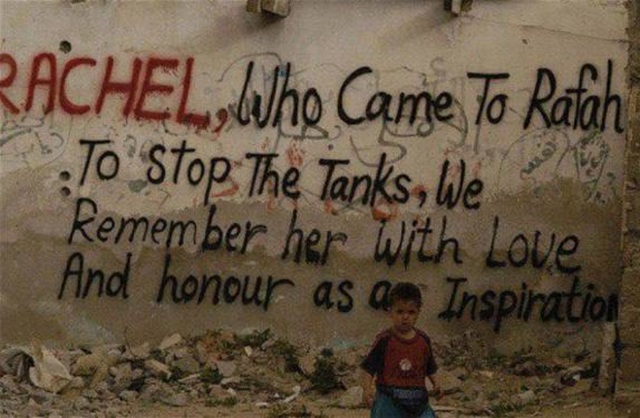
Twenty-two years ago, on 16 March 2003, Rachel Corrie, an unarmed 23-year-old American activist, stood before an Israeli military bulldozer in Rafah, Gaza, in a desperate act of resistance. She was crushed to death—deliberately, witnesses insist—by a soldier who saw her, who heard her, and who killed her nonetheless. A human body against a steel leviathan; flesh and bone against an armoured behemoth. And in the years since, the world has simply turned away.
Corrie’s death is not an aberration. It is a pattern. A year later, in April 2004, Thomas Hurndall, a 22-year-old British activist, was shot in the head by an Israeli sniper in Gaza. He had been trying to rescue Palestinian children from gunfire. Unlike in Corrie’s case, there was an admission of guilt—his killer, a sergeant in the IDF, was convicted of manslaughter. But the machine that enabled the crime rumbles on. It has not stopped for Hurndall. It has not stopped for Corrie. It has not stopped for the countless others buried under its treads.
Corrie’s parents, Cindy and Craig, have spent two decades waging a legal battle against Israel in search of accountability. They have filed lawsuits in both American and Israeli courts, seeking recognition, justice, even a sliver of official remorse. They have received nothing. Their daughter was killed in broad daylight by the military of a nation that boasts of its democracy, yet no one has been punished. No compensation has been paid. No judgment has condemned her death as unlawful. The case was dismissed, her life reduced to an unfortunate accident, as if she had simply tripped and fallen under the blade of the bulldozer that erased her from existence.
Where does justice go to die? In the courts of the powerful. In the closed rooms where “national security” trumps human rights. In the silence of allies who, despite their professed commitment to democracy and freedom, continue to fund, arm, and protect those who destroy both.

It is easy, in retrospect, to speak of Rachel Corrie as a martyr. To sanctify her. To cast her as an angel of peace whose sacrifice should inspire. But sanctification is just another way of sanitising violence. The truth is much uglier. Corrie was a young woman, flesh and blood, full of conviction and naivety, who believed the world might care if it saw what she saw. She wrote of the fear she felt in Gaza, the horror of watching families torn from their homes, the unimaginable cruelty of seeing houses reduced to rubble with people still inside. She wrote of sleepless nights listening to the roar of tanks, of the overwhelming stench of death. She was not a soldier. She carried no weapon. Her only defence was the bright orange jacket she wore, an international symbol of visibility.
But visibility is meaningless when the world refuses to see.
In the years since Corrie’s death, Israel has intensified its military operations in Gaza and the West Bank with an impunity that beggars belief. Human Rights Watch and Amnesty International have both accused Israel of maintaining an apartheid regime, of systematically brutalising and dispossessing the Palestinian people. The United Nations has issued resolutions condemning settlement expansion, extrajudicial killings, and collective punishment. Yet nothing changes. If anything, the occupation has become more entrenched, the violence more ferocious, the disregard for international law more brazen. And through it all, Western governments—the same ones that claim to champion human rights—continue to bankroll Israel’s war machine.
The United States gives Israel over $3.8 billion in military aid annually, no conditions attached. The United Kingdom sells Israel weapons, despite clear evidence that they are used to violate international law. The European Union, though occasionally issuing mealy-mouthed rebukes, ensures that Israel remains a favoured trade partner. This is not diplomacy. This is complicity.
The chilling reality is that the lives of activists like Corrie or Hurndall—or of Palestinians themselves—do not matter in the grand calculus of geopolitics. They are expendable, collateral damage in a conflict where only one side’s narrative is allowed to dominate. When Israeli journalist Gideon Levy dared to call Corrie’s death a murder, he was vilified. When human rights organisations document Israeli war crimes, they are smeared as biased. When Palestinians demand dignity, they are met with bullets, bombs, and bulldozers.
Corrie’s story has been rewritten by those who seek to absolve her killers. They paint her as reckless, as naive, as a radical who should have known better. They claim she placed herself in harm’s way, as if that justifies her execution. It is the same tactic used against every victim of state violence: shift the blame, vilify the dead, obscure the crime.
But the crime remains.
And so does the question: what does it mean when an unarmed woman can be crushed under a military bulldozer and the world moves on as if nothing happened? What does it mean when courts refuse to recognise her death as wrongful, when governments refuse to condemn it, when her parents are left fighting an unwinnable war against an unassailable machine?
It means that we live in a world where power is the only currency that matters. Where justice is an illusion sold to those too powerless to demand it. Where “democracy” and “human rights” are slogans, not principles.
Corrie once wrote, “I am disoriented. I am really scared. This has to stop. I think it is a good idea for us all to drop everything and devote our lives to making this stop.” But it did not stop. It continues. It is happening now, in Gaza, in the West Bank, in Sheikh Jarrah, in Jenin. Homes are being demolished. Families are being shattered. The soil is soaked with the blood of the oppressed, and the bulldozers are still moving.
History will remember Rachel Corrie. Not as a saint, not as a martyr, but as a woman who saw injustice and stood against it. It will remember that when she raised her voice, it was drowned out by the roar of a machine built to silence dissent.
And it will remember that we—those who watched, those who knew, those who had the power to act but did nothing—are just as guilty as the hand that crushed her.




The international community should move in, force Israel to withdraw their troops and their rightwing Jewish settlers from the West Bank, Gaza Strip and East Jerusalem, and implement the 2-state solution.
Although Rachel and her fellow ISM members had good intentions, there were some tactical mistakes on the part of the International Solidarity Movement leadership, which, in addition to the Israeli operated bulldozer purpose;y rolling over Ms. Corrie and killing her, made some tactical mistakes on their part, also. Rachel’s friends should’ve stood in front of the Samirs’ house with her, instead of allowing her to stand singley between the bulldozer and the Samirs’ house, especially since a couple of ISM members had already had some narrow escapes with the Israeli military operated bulldozers and had to be extricated at the last possible moment by fellow ISM members. Also, the ISM movement members received 2-3 days of very rudimentary and basic training before going into the Gaza Strip, which is not nearly enough training before going into such difficult situations.