Seventy-five years after the adoption of the 1951 Convention Relating to the Status of Refugees, the international system designed to protect people fleeing war, persecution and violence is facing one of the greatest tests in its history. Created in the aftermath of the Second World War to ensure that no one would be returned to a country where they faced grave danger, the Refugee Convention remains the legal foundation of global refugee protection. Yet today it is under growing strain from political pressure, reduced humanitarian funding, increasingly restrictive asylum policies and a record number of displaced people worldwide.
An analysis published by El País explores how the Convention’s anniversary comes at a moment when its principles are being challenged even as the need for international protection has never been greater.
The human reality behind the Convention is illustrated through the experiences of two refugee athletes whose lives were transformed by the protection it offers. In 2015, Syrian sisters Yusra and Sara Mardini fled the war in Damascus in search of safety. After travelling through Lebanon and Turkey, they boarded an overcrowded inflatable boat bound for Greece. Midway across the Aegean Sea, the engine failed, leaving around 20 people stranded.
Yusra, Sara and two other passengers who could swim entered the water and spent more than three hours pushing and guiding the vessel towards the Greek coast, preventing it from sinking. Reflecting on the journey years later, Yusra Mardini says every minute felt like an eternity. She rejects suggestions that refugees willingly take such risks, arguing that no one chooses such dangerous journeys unless the alternatives are even more dangerous.
Reaching Greece marked only the beginning of her journey. The sisters eventually settled in Germany, where they were recognised as refugees. Yusra later returned to competitive swimming, representing the Refugee Olympic Team and becoming a Goodwill Ambassador for the United Nations High Commissioner for Refugees (UNHCR).
Another story follows Wenyen Gabriel, who was born in Khartoum to parents who had themselves fled conflict in southern Sudan. His family escaped once again when he was still an infant, relocating to Cairo before eventually being resettled as refugees in the United States when he was two years old. Supported by a basketball scholarship, Gabriel reached the NBA and represented South Sudan at the Paris Olympic Games in 2024. Like Mardini, he now serves as a UNHCR Goodwill Ambassador, using his own experience to highlight the importance of refugee protection.
Although their journeys began in different conflicts and on different continents, both ambassadors demonstrate how international protection enabled their families to rebuild their lives.
That promise originated on 28 July 1951, when the Refugee Convention established a simple but far-reaching principle: anyone fleeing violence, conflict or persecution has the right to seek safety. Seventy-five years later, however, that commitment exists within a vastly different global environment. According to figures cited in the analysis, there were 117.8 million forcibly displaced people worldwide in 2025, reflecting a world experiencing a record number of armed conflicts.
Mardini argues that while the international protection system has saved millions of lives, it is now under enormous pressure. Refugees continue to face dangerous journeys, lengthy asylum procedures, limited opportunities and prolonged uncertainty before finding stability.
At the centre of the Convention lies the principle of non-refoulement, contained in Article 33. It prohibits states from returning anyone to a country where their life or freedom would be at risk. The principle has become the cornerstone of international refugee law, yet it is increasingly being tested.
Elizabeth Tan, Director of International Protection and Solutions at UNHCR, warns of growing concern over practices that restrict access to asylum, including immediate pushbacks at borders, denial of access to territory and forced returns. Such measures have become more common amid increasingly hostile political rhetoric and the rise of anti-immigration movements in several countries.
The pressure on host countries has also contributed to significant numbers of refugees returning to countries that remain unstable. In 2025 alone, 2.9 million Afghans returned to Afghanistan, including 1.9 million recognised refugees, largely from Iran and Pakistan following ultimatums, the withdrawal of residence permits and threats of deportation.
Virginia Álvarez, head of research at Amnesty International Spain, argues that the principal asylum crisis exists not in countries hosting the largest refugee populations but in the Global North, where comparatively fewer asylum seekers arrive. She points to the European Union’s newly implemented Migration and Asylum Pact, which introduces stricter border controls and accelerated deportation procedures for unsuccessful applicants while also advancing plans to establish deportation centres outside Europe.
Álvarez contends that such externalisation policies risk undermining the principle of non-refoulement by transferring asylum responsibilities to countries where there may be insufficient guarantees that refugees’ human rights will be protected.
UNHCR spokesperson Eujin Byun acknowledges the right of states to manage their borders but emphasises that governments must also honour the commitments they accepted under the Refugee Convention by ensuring that individuals whose lives would be endangered upon return are not sent back.
Byun also highlights another longstanding imbalance within the global refugee system. According to UNHCR, approximately 65 per cent of refugees remain in neighbouring countries, placing a disproportionate burden on states that often face considerable economic and social challenges themselves. Mardini argues that these frontline countries require far stronger and more predictable international support.
Financial pressures have become another major concern. Humanitarian funding cuts accelerated during 2025 after years of steadily declining resources for protracted displacement crises, particularly across Africa. By the end of June, UNHCR had received only 31 per cent of the funding required for its global operations.
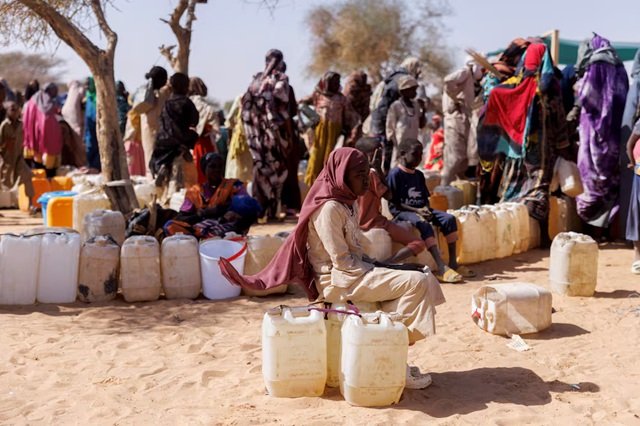
The consequences have been severe. Byun says reduced funding has forced the agency to scale back healthcare, shelter, education and even basic food assistance. In eastern Chad, around 8,500 refugee families remain without shelter, while approximately 30,000 people continue to wait near the border because insufficient resources are available to relocate them to safer locations. In Sudan, where the world’s largest displacement crisis is unfolding, humanitarian workers continue to encounter severely malnourished children and pregnant women in regions such as Darfur and El Obeid.
The analysis also examines the impact of misinformation on public attitudes. Although an Ipsos survey covering 29 countries found that 66 per cent of respondents support the right of people fleeing war or persecution to seek refuge, 61 per cent questioned whether all asylum applicants genuinely require international protection rather than seeking economic opportunities or social benefits.
Álvarez argues that years of political rhetoric and media coverage portraying migration primarily as a security threat have contributed to this perception by creating an image of migration as an overwhelming and dangerous phenomenon. Byun observes that while many people continue to support refugee protection in principle, confidence in the functioning of asylum systems has weakened. Yet, she says, conversations with refugees consistently reveal that most simply want to return home when it is safe to do so rather than risk dangerous journeys across routes such as the Atlantic to Spain or the Mediterranean to Italy and Greece.
Gabriel similarly rejects the perception that refugees represent a burden. Instead, he describes refugee protection as an investment in the future, recalling how his parents worked multiple jobs after arriving in the United States rather than depending solely on assistance.
Despite mounting challenges, those interviewed for the analysis agree that the Refugee Convention remains an indispensable pillar of international law. Álvarez believes the agreement reached by the international community in 1951 to protect displaced people remains a powerful example of collective responsibility that should continue to guide governments today.
For Mardini, the task now is not to abandon the system but to improve it. She argues that asylum procedures must become faster, fairer and more focused on long-term solutions, giving refugees not only emergency assistance but also access to education, employment and genuine opportunities to rebuild their lives. Above all, she urges policymakers to remember that every political decision affects real people waiting at borders or living in refugee camps, whose futures depend upon the continued protection promised by the Convention seventy-five years ago.