
Spy the Lie is an engrossing and meticulously structured guide to detecting deception, authored by former CIA officers who spent their careers refining the craft of uncovering lies. The book is deeply practical, offering readers techniques that range from assessing verbal inconsistencies to evaluating behavioural cues. The authors argue that deception detection is not about isolated body language signs, but about spotting patterns. As they write, “No single behaviour confirms deception, but when multiple signs appear in conjunction, suspicion is warranted” (p.45).
They introduce the “cluster rule”, which dictates that multiple indicators must be present to confirm deceit. This approach shifts the focus from unreliable myths—such as avoiding eye contact—to a more systematic observation of discrepancies. A crucial point made throughout the book is the importance of establishing a subject’s baseline behaviour. The authors explain, “Context matters as much as content” (p.68), underscoring how deviations from normal communication styles are more telling than isolated gestures.
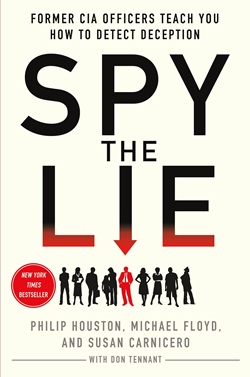
The book draws from real-life CIA cases, illustrating their principles in action. One particularly intriguing example involves a high-profile intelligence interview where an operative’s deceptive responses were betrayed by his overabundance of unnecessary detail. The authors state, “A deceptive person often provides an overabundance of detail as a way of appearing truthful” (p.112).
Unlike many books on deception detection that rely on vague generalities, Spy the Lie presents a structured and methodical approach, making it an invaluable resource for professionals in law enforcement, intelligence, business negotiations, and even personal relationships. The authors emphasise ethical considerations, warning against “weaponising deception detection” (p.173). They stress that these techniques should be used responsibly, reinforcing that the goal is not to trap people but to uncover the truth in high-stakes scenarios.
The book also challenges common misconceptions about polygraph tests, explaining that their reliability depends largely on the skill of the examiner rather than the technology itself. As the authors write, “The polygraph is only as effective as the examiner conducting it” (p.87).
What makes Spy the Lie particularly compelling is its accessibility. The writing is clear, engaging, and peppered with anecdotes that bring the subject to life. The authors distill decades of experience into digestible lessons, ensuring that even readers with no background in intelligence work can grasp the core principles. They conclude with a discussion on how deception detection applies to everyday situations, whether interviewing a job candidate, negotiating a contract, or even assessing a politician’s statements.
In the final chapters, they delve into the psychological aspects of deception, exploring why people lie and how different cultures perceive dishonesty. They note, “Deception is not always malicious; sometimes it’s a survival mechanism” (p.198). This nuanced perspective prevents the book from becoming overly cynical, reinforcing that understanding deception is as much about empathy as it is about interrogation.
Ultimately, Spy the Lie is an indispensable guide for anyone looking to sharpen their ability to detect dishonesty. Its well-researched methodology, combined with engaging storytelling, makes it one of the most practical books on the subject. Whether you are a professional interrogator or simply someone who wants to navigate truth more effectively in daily life, this book provides a robust toolkit for discerning deception.