A second mass grave site linked to the Jalisco New Generation Cartel (CJNG) has been uncovered in western Mexico, again with the help of relatives of the country’s more than 120,000 missing persons. The gruesome discovery is intensifying pressure on President Claudia Sheinbaum to confront Mexico’s decades-long crisis of enforced disappearances and impunity.
As reported by the Financial Times, mothers of the missing—led by activist Carmen Sepúlveda—learned that authorities had uncovered the remains of 42 people in Colima state, in what is now being described as one of the largest mass graves revealed in Mexico in recent years. Yet, in a revelation that has fueled further outrage, it was found that prosecutors had completed their forensic work months ago—despite refusing for over a year to disclose any information to the families searching for their loved ones.
This latest site, discovered in the remote hills of Colima, spans over 40 hectares and is believed to have been used as a “death camp” by the CJNG. Authorities found bodies still smoldering, with evidence suggesting the use of chemicals to incinerate human remains. The area, according to a Mexican security official interviewed by the Financial Times, remains heavily patrolled by cartel members in armored vehicles.
Sepúlveda, whose son Carlos Donaldo Campos disappeared in 2018 at age 23, now leads the Network of Missing People in Colima. She described the moment she and other mothers heard about the site: “We said, ‘That’s where all our children are.’”
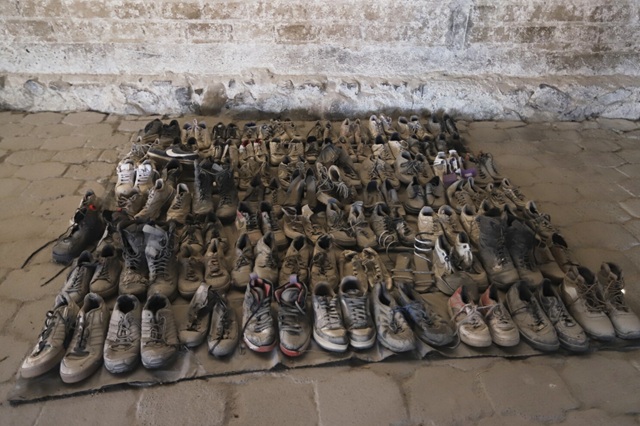
The unearthing of the Colima camp follows a similarly horrifying discovery in neighboring Jalisco state just two months earlier, where activists found bone fragments and more than 1,000 pieces of clothing. Images from that site were broadcast around the world, forcing federal authorities to finally acknowledge what activists had long warned: these were not training camps, but centers of torture, death, and burial.
Both sites are linked to the CJNG, one of Mexico’s most violent and powerful drug cartels. The land where the Colima site sits was reportedly known to authorities since at least 2018, when a high-profile trafficker connected to the CJNG was arrested there. Despite the arrest, the site continued to be used by criminal groups—another symbol, critics say, of the Mexican state’s paralysis in dismantling cartel infrastructure.
Jacobo Dayán, a researcher at the Ibero-American University in Mexico City, told the Financial Times, “What’s very discouraging is that the Mexican state identifies this place, and even makes arrests, and the place keeps operating. They never dismantled the network.”
Families like Sepúlveda’s and that of fellow activist Blanca Estela Ramírez, whose brother Juan Manuel disappeared in 2018, have become the driving force behind discovery and accountability. Equipped with little more than determination and shovels, these mothers have transformed themselves into investigative brigades—scouring the countryside for signs of the disappeared. In the absence of effective state action, they have become the face of resistance and a stark indictment of government failure.
In April, after meeting with activists, the federal government finally began releasing some information about the Colima site. So far, only three of the 42 victims have been identified. Over 40 percent of the remains were burned; others were buried in unmarked pits. Mexican forensic units, overwhelmed by a backlog of tens of thousands of unidentified bodies, are unlikely to provide swift answers.
President Sheinbaum has responded by launching a new plan to address the crisis of disappearances, though critics argue it may be too little, too late. Colima, despite being the smallest Mexican state by population, now has the country’s highest homicide rate and is becoming a focal point in the ongoing tragedy.
“The boys don’t go of their own accord,” said Ramírez. “They go under false pretenses.”
For Sepúlveda, who spent Easter watching authorities exhume mutilated bodies, the search continues. “We’ve asked ourselves a lot, when we’re in the graves—we all ask why,” she said. “How can a person, a human being, do so much damage to another human?”
As families continue to uncover the truth on their own, the Mexican government faces mounting demands to confront the cartels—and its own complicity and neglect—in one of Latin America’s most persistent human rights crises.