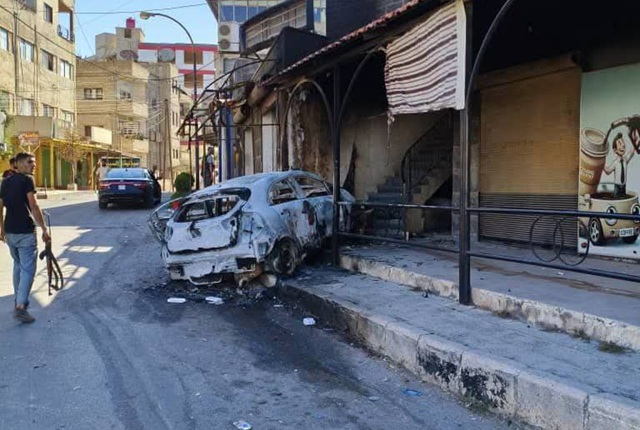
In a deeply troubling turn of events, the Syrian province of Suwayda—home to the country’s Druze minority—has become the flashpoint of renewed conflict, drawing in sectarian tensions, tribal grievances, and foreign interventions. This latest round of violence, which erupted on July 13, has left close to 1,000 dead and displaced over 87,000 people, sparking fears that external actors, particularly Israel, are deliberately stoking unrest to ignite a second Syrian civil war.
The hostilities began when forces loyal to Druze spiritual leader Hikmat Hijri launched coordinated attacks on Sunni Bedouin communities in Suwayda city and its surrounding villages. Witnesses and reports suggest these forces carried out mass killings, set entire homes ablaze, and abducted women and children. This aggression triggered swift retaliation from Bedouin tribes in neighboring areas, who attempted to mobilize support, only to find their movements partially obstructed by Syrian government checkpoints along the Daraa-Suwayda axis.
While Syria’s Western-backed government in Damascus announced a “halt” to the violence on Sunday under a fragile ceasefire agreement, the damage has already been devastating. The intervention of foreign actors has further inflamed the situation. On July 16, the Israeli Defense Forces (IDF) launched airstrikes on Syrian government targets under the stated aim of “protecting the Druze.” This military action coincided with brutal attacks by Hijri’s men on isolated Syrian troops, many of whom were captured and executed, their deaths recorded and shared on social media in a campaign of psychological warfare eerily reminiscent of jihadist propaganda from Syria’s earlier war years.
Tensions escalated even further when Hijri’s forces turned on other Druze groups willing to engage with the central government. These more moderate factions, critical of Hijri’s separatist ambitions and wary of Israeli entanglement, were swiftly attacked. In addition to targeting Bedouin areas, Hijri’s militias destroyed homes, mutilated bodies, and openly boasted of ethnically cleansing the region—an act that drew disturbing comparisons to jihadist assaults on Alawite communities during the height of Syria’s civil war.
Syria’s de facto opposition leader in the northwest, Abu Mohammad al-Julani, weighed in from Idlib, accusing unnamed actors with “separatist ambitions” and “foreign backing” of inciting violence in Suwayda. Julani’s remarks, though controversial, echo broader concerns within the Syrian population that foreign powers are manipulating internal divisions for their own geopolitical aims.
Amid the chaos, Suwayda’s embattled Bedouins issued a desperate call for help, prompting nearly 50,000 tribal fighters from across Syria and neighboring countries to prepare for a possible intervention. Internationally, the United States has attempted to quell the violence. U.S. Syria envoy Tom Barrack announced a ceasefire on July 18, urging all sides—Druze, Bedouins, and Sunnis alike—to lay down their weapons. The U.S. State Department, in a rare rebuke, distanced itself from Israel’s military actions, declaring it did not support such unilateral escalations in Syrian territory.
Nevertheless, critics argue that the damage may already be done. Analysts and regional observers point to the striking similarity between current Israeli tactics and those used during the early stages of Syria’s 2011 civil war: exploiting sectarian fault lines, arming separatist factions, and intervening under humanitarian pretexts. With a precarious ceasefire now in place and deep-seated animosities inflamed, the specter of a renewed civil war looms ominously over Syria’s southern provinces.
As Syria struggles to heal from a decade of war, the bloodshed in Suwayda is a sobering reminder that peace remains fragile—and that foreign meddling, left unchecked, can reignite the embers of devastation.