Editorial
Sri Lanka stands on the brink of catastrophe, torn between the seductive mirage of progress and the unforgiving abyss of political incompetence. Under the disastrous stewardship of President Anura Kumara Dissanayake, the nation’s future has become an indistinct blur, shrouded by diplomatic ineptitude, policy paralysis, and an unforgivable lack of foresight. While the government may boast of its supposed incorruptibility, the grim reality unfolding before us stands in stark contradiction to its self-righteous proclamations. The political order is disintegrating, fragment by fragment, crushed beneath the weight of reckless decisions, hollow rhetoric, and the sheer ignorance of those entrusted with guiding Sri Lanka through a treacherous geopolitical minefield. With every speech, every declaration from the president, despair deepens as Sri Lanka’s once-promising trajectory is methodically dismantled.
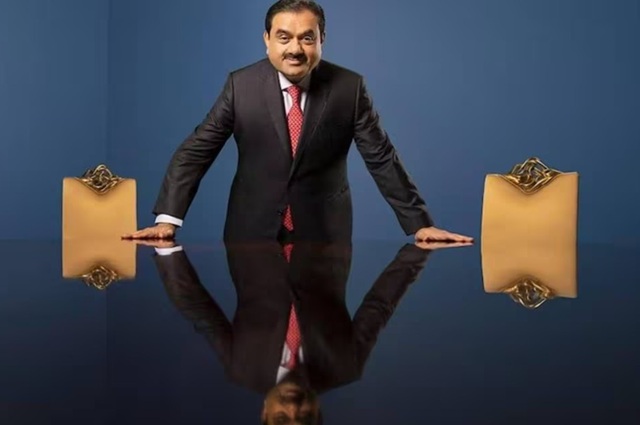
At the core of this disastrous narrative is the sinister spectacle of Adani, the Indian business conglomerate behemoth that has, yet again, ensnared Sri Lanka in its web of calculated deception and ruthless self-interest. The company’s withdrawal from the Mannar renewable energy project has sent shockwaves across the island. But this exit is no mere corporate decision; it is a symptom of a deeper, more malignant affliction embedded within Sri Lanka’s political apparatus. Adani’s retreat was not a routine business move—it was a strategic provocation, a test of Sri Lanka’s resilience. And the government, in a predictable display of weakness, has failed spectacularly.
Dissanayake’s administration appears either unable or unwilling to grasp the brutal geopolitical forces at play. Like a master puppeteer, Adani has manipulated Sri Lanka’s staggering incompetence, leaving the country floundering in a sea of squandered opportunities. This is no simple financial setback—it is a damning indictment of the nation’s inability to manage foreign relations and corporate dealings with even a shred of strategic acumen. Once again, Adani has exploited the government’s gullibility, its failure to anticipate the consequences of its actions. Sri Lanka, caught between India’s political muscle and its own decaying institutions, has exposed itself as nothing more than a hapless pawn in a global power struggle it barely comprehends.
Adani’s corporate playbook is an exercise in unbridled aggression. It thrives on political leverage, circumvents legal oversight, and exploits international markets to serve its own ends. In every deal, it inflates its significance, imposes dependency, and then withdraws the moment scrutiny intensifies—leaving the host nation to suffer the fallout. The pattern is as predictable as it is ruthless. And yet, Sri Lanka’s leadership has walked into the trap yet again. How can a government that claims to be untainted by the corruption of its predecessors have so tragically bungled its dealings with a corporate entity renowned for its calculated opportunism?
This is no isolated incident. Adani’s departure is part of a broader strategy of strategic retreat—a well-rehearsed cycle perfected over the years in various countries. And what follows is even more ominous: emboldened by the Indian government’s backing, Adani will now seek to force Sri Lanka into ruinous concessions, ensuring that whatever economic gains were once within reach will be systematically stripped away. This is precisely what transpired when trade unions sabotaged the far more constructive tripartite agreement between Japan, India, and Sri Lanka for a container terminal in Colombo. Adani seized upon this political chaos, securing an extremely lopsided agreement that granted it unfettered control—at Sri Lanka’s grave expense—to develop a brand-new terminal in the same port. The government should see how it has been hiring people and penetrating the Sri Lankan state structure by giving opportunities to relatives of certain government officers. This is how the game is played. And this is how our inept politicians continue to fall prey to the machinations of global power players. Decades after the Indo-Lanka Accord, Sri Lanka still cannot initiate a telecommunications project without India’s approval, nor can it assert its authority over Trincomalee without Indian consent. The stranglehold remains unbroken.
But what is even more staggering is the government’s pathetic response. Instead of countering Adani’s move with decisive strategy, Dissanayake’s administration has been reduced to grovelling—desperately pleading for the conglomerate’s return. Reports indicate that Tilvin Silva, General Secretary of the ruling party, has even sought intervention from Indian authorities to persuade Adani to reconsider. This is not leadership; this is servility of the most humiliating kind. It is a stark reminder of the brutal power imbalances that define Sri Lanka’s place in the world—a nation reduced to begging at the feet of a foreign corporate giant.
This feeble, reactionary governance is the hallmark of a regime entirely out of its depth. Sri Lanka is caught in a geopolitical tempest, crushed between India’s relentless influence and China’s economic stranglehold. Yet Dissanayake’s government has shown neither the intellect nor the dexterity to navigate these perilous waters. Instead, it has stumbled from crisis to crisis, each misstep further entrenching the nation’s descent into economic ruin. The tragic irony is that while Dissanayake’s government prides itself on being a break from the corrupt regimes of the past, it has perpetuated the very same patterns of dysfunction that have plagued Sri Lanka for generations. The corruption may be less overt, but the decay is no less devastating.
This is not the first time Sri Lanka’s leadership has failed to handle high-stakes international business with competence. For decades, the country has been little more than a playground for foreign interests, and yet the deals struck have been marred by cronyism, mismanagement, and squandered potential. From the Rajapaksas to Wickremesinghe, successive administrations have treated foreign investments as personal revenue streams rather than national development opportunities. And while Dissanayake may be less corrupt, his government remains trapped in the same cycle of opportunism. The result? Deals are made not to secure Sri Lanka’s future but to feed the political machinery.
The alarming regularity with which foreign investors abandon Sri Lanka speaks volumes. Bureaucratic obstacles, underhanded demands for bribes, and blatant political interference have become the norm. A glaring example is the case of Korean investors who sought to establish a boat factory in the Eastern Province—only to be hounded by bribe-seekers connected to the previous government. Frustrated and disillusioned, they withdrew, leaving yet another opportunity to rot. This is not an anomaly; it is the rule. And Dissanayake’s government, despite its grandstanding, has done nothing to dismantle this corrupt ecosystem.
Worse still, despite its rhetoric of integrity, this administration remains woefully blind to the unforgiving realities of global trade. Sri Lanka’s position is perilous. Sandwiched between India’s hegemonic ambitions and China’s economic grip, the nation requires a government with both backbone and strategy. It has neither. The Dissanayake administration has proven itself incapable of playing the game at the level required to safeguard Sri Lanka’s sovereignty and future.
What remains is a government drowning in its own hubris—pandering to populist sentiment while failing to construct a coherent economic or geopolitical strategy. The ruling JVP/NPP may thrive on ideological posturing, but when it comes to the harsh realities of governance, they are spectacularly unfit for purpose. Sri Lanka’s descent continues, its leaders too blind, too weak, and too incompetent to stem the tide.