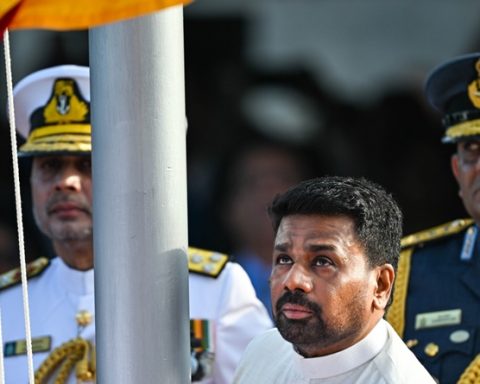
In an interview with The Island, former Justice Minister Dr. Wijeyadasa Rajapakshe, PC, addressed President Anura Kumara Dissanayake’s recent promise to release Tamil political prisoners, stating unequivocally that, in his view, Sri Lanka holds no political prisoners. Dr. Rajapakshe, who resigned from his ministerial post to contest the previous presidential election, emphasized that there are no individuals detained solely for their political beliefs, contrary to the claims surrounding the National People’s Power (NPP) campaign’s assurances in the northern districts of Vavuniya and Jaffna. (Read our editorial yesterday on this same issue)
Rajapakshe argued that the term “political prisoners” is misleading and open to exploitation by international bodies, particularly the Geneva-based United Nations Human Rights Commission (UNHRC), and critics of Sri Lanka’s anti-terrorism efforts. According to Rajapakshe, any combatants or LTTE cadres captured or who surrendered during the final stages of the civil war in May 2009 underwent rehabilitation and were subsequently released. “Over 12,000 former LTTE members, both men and women, have been reintegrated into society following rehabilitation,” Rajapakshe clarified, citing Defense Ministry records.
At the time he left his role as Justice Minister, Rajapakshe explained, only 11 individuals, all convicted of violent acts of terrorism, remained incarcerated. Among them were those responsible for major attacks, including the 1996 Central Bank bombing and the Dehiwala train and Piliyandala bus bombings. The cases of these individuals are beyond the jurisdiction of the Attorney General’s Department, as they have already been sentenced by the Supreme Court. Additionally, 13 other suspects are held under the Prevention of Terrorism Act (PTA), though, according to Rajapakshe, no “secret detention facilities” exist within the country as has sometimes been alleged.
Rajapakshe pointed out that previous administrations, including those led by Presidents Premadasa and Sirisena, had exercised presidential pardons for former terrorists, even those once considered “hardcore.” He noted that the President retains the authority to pardon convicted individuals should he choose, but emphasized the importance of consulting with the Attorney General’s Department for a full report on those currently serving sentences for terrorism-related convictions.
Turning to NPP leader Dissanayake’s additional promise to release northern land held by the military, Rajapakshe reminded that land returns commenced within a year of the civil war’s conclusion and have continued across successive administrations, including the most recent Wickremesinghe-Rajapaksa government. He underscored that the Defense Ministry holds comprehensive records of this ongoing process.
Rajapakshe expressed surprise that none of the political parties contesting the upcoming general election had commented on Dissanayake’s remarks, stressing that the issue of accountability and post-war reconciliation should be handled with care. “Accountability is too serious an issue to play politics with,” he remarked, calling for mutual recognition of wartime responsibilities to foster true reconciliation.
As the general election approaches, key parties including the Democratic Tamil National Alliance (DTNA), a breakaway faction of the Tamil National Alliance (TNA), are vying for seats in the northern and eastern provinces, with some former LTTE members reportedly contesting from the DTNA. Rajapakshe warned that while all parties have the right to pursue electoral strategies, no party should compromise Sri Lanka’s defense and stability in international arenas, particularly in Geneva.