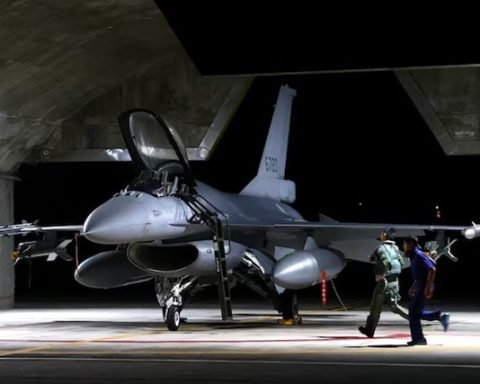
Taiwan President Lai Ching-te on Wednesday unveiled a sweeping $40 billion special defense budget, a bold proposal that would reshape the island’s military capabilities through 2033 and push annual defense spending above 3% of GDP as early as next year. The announcement landed at a moment of sharpened regional anxiety, with China intensifying its rhetoric following comments by Japanese Prime Minister Sanae Takaichi on a hypothetical Taiwan conflict. Lai framed the plan as a decisive answer to mounting military pressure from Beijing and persistent calls from Washington for Taiwan to invest more deeply in its own security.
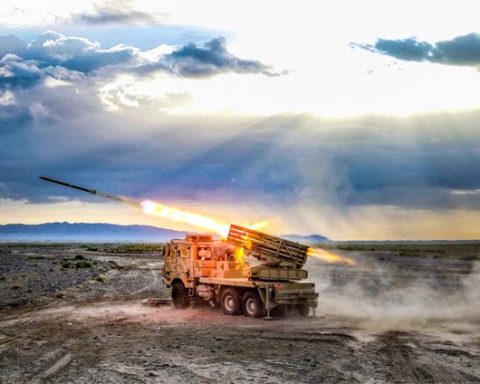
Lai described the initiative as crucial to achieving “high combat preparedness” by 2027, a timeline he argues is essential to deterring China’s rapidly expanding military power. The special budget includes investments in advanced air defense, interception systems, and artificial intelligence, designed not only to modernize Taiwan’s forces but to fundamentally alter the cost calculus for any potential Chinese invasion. He emphasized that peace “must depend on strength” and insisted that building a capable defensive force is the only way to “permanently defend democratic Taiwan.”
The proposal immediately drew political scrutiny at home, where Lai faces a legislature dominated by the opposition Kuomintang (KMT) and its ally, the Taiwan People’s Party. The coalition has previously stalled or scaled back defense initiatives, only reversing course after public backlash. KMT leader Cheng Li-wun recently criticized the scale and pace of Lai’s buildup, calling it overly aggressive and questioning whether such rapid spending increases can truly stabilize the Taiwan Strait. Yet she stopped short of pledging to block the bill, instead insisting that experts would rigorously review the plan and that affordability must guide any final decision.
Supporters of the budget argue that Taiwan has little time to waste. Lai’s Washington Post op-ed published hours before the announcement warned that Taiwan faces “growing pressure from Beijing,” with defense outlays projected to reach 3.3% of GDP next year and potentially 5% by 2030, marking the most sustained military investment in the island’s modern history. He stressed that the special budget would significantly expand asymmetrical capabilities — including unmanned systems and sea drones — to complicate China’s strategic planning and raise the risks of any military action.
The plan will be overseen by Defense Minister Wellington Koo, a figure well regarded in Washington for his strategic experience and candid assessments of Taiwan’s military shortcomings. His appointment is seen as an effort to accelerate reforms that began under former President Tsai Ing-wen, who boosted defense budgets for seven consecutive years, reinstated one-year mandatory service, and launched Taiwan’s first domestically built submarine.
Still, analysts warn that Taiwan is racing against time. Many in the U.S. and Taiwan advocate pivoting more aggressively toward a “porcupine” strategy favoring small, mobile, and inexpensive weapons that can survive a first strike and inflict heavy costs on invading forces. Yet political disagreements and budgetary caution have slowed progress, leaving key questions about Taiwan’s readiness unresolved.
International observers believe Taiwan’s opposition parties may ultimately avoid a full confrontation over the bill, particularly with the KMT eyeing the 2028 presidency. Ruptures within the region have added urgency: Beijing has spent the past week issuing furious denunciations of Japan after Takaichi suggested a Chinese attack on Taiwan would create a “survival-threatening situation” for Tokyo. China has responded with escalating diplomatic and economic retaliation, while warning it would “crush” any foreign interference over Taiwan.
The U.S., meanwhile, approved more than $1 billion in new arms sales to Taiwan — the first under President Trump’s second term — including aircraft parts and an air defense system, signaling ongoing support even amid American skepticism about global military commitments. Lai, addressing international audiences in his op-ed, insisted that Taiwan alone bears the greatest responsibility for its own survival. He argued that the island’s commitment to peace is unwavering, but that peace can only endure if Taiwan is strong enough to defend itself.