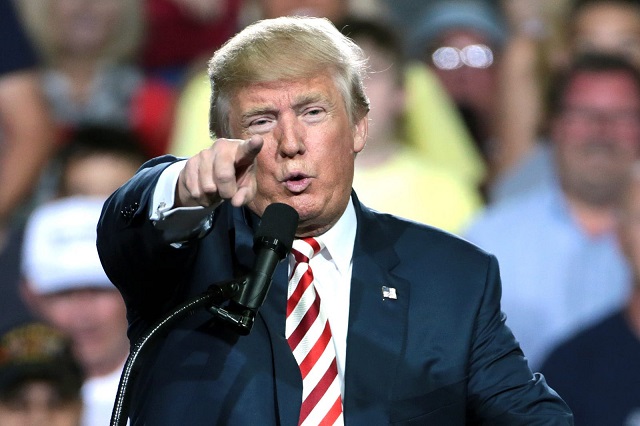
The Atlantic magazine and staff writer Anne Applebaum are under fire following the publication of an op-ed that likens former President Donald Trump to notorious dictators Adolf Hitler, Joseph Stalin, and Benito Mussolini. The article has sparked widespread criticism, particularly from pro-Trump commentators and political figures who have ridiculed the comparisons made by Applebaum.
In her piece, titled “Trump Is Speaking Like Hitler, Stalin, and Mussolini,” Applebaum argues that Trump’s rhetoric—such as referring to opponents as “vermin” and calling “criminal illegal immigrants” animals—mirrors the dehumanizing language employed by historical tyrants. This bold assertion quickly ignited a social media backlash, with many labeling the article as extreme and unfounded.
The Trump campaign dismissed the op-ed as “fake news by a third-rate media outlet,” while various commentators took to social platforms to mock both Applebaum and The Atlantic. Journalist Glenn Greenwald remarked, “When you spend eight years calling a person every bad name you can think of—including Hitler—and it doesn’t work, so you desperately decide to call him all the bad names at once.” Elon Musk also weighed in, laughing off the article with a simple “I can’t stop laughing.”
Critics have also highlighted Applebaum’s connections to the National Endowment for Democracy (NED), where she serves on the board. Some commentators, including journalist Mike Benz, have accused her of promoting a pro-intelligence agenda, suggesting that her viewpoints align closely with U.S. national security interests. Benz remarked, “Anne Applebaum is on the board of directors for the most notorious CIA cut-out in U.S. history.”
The NED, funded by the U.S. State Department, has been involved in various international initiatives, including support for regime change efforts and political movements abroad. Critics argue that Applebaum’s opinions frequently reflect U.S. foreign policy goals, particularly in her advocacy for actions against Russia and her criticisms of Trump’s foreign policy.