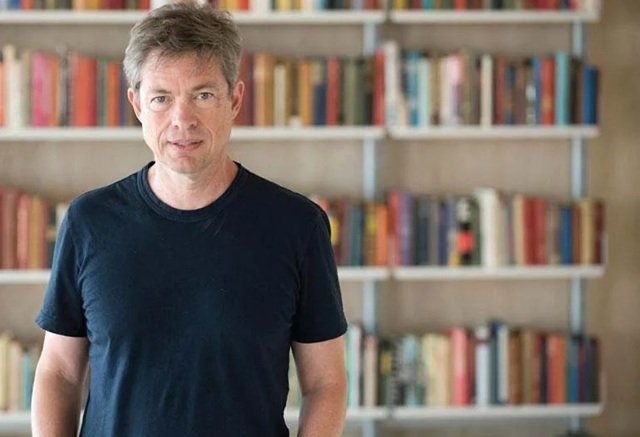
Nicolas Berggruen is a billionaire who prefers conversations with philosophers to the political spectacle favoured by fellow magnates Elon Musk and Peter Thiel. Rather than funding radical candidates or pursuing public power, the 65-year-old investor has built a think tank dedicated to ideas. Yet, as a Der Spiegel investigation reveals, his intellectual ambitions remain difficult to distinguish from a personal search for purpose.
On a sunny day in Boston, Berggruen sits at a bus stop opposite Michael Levin, a biologist known for pioneering research into bioelectricity and frog-cell robots. Berggruen wants to hear what Levin is thinking about. The scientist describes a “Platonic space” from which patterns of intelligence emerge into the physical world, appearing in robots, artificial intelligence and human beings. Berggruen listens, takes notes and asks occasional questions. After 45 minutes, Levin returns to his laboratory. Berggruen heads for his private jet, bound for dinner in Miami.
The encounter captures the peculiar world Berggruen has created: a billionaire with almost unlimited access to intellectual talent, but no clear answer about what his money and influence are meant to achieve.
Most Germans remember him as the investor who failed to rescue Karstadt. His acquisition of the department-store chain ended in disappointment when he sold a diminished business to René Benko in 2014. Berggruen subsequently withdrew from Europe for a time. Since 2021, however, he has returned to public attention, buying three palaces in Venice and giving interviews about artificial intelligence and capitalism.
His fortune, estimated by Forbes at $2.9bn, comes from a global business network and extensive property holdings. In Berlin and Potsdam alone, he owns around 100 buildings. Yet Berggruen says he spends perhaps an hour a week managing his commercial interests. Business, he insists, was always more a game than a passion.
Born in 1961, Berggruen grew up in Paris in a family shaped by art and distance. His father, Heinz Berggruen, was a prominent art dealer who had fled Nazi Germany and sold works by Picasso, Klee and Matisse. The family’s upbringing was formal and reserved. Nicolas describes his relationship with his father as respectful but emotionally distant, while his brother Olivier suggests that financial success may have been an attempt to prove himself.
The financial crisis of 2008 intensified Berggruen’s doubts about the purpose of his work. He sold his homes in Miami and Manhattan and spent years travelling between luxury hotels, earning the nickname “the homeless billionaire”. In 2010, he began hiring philosophy professors to teach him in his hotel suite. That same year, he founded the Berggruen Institute, creating a permanent platform for meeting thinkers and exploring ideas.
The institute now operates in Los Angeles, Beijing and Venice. It publishes the Noema magazine and hosts discussions on artificial intelligence, geopolitics and philosophy. Its annual Berggruen Prize awards $1m to intellectuals, including philosopher Michael Sandel, whose work examines inequality and the common good.
At a Harvard gathering in Cambridge, Berggruen brought together prominent psychologists, physicists, economists and researchers to discuss artificial intelligence. The conversation was orderly and academic, with guests speaking in turn. Berggruen listened quietly. One participant later joked that such a gathering was not even normal at Harvard.
The institute’s impact remains uncertain. Berggruen himself admits that history will determine whether it develops useful ideas or brings thinkers into public debate. A former adviser offered a less charitable interpretation: Berggruen simply wants to be important.
Unlike Thiel, who uses his network to advance a distinct political agenda, Berggruen has no obvious ideological project. His most controversial argument is that exceptional thinkers need greater freedom than democratic systems usually provide. “Democratic systems are good for the average,” he says, arguing that society must give extraordinary people more room.
But his own projects repeatedly encounter practical limits. A proposed institute site in Los Angeles stalled because of safety concerns around MacArthur Park, where Berggruen owns a building. Plans for a 180-hectare campus in the Santa Monica Mountains also faltered over permits. Negotiations for a new centre in Oxford have yet to progress.
For a man who can buy Venetian palaces and bring leading intellectuals together, these setbacks expose the limits of wealth. Berggruen’s institute can create encounters, award prizes and publish essays. Whether it can change the world remains unresolved.
At the end of the Der Spiegel profile, Berggruen reflects on freedom and the burden of choice. “If you have no freedom,” he asks, “isn’t that actually more liberating?”
As often with Berggruen, the thought sounds intriguing. What remains unclear is what he intends to do with it.