In modern warfare, the battle for territory is often accompanied by a battle for truth. Military operations are no longer judged solely by events on the ground but also by the competing narratives that emerge in their aftermath. Governments defend their actions, armed groups seek to shape public perception, and international organizations attempt to document events under extremely challenging conditions. In an age of satellite imagery, smartphones, and instant global communication, one might assume that establishing the facts has become easier. In reality, the opposite is often true. Information is abundant, but independently verified evidence remains scarce, particularly in inaccessible conflict zones.
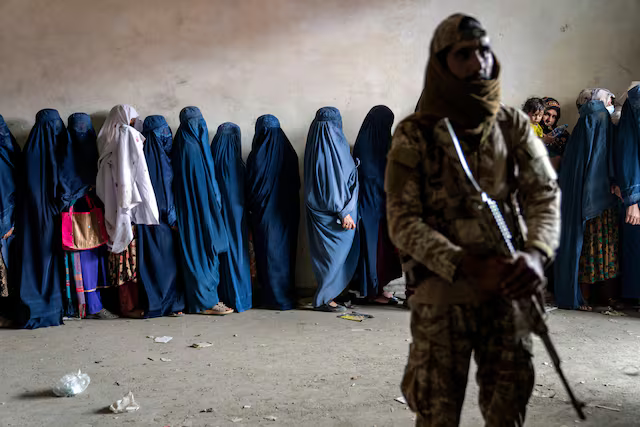
Afghanistan under Taliban rule exemplifies this dilemma. Since the Taliban returned to power in 2021, the country has become one of the world’s most difficult environments for independent investigation. Journalists face severe restrictions, humanitarian organizations operate under constant limitations, and international observers have only limited access to many areas. As a result, investigations into military operations frequently rely on incomplete evidence gathered under extraordinary constraints.
These realities provide the backdrop to Amnesty International’s recent report on Pakistan’s reported precision strikes inside Afghanistan on 16 March 2026. The report alleges civilian casualties and raises questions about Pakistan’s compliance with international humanitarian law. Such allegations deserve careful consideration. Protecting civilians is a legal and moral obligation in every armed conflict, and credible claims of civilian harm should always be investigated thoroughly. Yet the credibility of any investigation depends not only on its conclusions but also on the transparency of its methodology, the quality of its evidence, and an honest acknowledgment of its limitations.
This is not simply a debate about one military operation. It is a broader discussion about how the international community should assess evidence emerging from conflict zones where independent verification is exceptionally difficult.
Human rights organizations perform an indispensable function in modern conflicts. Their reports have exposed war crimes, documented abuses, and amplified the voices of victims who might otherwise be ignored. Governments, courts, journalists, and policymakers frequently rely on these investigations when assessing humanitarian crises. Because these reports carry significant influence, however, they must also withstand rigorous scrutiny. Their authority ultimately rests not on reputation but on the strength of their evidence and the transparency of their investigative process.
Afghanistan presents formidable challenges to meeting those standards. Independent investigators cannot always visit affected locations freely, examine physical evidence without restriction, or interview witnesses in an environment free from intimidation. Instead, they often depend on witness testimony, open-source intelligence, satellite imagery, digital media, and information supplied by local contacts. These are valuable investigative tools, but they are not perfect substitutes for unrestricted field investigations.
The reported strike on a hospital illustrates this broader challenge. Amnesty International concluded that a medical facility was affected during Pakistan’s operation, raising concerns over civilian casualties and the protection of healthcare infrastructure. Such findings deserve serious attention. Equally important, however, is understanding how investigators reached those conclusions and the extent to which they were able to independently verify competing accounts in a highly restricted environment.
This is where transparency becomes essential. Readers should be able to understand how photographs and videos were authenticated, how witnesses were identified and interviewed, what independent corroboration was available, and what uncertainties remained. No investigation is free from limitations, particularly in conflict zones. Acknowledging those limitations strengthens rather than weakens public confidence because it allows readers to distinguish verified facts from informed assessments.
The operating environment inside Afghanistan inevitably shapes every investigation. International organizations have repeatedly acknowledged the obstacles they face in conducting humanitarian work and monitoring human rights under Taliban rule. Restrictions on humanitarian personnel, particularly women, have reduced engagement with significant sections of Afghan society. Access to some locations remains limited, and security conditions further complicate field investigations. These constraints do not invalidate investigative findings, but they do require caution when interpreting conclusions derived from incomplete access.
Pakistan, meanwhile, has consistently maintained that its March 2026 operation targeted terrorist infrastructure based on credible intelligence. Islamabad argues that cross-border attacks originating from Afghan territory continue to pose a serious threat to Pakistan’s national security and that military action was directed against militant groups rather than civilians. These official claims also deserve careful examination. Governments involved in military operations naturally present their own narratives, while intelligence underpinning operational decisions is rarely disclosed publicly. Consequently, official statements should neither be accepted uncritically nor dismissed outright. Like the findings of advocacy organizations, they should be evaluated against independently verifiable evidence wherever possible.
The principle is straightforward: every claim should be subject to the same evidentiary standard, regardless of whether it originates from a government, an international organization, or a non-state actor. Consistency is the foundation of credible accountability.
Conflict investigations today rely increasingly on digital evidence. Commercial satellite imagery, geolocation techniques, smartphone recordings, and open-source intelligence have transformed the documentation of armed conflict. These technologies have enabled investigators to reconstruct events that might previously have remained hidden. Yet they also have important limitations. Images capture moments rather than complete sequences. Videos often lack geographical or chronological context. Publicly available material rarely provides a comprehensive picture of complex military operations. As a result, investigators must carefully distinguish between what has been conclusively established and what remains an informed assessment based on available evidence.
This distinction matters because modern conflicts are fought as much in the information space as on the battlefield. Every actor seeks to influence international opinion. Governments pursue diplomatic legitimacy, armed groups use propaganda to advance political objectives, advocacy organizations seek accountability, and media outlets compete to report rapidly evolving events. In such an environment, evidence-not rhetoric-must remain the foundation of credible analysis.
The challenges observed in Afghanistan are not unique. Investigations into conflicts in Ukraine, Gaza, Sudan, and Myanmar have encountered similar obstacles, including restricted access, competing narratives, disinformation campaigns, and fragmented evidence. These experiences demonstrate that independent verification has become one of the defining challenges of twenty first century conflict reporting.
For policymakers, the lesson is clear. Reports produced under constrained conditions should neither be dismissed because they contain uncertainties nor treated as infallible because they originate from respected organizations. Instead, they should be assessed alongside official statements, independent journalism, satellite analysis, forensic evidence, and subsequent investigations. Confidence in any conclusion should grow as multiple independent sources converge on the same factual account.
Equally important is expanding opportunities for independent verification. The international community should continue advocating greater access for humanitarian organizations, journalists, and impartial investigators. Governments conducting military operations should cooperate with credible investigations where national security permits, while de facto authorities controlling territory should facilitate humanitarian access consistent with international norms. Greater transparency benefits all parties because it reduces uncertainty, strengthens accountability, and limits the space for misinformation.
Ultimately, the controversy surrounding Amnesty International’s report reflects a much larger reality. The central challenge is not whether one particular narrative is correct but whether sufficient evidence exists to support any definitive conclusion. In Afghanistan, where independent access remains severely restricted, certainty is often difficult to achieve.
This should encourage greater humility not lower standards. Human rights investigations remain indispensable for protecting civilians and promoting accountability, but their conclusions should always be understood within the context of the evidence available and the constraints under which that evidence was collected. Likewise, governments defending military operations should be prepared to support their claims with as much verifiable information as security considerations allow.
The pursuit of accountability requires more than competing narratives. It requires transparent methodology, rigorous verification, and a consistent commitment to evidence over assumption. Only by applying the same standards to every actor can the international community preserve confidence in human rights reporting while ensuring that allegations of civilian harm are assessed fairly, impartially, and credibly. In an era when information itself has become a battlefield, careful verification remains the strongest defense against both misinformation and impunity.