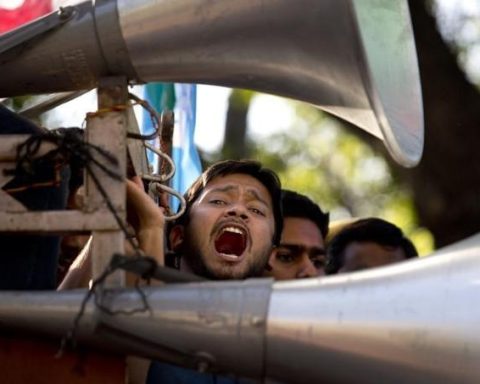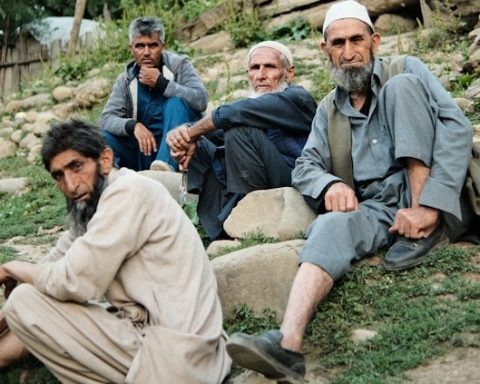

The contemporary dynamics of digital architecture have altered the prospects of insurgency, which is no longer recognised solely by guns and territory. Digital architecture, defined by algorithms and grievance narratives, provides a breeding ground for radicalisation, mobilisation, recruitment, and hybrid conflict. Across Asia, the pattern of violent upsurge is adhering to the weaponisation of platforms that were once symbols of democratic participation. In the context of Pakistan, with a history of insurgencies, especially in Balochistan, the notion of algorithmic warfare poses a new governance challenge.
Contemporary research outlines that extremist movements have employed the fundamentals of the digital age by exploiting the design logic of social media in an array of ways, ranging from broadcast propaganda to engineered engagement. Utilising algorithms, social media platforms such as X, TikTok, Instagram, YouTube, and Facebook prioritise content that expands user interaction, often amplifying emotionally charged material without considering factual accuracy or impact. This amplification manufactures echo chambers, paving the way for repeated exposure of radical content to youth and diminishing psychological barriers to extremist identification. The global analytical outlook highlights that traditional long-term trajectories of radicalisation have been compressed by online domains, accelerating the process from incidental exposure to ideological affinity into a shortened span.
The UNESCO mapping report highlights that online spaces have gained momentum for political radicalisation in Asia, particularly among youth exposed to content that resonates with their socio-economic issues, identity, or communal dynamics. These dynamics also resonate in Europe, as shown by studies in which adolescents encountered emotionally charged extremist narratives reinforced by algorithmic engagement, normalising violent prospects.
Youth vulnerability has been associated with socio-economic factors such as marginalisation, unemployment, and weak political structures that pave the path for extremist mobilisation. Structural grievances in the South Asian region provide impetus for radicalisation amplified by digital spaces. Indo-Pacific-focused research underscores that the interaction between politico-economic, identity-based, and social factors intersects with online exposure, manoeuvring susceptibility to extremist recruitment.
As observed in Pakistan’s insurgent recruitment patterns, from northwest-based militant groups to separatist factions in Balochistan, there is a reflection of the conjunction of offline and online dynamics. Studies highlight that extremist organisations alter their digital strategies to resonate with local contexts, employing social media to disseminate propaganda and to build community anchorage, a sense of belonging, and the normalisation of violence and hatred.
Digitalised insurgent movements pose a challenge to traditional counterterrorism practices that were previously grounded in addressing kinetic, hierarchical threats. Modern-day separatist factions operate with hybrid tendencies, coupling physical organisation with web-based networks for narrative amplification, access, and diverse recruitment pathways that are decentralised and optimised as per algorithms. This transformative shift is acknowledged by empirical research on violent extremism, as highlighted in global reviews of terrorism, which note that platforms such as Facebook, TikTok, YouTube, and other encrypted apps are pivotal for violent actors in narrative building, identity-based linkages, and recruitment accessibility.
The process continues not merely via passive algorithmic exposure but rather through active involvement, whereby individuals with the appropriate dispositions seek out and connect with content that intensifies their grievances. This phenomenon has been attested to in various parts of the world, including South Asia, where political dissatisfaction, identity narratives, and economic grievances overlap with online exposure.
Over recent years, Pakistan’s internal security landscape has increasingly revealed the existence of proxy networks and front groups that create confusion between support for civil society activism and support for militancy. Law enforcement agencies have shared a recent case involving the Baloch Yakjehti Committee (BYC), which authorities claim operates as a civilian-coded facilitator for an insurgent network named Fitna-e-Hindustan, assisting the group in recruitment, narrative amplification, and grassroots outreach aligned with the violent aims of separatists. This trend represents a broader hybrid model in which physical and digital spheres reinforce one another, and young people exposed to powerful grievance narratives that evoke emotions are drawn into increasingly radicalised networks.
This scenario is not exclusive to Pakistan, nor is it disconnected from broader South Asian trends. Indian officials have stated that networks utilise social media platforms, including Instagram and encrypted channels, to enlist young operatives associated with ISIS-affiliated groups in the region. This situation indicates that digital radicalisation is a transnational phenomenon, as the internet imposes no restrictions on attracting individuals or projecting grievances across borders.
Adding to the complexity are regional geopolitical narratives. India’s approach, particularly in disputed regions such as Jammu and Kashmir, has introduced powerful grievance frames that are digitally utilised by insurgents and extremist networks alike. Human rights issues in these areas warrant attention; however, the exploitation of such grievances by violent networks poses a second-order security challenge, wherein emotive issues are magnified by algorithmically driven platforms to create identity-centred echo chambers that accelerate radicalisation. Academic literature on youth radicalisation consistently identifies emotional resonance, identity affirmation, and perceived injustice narratives—supported by both actual grievances and online amplification—as key drivers of online recruitment processes.
This hybrid model complicates conventional counterterrorism by blending civic activism, protests, and organised violence. Although algorithms do not directly produce extremist content, they magnify emotionally loaded narratives and guide receptive individuals towards radical ideas. Studies suggest that online environments help develop and strengthen extremist identities, making at-risk adolescents more visible to global recruiters. For instance, the BLA is among the groups that exploit social media for narrative construction and recruitment, indirectly translating unexpressed local discontent and geopolitical conflict into radicalisation.
The trend indicates that radicalisation is predominantly driven by identity, emotion, and the formation of online communities rather than ideology alone. Consequently, the evolving dynamics of digital insurgency call for a new generation of governance strategies that address both recruitment mechanisms and the underlying grievances that fuel them.