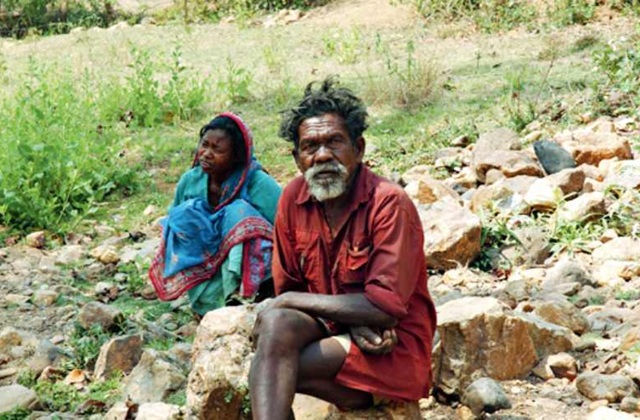
In a haunting reminder of India’s protracted internal conflict, the central government’s militarised approach toward tackling Maoist insurgency in the mineral-rich Bastar region of Chhattisgarh has deepened the marginalisation of the Adivasi communities. From the controversial Salwa Judum days to the current “Naxalmukt Bharat Abhiyan” led by the BJP regime, a pattern of suppression, displacement, and militarisation continues to dominate this so-called war on Maoism.
A 2012 episode, reported in detail by Frontline India, captures the fraught reality of state excesses. A Central Bureau of Investigation (CBI) team—dispatched on Supreme Court orders to investigate the 2011 assault on social activist Swami Agnivesh—was attacked by the very Special Police Officers (SPOs) it was probing. The incident escalated into a violent two-hour gun battle in Dornapal, Sukma, from which the CBI officials had to be airlifted by the Indian Air Force. The attack on Agnivesh stemmed from his humanitarian mission to Adivasi villages—Tarmetla, Timapuram, and Morpalli—allegedly torched and looted by security forces and Salwa Judum cadres during a so-called anti-Maoist operation.
A Resurging Crackdown
Fast forward to 2025. With the BJP now governing both the Centre and the State, the government has stepped up its offensive against left-wing extremism. On March 20, Union Home Minister Amit Shah hailed the killing of 22 Maoists and reiterated the Centre’s determination to make India “naxal-free” by March 31, 2026. The Chhattisgarh government claims to have neutralised over 325 Maoists and processed more than 2,000 surrenders or arrests in just six weeks.
While the numbers may project success, the human cost is staggering. Frontline India reports disturbing accounts from tribal leaders, former insurgents, and civil society members who say that the government’s zero-tolerance policy has incentivised fake encounters, encouraged a “cash for corpses” culture, and emboldened the demolition of Maoist memorials. The killing of Gummadivelli Renuka, a Maoist ideologue and law graduate, is cited as a case of custodial execution.
Echoes of Salwa Judum
Salwa Judum, declared unconstitutional by the Supreme Court in 2011, was a state-backed militia that wreaked havoc on Adivasi communities. Its legacy lives on, many allege, through the District Reserve Guard—a specialised anti-Maoist unit that has absorbed former Salwa Judum members. Despite legal challenges and a contempt petition still pending since 2012, no concrete measures have been taken to ensure justice for those displaced or harmed.
Academic Nandini Sundar, whose petition helped bring down Salwa Judum, notes that militarised development is the new face of state action. “Security camps are now doubling as delivery points for basic services. Why should health camps be run from military compounds?” she asked in an interview with Frontline India.
Development or Dispossession?
The surge in military operations has coincided with aggressive mining and infrastructure development in Bastar. Several Adivasi leaders, including former Deputy Chief Minister T.S. Singh Deo, have accused the government of forging gram sabha consent for mining projects tied to corporate giants like the Adani Group. The Hasdeo Arand forest, rich in biodiversity, has already seen significant deforestation since the BJP assumed office in December 2023.
Critics argue that this is no coincidence. Gandhian activist Himanshu Kumar told Frontline India that the renewed war on Maoists is simply a smokescreen for land grabs. “They want to displace Adivasis and hand over their resources to corporates. This has nothing to do with security and everything to do with profit,” he said.
The Price of Dissent
Any voice that dares to challenge the narrative is quickly silenced. From the arrest of Raghu Midiyami of the Moolvasi Bachao Manch to the earlier suspension of Varsha Dongre for exposing custodial abuses, the State appears determined to crush all opposition. Even internationally respected organisations like the International Committee of the Red Cross (ICRC) and Médecins Sans Frontières have been accused of aiding Maoists and have had their operations suspended or restricted.
The tragic deaths of human rights activists like G.N. Saibaba, Stan Swamy, and Pandu Narote—many under controversial circumstances—further underscore a disturbing trend: dissent is increasingly being equated with sedition.
A Call for Dialogue
Political scientists and conflict experts argue that the underlying socio-economic grievances of Adivasis and forest dwellers remain unaddressed. “Killing insurgents won’t kill the ideology,” said Manoranjan Mohanty, author of Red and Green: Five Decades of the Indian Maoist Movement. “As long as dispossession continues, the Maoist movement will find new life.”
Saroj Giri of Delhi University questioned the silence of international human rights watchdogs and India’s opposition parties. “Operation Kagar looks like an armed conflict under international law. It is shocking that there’s no accountability from either the opposition or global bodies,” he told Frontline India.
A Divided Nation
The Indian government often highlights the appointment of tribal leaders in high offices—like the President and Chief Ministers—as proof of its commitment to tribal welfare. But critics argue these symbolic gestures do little to shield ordinary Adivasis from displacement, fake encounters, and denial of constitutional rights. With over 55,000 people displaced since Salwa Judum’s formation, the scars of this conflict run deep.
As the 2026 deadline looms, the Adivasi communities of Bastar find themselves caught between bullets and bulldozers—between military boots and mining drills. Whether this campaign yields “peace” or merely pacification remains to be seen. But one thing is clear: India’s war on its indigenous people is being fought not just in jungles, but in courtrooms, classrooms, and corporate boardrooms.