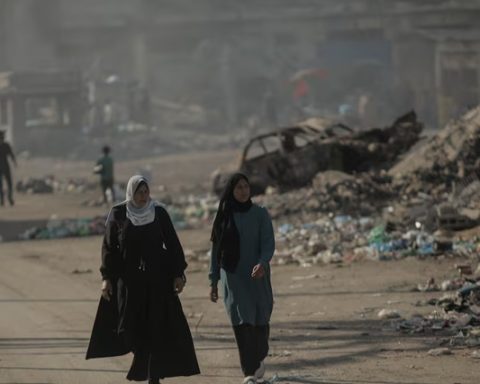
Iran is a country that has endured suffering for decades, yet even those who thought they had seen it all say the current devastation is unlike anything before. The memory of the 1980s war with Iraq, the relentless bombings, chemical attacks, and the decades of economic chaos has left generations hardened. But the precision and scale of the recent coordinated airstrikes by the United States and Israel have introduced a terror that many Iranians were unprepared to witness firsthand.
“It was like there was bombing on every corner of my neighbourhood,” said a middle-aged Tehran doctor, who had been treating victims of the latest strikes before finding herself a survivor. “My neighbours all died when their house was hit. They were civilians, not military, not regime. Our neighbourhood is residential. There were children. Someone had their leg amputated.” The doctor, who spoke to Times UK at the Kapikoy border crossing into Turkey on condition of anonymity, said she was fleeing to Britain to be with her pregnant daughter, even as she struggled with trauma, tears, and trembling hands.
Across the Middle East, borders like Kapikoy illustrate the agonizing choices faced by thousands of Iranians caught between survival and family. Minibuses ferried refugees back to Iran from Turkey, while simultaneously helping others escape, as commercial flights had been grounded and the border crossing overwhelmed.
Shahram Mirzai, 35, left his job on a building site in Turkey to return to Urmia, near the border, to be with his wife and four children. “For four days I’ve been completely disconnected. None of us know how our families are faring. At a time like this I have to go home to be with them,” he told Times UK. Yet the return brought uncertainty: without work in Turkey, Mirzai had no clear way to provide for his family amid Iran’s ongoing economic crisis. “It’s not just me — millions of young men leave to find any kind of job in Turkey or Iraq. We do whatever we can to survive,” he said.
Ahmad Reza, an engineer, had also flown to Turkey from Tashkent, Uzbekistan, only to return to Esfahan because his father was ill. He traveled with his dog, Teddy, in a pet carrier. “I don’t know what the situation is except that it’s very dangerous, but I have chosen the side of my family,” he said. Reza’s experience reflected the perilous reality for those moving in either direction: long queues, chaos at border checkpoints, and a system overwhelmed by manual checks after strikes damaged the interior ministry’s servers that held passport databases.
“The whole area was full of fire and explosions. It was terrifying, terrible. The driver was as scared as I was. He just said, ‘sit still, sit still’ and sped away,” the doctor recalled of her journey through the cities of Tabriz and Khoy, witnessing industrial sites ablaze, including a petrochemicals plant.
Others approached the danger with a mixture of fear and philosophical resignation. Maryam, an older woman escaping Tehran, reflected, “The children are scared. I was not scared. I lived through the Iran-Iraq war.” She expressed ambivalence about blame, noting the succession of powers over Iran’s modern history—from the Shah, to Saddam Hussein, to the current regime—and suggesting that various groups have historically used crises for their own interests.
Younger Iranians, however, were more direct in their perspective. A young woman returning home with her brother said, “No one wants to see their country bombed,” yet she insisted she would never return to the restrictive conditions before recent protests and the regime’s violent crackdowns in January. Like many others interviewed by Times UK, she was not wearing a headscarf, signaling defiance and personal choice in a country where such acts carry symbolic weight. “After all the destruction we have been through, I would rather die than go back to where we were,” she said.
Across the groups of travelers, there was a peculiar coexistence of past, present, and future in their minds. Many spoke as if the regime were already a historical force, culturally spent. “We just want to live together, Christians, Jews, Muslims, free to do what we want,” Reza said, emphasizing a desire for coexistence rather than civil conflict. There was discussion of freedom, democracy, and human rights, but little mention of a country’s breakup or armed revolution.
Maryam drew on deeper cultural and spiritual references to articulate hope amid despair. She invoked Iran’s pre-Islamic religious heritage, including Zoroastrianism, in reflecting on the collective resilience of the Iranian people. “Democracy has to sprout from within ourselves,” she said. “Our people’s collective subconscious carries the heritage of an old wisdom. We have philosophy, we have rituals, we have science, and we have our history of Zoroastrianism, which can lead us to the light from the darkness.”
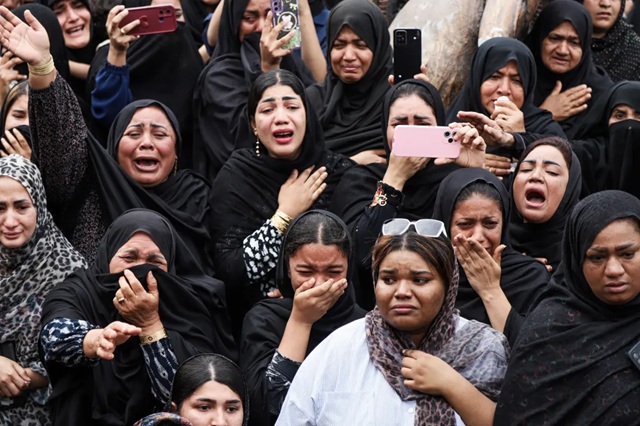
The war and its aftermath have turned familiar landscapes into sites of trauma. Mourners gathered across the country following the death of Supreme Leader Ayatollah Ali Khamenei, while funerals for civilians hit by airstrikes, many children among them, were held in cities such as Minab. Scenes of mourning coexist with fear and uncertainty as Iranians navigate the perilous decision between staying and fleeing.
For many, the conflict has created a surreal reality where the past and present collide. Older generations carry memories of war and deprivation, while the young confront an uncertain future shaped by violence, foreign intervention, and domestic repression. Yet amidst the fear, there is an unmistakable resolve: a determination to survive, to protect family, and to assert agency over the future of their lives and their country.
The experiences of those fleeing Tehran and other cities reflect the human cost of modern warfare, where civilians are caught between the precision of sophisticated air forces and the chaos of collapsing infrastructure. It also highlights the deep social, cultural, and historical layers that influence how Iranians interpret and endure crises, as captured in reporting by Times UK. These stories reveal not only the immediate horrors of bombing and displacement but also the enduring spirit of a population seeking light amid darkness.
As families wait in snowbound border regions, often for days at a time, the question is not only when the violence will end, but whether the lives disrupted by the conflict can ever return to normalcy. For now, the thousands who have fled, and those choosing to return to face danger, navigate their own path through a country transformed into a “blurry image” of fear, resilience, and hope.