History exists in the facts of life, and the shallowness of a nation’s history is often the result of inept and egoistic leadership. In wars, logic fails to define foes and friends. India and Pakistan share a long history of mutual blame for their failures to preserve freedom, security, and the ideological foundations of their existence.
Insecurity and injustice stem from corruption and failed political leadership. India opted for institutional development to avoid military intervention, whereas Pakistan was derailed in its pursuit of change and national development by continuous military coups and foreign alliances intended to maintain its survival. British colonialism, lasting for centuries, divided and ruled the subcontinent, and history continues to repeat itself through ongoing insecurity, internal political intrigue, and foolish sectarian actions that replace reason with unreason. The British left the subcontinent in haste, fearing a Nazi German onslaught during World War II, causing ethnic divisions and mass killings in the name of freedom and socio-political identity. While India constitutionally claims secularism, it has increasingly flourished as a Hindu-dominated democracy as the basis of its nationalism. Pakistan, on the other hand, lost its ideological point of reference through seven military coups and conspiratorial regime changes, never ushering in a fair system of political governance to ensure its integrity and survival.
Some fifteen years ago, when this author wrote Pakistan at the Crossroads, it sounded an alarm to thoughtful people about how the wrong people, with wrong thinking, were doing the wrong things across Pakistan. Sadistic leaders remain a problem. Perpetuated animosity serves domestic political agendas and ballot boxes.
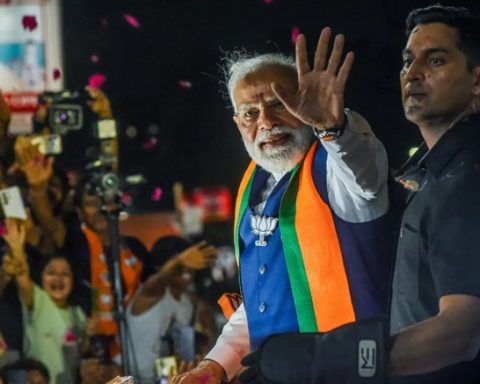
To learn from history, the newly independent Indian and Pakistani states needed objectively grounded reasons to reconstruct their societies for political change, freedom, and friendship. Their dynamics should have envisaged proactive vision and creative leadership, pursuing peace and harmony over animosity. The State of Jammu and Kashmir lies at the heart of the political and strategic problems that characterize relations between the two nuclear rivals. Under Prime Minister Narendra Modi, India is increasingly tainted by Hindu nationalism and its ideological and normative supremacy. Its unilateral claims over Kashmir negate the British constitutional act of freedom for both states and lack the truth, wisdom, and honesty required for moral and intellectual justification.
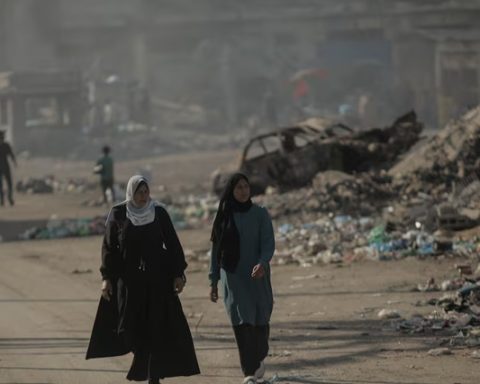
Ignorant, irresponsible, and egoistic politicians blame others for their own fault lines and never dare to look in the mirror. Societies and nations overtaken by greed and irrational leadership find excuses to claim that fair is foul and foul is fair. Pakistan has lost several decades of precious time and opportunity for nation-building, unity within socio-economic and political diversity, and a peaceful system for the transfer of power to elected representatives. Critical problems of national harmony, peace, and unity continue to surge in Balochistan and Khyber Pakhtunkhwa provinces. Bombing and killing innocent people will not bring political change, but intelligent leaders with vision and integrity could restore Islamic values of unity and social harmony.
The contemporary political trajectory reveals inherent mismanagement, abuse of power, and deepening internal insecurity. Emerging conflicts with Afghanistan, along with attacks by ISIL and the Pakistani Taliban in Balochistan and Islamabad, signal far more than simple sectarian divides. The Sharif brothers and certain generals are part of the problem, not the solution. These prolonged challenges require comprehensive thinking within the security apparatus and a renewed commitment to national unity. Truth-telling is maligned and persecuted by the ruling elite. The Sharifs, Bhuttos, Zardaris, and a handful of generals do not represent the nation. It is an inescapable necessity of time and truth that those in power must be warned to listen to voices of reason and the political necessity for change, restraint, and civilized conduct.
The February 2024 elections were rigged and demonstrated a fraudulent scheme of internal intrigue designed to prevent peaceful change and the transfer of power to Imran Khan, leader of the Pakistan Tehreek-e-Insaf party. Generals do not build nations; they are often sources of conflict and sectarian division. They do not develop economies or the moral and intellectual fabric of a nation. That task belongs to people of knowledge—intellectuals, visionaries, thinkers, poets, and philosophers. Generals do not prepare present and future generations for national responsibility, nor do they promote the rule of law and social justice essential for nation-building.
Viewed rationally, both India and Pakistan failed miserably to understand the true meaning of national freedom from British colonialism.
Nation-building for peace and good neighborly relations is a critical issue for present and future generations across the subcontinent. Strangely, educated and proactive new generations are denied time and opportunity within neo-colonial cultures dominated by political power and elite classes. In the post-colonial period, India built some public institutions to strengthen democracy, free elections, and peaceful transfers of power, whereas Pakistan fell victim to conspiracies, dismemberment, and military coups, losing its strategic path toward institutional development and nation-building.
Current egoistic politicians who lack electoral legitimacy must face the mirror and immediately release Imran Khan, leader of Pakistan Tehreek-e-Insaf, from captivity and unjust treatment. Individually motivated animosities have resulted in over 150 fabricated cases against him. Domestic harmony in Pakistan requires coherent rethinking, beginning with the release of Khan and his party members.
Time and opportunity demand new ideas and renewed efforts on both sides to pursue peaceful means of resolving the Kashmir dispute. Effective leaders are people-oriented, open to listening and learning, and aware of their strengths and weaknesses. Leaders in India and Pakistan must engage in serious soul-searching and think critically about how to redirect their course toward sustainable political change, national freedom, and a progressive future. Both nations maintain relations with the United States, China, Russia, and Western European countries; leaders of these nations must take initiatives to encourage India and Pakistan toward peace-making and good neighborly relations as a preventive measure against a catastrophic future war.
Any meaningful political transformation requires habitual honesty, rational candor, frankness, and sincerity of purpose to avert tragic outcomes. History reminds us that truth, glory, and honor reside in righteousness—not in wickedness.