Tripura’s latest road and rail blockade by surrendered insurgent groups highlights persistent gaps in the implementation of the September 4, 2024, tripartite peace accord and raises questions over the sustainability of the State’s post-insurgency rehabilitation process. On September 4, 2026, seven organisations representing surrendered cadres launched a 72-hour blockade at multiple locations, demanding implementation of the accord and fulfilment of an 11-point charter. The organisations include the National Liberation Front of Tripura (NLFT), NLFT-Parimal Debbarma (NLFT-PD), NLFT-Nayan Bashi (NLFT-NB), All Tripura Tiger Force (ATTF), ATTF-Old, Joint Action Rehabilitation Committee (JARC) and the Joint Action Committee (JAC).
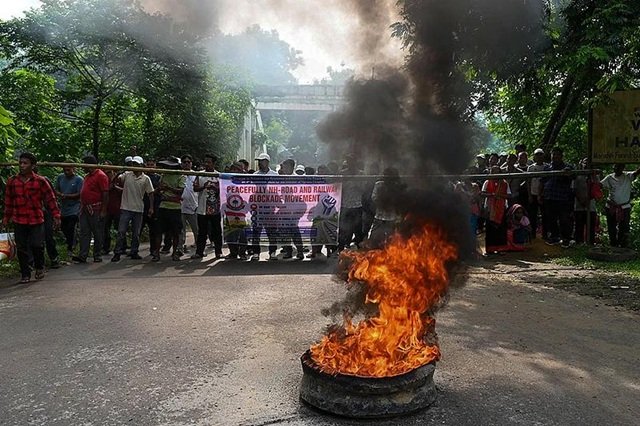
The protesters blocked the Assam-Agartala National Highway at Chandra Sadhu Para near Hathai Kotor Bridge and other locations, while railway movement was disrupted near Brigudas Bari. Tyres were reportedly set ablaze and vehicles stranded, prompting deployment of Police and paramilitary forces. The immediate demands include rehabilitation of surrendered cadres, withdrawal of pending cases, security for former cadres and leaders, and greater powers for the Tripura Tribal Areas Autonomous District Council (TTAADC) over land-related matters.
The agitation follows months of repeated protests over what surrendered cadres describe as delays in implementing rehabilitation commitments. In June, NLFT and ATTF representatives had announced a similar 72-hour road and rail blockade, alleging that the proposed INR 2.5 billion rehabilitation and development package remained largely unimplemented. The agitation was subsequently withdrawn following government assurances. JARC and JAC also withdrew an indefinite blockade call on June 24, 2026, after receiving assurances that their demands would be examined. Another proposed blockade scheduled for August 13, 2026, was deferred following government intervention.
The recurrence of such protests indicates that assurances have not translated into sufficient implementation on the ground. The issue is particularly significant given the scale of the surrenders. According to data presented in the Tripura Assembly on March 17, 2026, 1,245 militants belonging to various outfits surrendered between April 2023 and March 2026, including cadres of different NLFT factions and ATTF. A total of 147 weapons were surrendered. Under the rehabilitation policy, eligible former cadres are entitled to a fixed deposit of INR 400,000 and a monthly stipend of INR 6,000 for three years. Protest leaders, however, have claimed that only a small proportion of surrendered cadres have received rehabilitation packages.
The credibility of the peace process increasingly depends on the Government’s ability to establish transparent and time-bound mechanisms for verifying beneficiaries and delivering promised assistance. Delays in rehabilitation can leave former insurgents economically vulnerable and politically dissatisfied, potentially creating conditions for renewed mobilisation, even if they do not translate into a return to armed insurgency.
The demands also extend beyond individual rehabilitation. Former insurgents have raised issues concerning pending criminal cases, security arrangements, livelihood opportunities and the powers of the TTAADC over tribal land. These demands reflect the broader socio-political grievances surrounding Tripura’s tribal population. Consequently, the present agitation cannot be addressed solely through financial packages; questions concerning land, customary rights and institutional powers require sustained political engagement.
The repeated resort to blockades is itself a concern. Tripura depends heavily on the Assam-Agartala Highway and railway network for the movement of people, commodities and essential supplies. Disruption of these routes imposes costs on the wider population and provides protesting groups with considerable leverage over the State Government. Repeated disruptions also affect the State’s economic activity and connectivity.
For the Government, the immediate challenge is to prevent the present agitation from escalating, while restoring confidence in the peace agreement. A publicly monitored rehabilitation framework, clear beneficiary criteria, time-bound disbursement of assistance and regular consultations with surrendered cadres could help reduce the trust deficit. Pending legal cases should also be reviewed through an established mechanism, while political demands concerning tribal land and TTAADC powers require separate dialogue.
The present crisis does not indicate a return of insurgency in Tripura. Rather, it demonstrates that ending armed conflict is only one stage of a peace process. Unless surrenders are followed by credible rehabilitation, livelihood support and implementation of political commitments, unresolved grievances can continue to generate instability through protests and disruptions. The durability of Tripura’s peace will ultimately depend on converting the 2024 accord from an agreement of surrender into a functioning framework for long-term reintegration.