



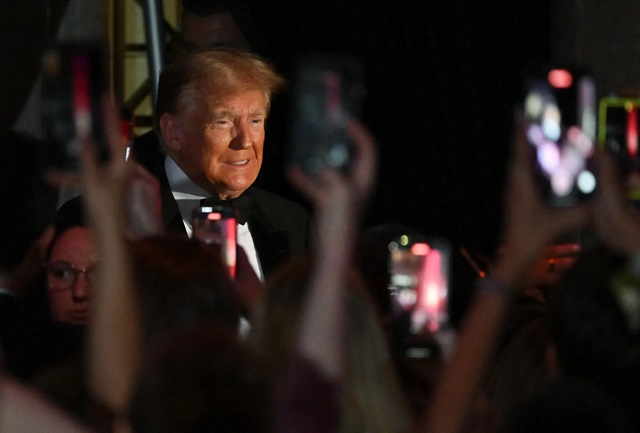
Donald Trump’s return to the global stage in his second term has been marked by a familiar swagger. He pledged to end the war in Ukraine within 24 hours, broker peace in Gaza, revive the Iran nuclear deal, contain China’s rise, and even resolve the conflict between India and Pakistan. Yet, as of May 2025, none of these ambitions have materialized. The gap between Trump’s rhetoric and geopolitical realities has widened into a chasm—one rooted not merely in flawed strategy, but in a deeper delusion: the belief that America still holds uncontested sway over the global order.
Trump continues to act under the assumption that the United States remains the unchallenged arbiter of international affairs, capable of shaping outcomes by sheer force of will. But as Amitav Acharya has argued in The End of American World Order (2014), the era of American unipolar dominance is over. Today’s international system is increasingly multipolar, shaped by the assertiveness of regional powers and the erosion of U.S. hegemony. Trump’s foreign policy fails not because the goals are inherently unachievable, but because the tools he employs—and the worldview that shapes them—are relics of a bygone era.
This is especially evident in his approach to Iran. While Trump has made gestures toward renegotiating a nuclear agreement, the pathway remains blocked. The barriers are not simply diplomatic, but epistemological. Iran operates within a civilizational paradigm, grounded in theocratic sovereignty and strategic independence. The U.S., by contrast, approaches diplomacy through a secular, liberal lens focused on transactional deal-making. These divergent worldviews lead to a structural incompatibility. Trump’s decision to withdraw from the JCPOA in May 2018—a move widely condemned by U.S. allies and the IAEA—only deepened Iran’s strategic mistrust and reduced the space for credible engagement.
China presents a similar case. Trump’s playbook—tariffs, sanctions, and inflammatory rhetoric—has failed to deter Beijing or reshape its global ambitions. On the contrary, it has reinforced China’s strategic resolve and pushed it to deepen ties with other powers, including Russia and the Global South. According to the Brookings Institution, Trump-era tariffs not only hurt U.S. consumers but also failed to meaningfully alter China’s industrial policies. The idea that the U.S. can impose costs without reciprocal consequences no longer holds. In a world of near-peer competitors, such methods appear increasingly ineffective, even counterproductive.
Trump’s foreign policy is further weakened by erratic behavior and symbolic provocations. His highly publicized effort to mediate between India and Pakistan, applauded by Fox News but met with skepticism elsewhere, resulted in a short-lived ceasefire that collapsed within 48 hours.
What underlies all these failures is not just poor execution, but a fundamental misunderstanding of global leadership in the 21st century. Trump views strength as dominance, leadership as unilateralism, and diplomacy as performance. Yet today’s international order requires precisely the opposite: mutual recognition, regional agency, and the ability to navigate cultural and ideological pluralism. Global influence no longer flows from bluster and brinkmanship, but from legitimacy and cooperation.
Trump’s persistence in using an outdated vocabulary of power—one rooted in American exceptionalism and Cold War binaries—has rendered his foreign policy increasingly irrelevant. His worldview is anchored in a past that has already faded, while the rest of the world has moved on to a more distributed, plural, and negotiated order.
Trump’s Delusions in a Post-Hegemonic World
6 Comments
Latest from Blog

Tobacco use among schoolchildren in Sri Lanka has increased significantly over the past eight years, with
Plans to open Sri Lanka’s Adam’s Bridge Marine National Park to tourism on October 15 have

Sri Lanka’s state universities are struggling to recruit and retain senior academics as lecturers leave for
Mahinda Rajapaksa’s political dominance was shaped by nationalism, religious influence, the legacy of the war and
Supertanker freight rates on Persian Gulf–East Asia routes have climbed above $1.4 million a day, setting
Formula 1 driver Esteban Ocon has said he will not race in 2027 unless he secures
The allegations against former BND chief August Hanning, alongside a former CIA official’s guilty plea in

Fifteen former members of Britain’s Special Air Service (SAS) and intelligence officers have broken decades of
Palestinian President Mahmoud Abbas has postponed legislative elections scheduled for next month until 11 September 2027
A South Korean container ship has completed the country’s first commercial round trip to Europe through
US’ attitude to Iran is shaped by the revolution that overthrew The Shah.
his entire life is a delusion.
Aren’t we all suffering under delusions and illusions?
Yes. We are all deluded, secluded and convoluted. BUT, we are still nice guys (and gals) with plenty of pals to drive us bonkers.
Are you drunk again?
Israel clipped Khameini’s nuts hahaha