


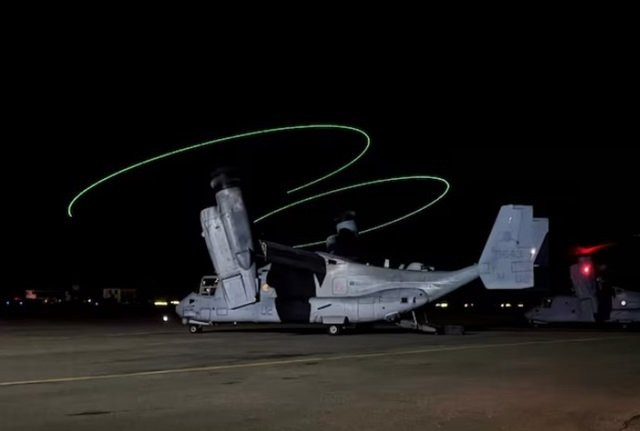
The United States military has established a significant relief operation in Venezuela following two major earthquakes last week, deploying more than 900 personnel inside the country and hundreds more at regional bases to support rescue efforts and humanitarian assistance, according to information provided to Reuters by the top US military commander for Latin America.
General Francis Donovan, commander of US Southern Command, told Reuters that US forces have taken part in search-and-rescue operations, helped restore airport operations and mobilized air and naval resources to support the arrival and distribution of international aid after the disasters.
The deployment represents a major change in military engagement between the two countries, coming months after a US operation on January 3 that resulted in the capture of Venezuelan President Nicolas Maduro, who was flown to New York to face drug trafficking charges. Maduro has denied any wrongdoing.
Donovan said the current mission involves approximately 900 US military personnel operating inside Venezuela, with another 800 stationed at Caribbean locations including Puerto Rico and Curacao. The forces are focused on supporting disaster relief operations rather than conducting a long-term military deployment.
Venezuela was struck by two earthquakes measuring magnitudes 7.2 and 7.5 less than a minute apart last Wednesday. The earthquakes caused widespread damage, collapsed buildings and trapped thousands of people beneath rubble. Rescue operations continued as officials warned that the chances of finding survivors were declining with each passing day.
According to Venezuelan legislature head Jorge Rodriguez, only one survivor, a 3-year-old child, had been rescued by the sixth day of search efforts, although operations remained ongoing.
Donovan told Reuters that US Marines were among the first American personnel to arrive and assist rescue teams searching through collapsed structures. The US military also helped transport civilians involved in rescue efforts, including teams from Fairfax, Virginia, who released video showing the rescue of a mother and her 9-month-old baby.
The broader US military role has focused heavily on logistics, Donovan said, including preventing humanitarian supplies from becoming concentrated at airports and other entry points without a system to move them to affected communities.
“Because that’s where these events can sometimes go sideways,” Donovan said, explaining that large quantities of aid can become difficult to distribute without sufficient transportation and coordination.
The disaster response has taken place amid criticism of the Venezuelan government’s handling of the emergency. Critics have said authorities were slow to deploy heavy equipment and specialized rescue teams during the early days after the earthquakes, leaving many residents searching for relatives using basic tools such as their hands, shovels and ropes.
By Saturday, Venezuelan state television showed construction equipment being used to remove rubble in some areas. Residents also reported that foreign rescue teams had assisted in recovering victims from collapsed buildings.
Donovan acknowledged the challenges facing Venezuelan authorities, saying the country was dealing with the effects of decades of poor leadership that had severely damaged national infrastructure. He also pointed to reported shortages of medicine and hospital personnel as factors that could increase public frustration during the recovery effort.
The US military commander said he could not provide a timeline for how long American forces would remain in Venezuela, noting that the State Department is overseeing the broader relief mission. However, he said the military was not preparing for a permanent presence in the country.
“There’s no talk about staying,” Donovan said. “This is what we do in relief operations. We leave when we’re done.”
The current cooperation follows another recent instance of US-Venezuelan coordination. Donovan said that in the past month, the US military carried out a strike that killed the leader of Venezuelan prison gang Tren de Aragua, an operation conducted with Venezuelan authorities.
The earthquake response has created an unexpected channel for cooperation between the two countries after years of political tension. Donovan said he hoped the relief efforts could contribute to stronger military-to-military relations between Washington and Caracas in the future.
“If then this opens the door for a better mil-to-mil relationship, absolutely, we’ll be ready to move forward,” Donovan said.









