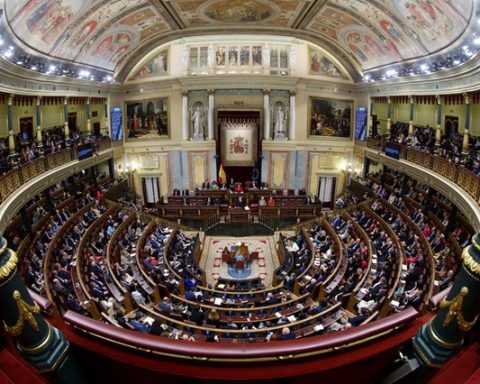
In a significant bipartisan move, US lawmakers introduced the ‘Pakistan Freedom and Accountability Act’, House Resolution 5271 (H.Res. 5271) on September 15, 2025. The legislation seeks to authorize sanctions against Pakistani officials-current or former-accused of human rights abuses and undermining democratic institutions.
The Bill was introduced by Congressman Bill Huizenga (Republican), Chairman of the House Subcommittee on South and Central Asia, and co-led by Democrat Sydney Kamlager-Dove. It draws authority from the Global Magnitsky Human Rights Accountability Act, which permits the US government to target individuals involved in severe human rights violations or corruption.
The United States will not sit idly by,” stated Huizenga, “as individuals in Pakistan’s government, military, or security forces commit or downplay blatant human rights abuses.” His Democratic colleague, Sydney Kamlager-Dove, emphasized that the Bill reinforces the US commitment to defending democratic values globally. Representative Julie Johnson added that it sends a “strong message” that attacks on democracy will not go unpunished.
This legislative effort builds upon House Resolution 901, passed in June 2024, which expressed support for democracy and human rights in Pakistan. Pakistani-American advocacy groups have actively supported both measures. Asad Malik, former president of the Pakistan-American Public Affairs Committee, stated that the legislation “empowers the people of Pakistan” and ensures violators “face appropriate consequences.”
The Pakistani government has previously dismissed such actions. Following the passage of H.Res. 901, the Foreign Office released a statement criticizing the resolution’s timing and context, arguing it reflected an “incomplete understanding” of Pakistan’s political situation. Pakistan, it asserted, is committed to human rights and the rule of law and prefers “constructive dialogue based on mutual respect.”
This official narrative, however, contrasts sharply with assessments from international observers. Freedom House’s 2025 report ranked Pakistan as “partly free,” noting a significant ten-year decline in political rights and civil liberties. Similarly, the World Justice Project’s 2024 Rule of Law Index placed Pakistan third-worst among 142 countries, ahead of only Mali and Nigeria. These reports cite weak constraints on government power, lack of accountability, and widespread abuses.
The US State Department’s own 2024 Country Report on Human Rights Practices, published in August 2025, found that the Pakistani government “rarely took credible steps to identify and punish officials who committed human rights abuses,” contributing to a pervasive “culture of lawlessness.”
Despite these damning reports, Pakistan’s establishment has remained silent on the new Bill, seemingly confident that strengthening US-Pakistan strategic ties will prevent any serious diplomatic repercussions. The proposed act represents a firm bipartisan warning, but its practical impact will likely be dubious.