In Malda, a man who has voted in every election since 1984—holding a ration card, an Aadhaar number, and a name listed on previous electoral rolls—was this year asked to prove that he exists. This is not an isolated case. Across West Bengal, the Special Intensive Revision (SIR) of electoral rolls, described by authorities as a routine administrative exercise, is requiring citizens to repeatedly justify their right to vote. As reported by Frontline India, this process effectively forces people to prove their citizenship to exercise a constitutional right.
At the heart of the SIR is a radical assumption: the electorate is potentially fraudulent until proven innocent. Article 326 of the Constitution guarantees universal adult suffrage, allowing all citizens above 18 to vote, regardless of the documents they hold. Forcing citizens to provide documentary proof of eligibility transforms a right into a bureaucratic hurdle and risks widespread disenfranchisement. Instead of the state proving ineligibility, citizens are compelled to prove existence—a reversal that goes against the spirit of India’s democracy.
The Supreme Court has so far declined to halt the process, arguing that administrative discretion must be respected. Yet, as Frontline India points out, this refusal has deeper implications. Voting is not just a legal entitlement; it is the primary mechanism for exercising popular sovereignty. Judicial inaction in the face of structural threats to voting rights shifts the burden onto citizens, undermining the foundation of democracy.
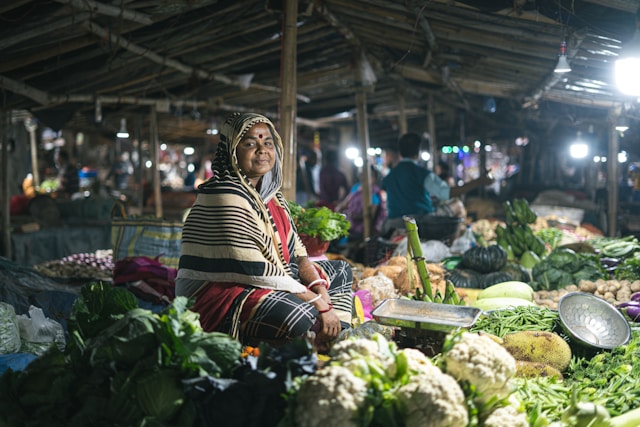
The consequences are predictable. Daily-wage workers, women who have changed their names after marriage, agricultural laborers, and Bengali Muslims concentrated in districts like Malda and Murshidabad bear the brunt of this exercise. Generations of these families have lived in India. Their citizenship is unquestionable; what is missing is paperwork. Yet the state substitutes documents for belonging, effectively penalizing those already marginalized.
The April 1 protests in Malda highlight the real impact of this exercise. As Frontline India notes, the unrest cannot be reduced to a law-and-order problem. People protested because repeated administrative checks threatened their civic existence. While violence must be addressed legally, the protests signal a deeper political grievance: when rights are conditional and constantly challenged, citizens are forced into confrontation with the state.
This is what Frontline India calls “hierarchical citizenship.” While the law treats all voters equally, administrative procedures create inequality, requiring certain communities to continually prove themselves while others are spared scrutiny. Over time, this fosters mistrust, disengagement, and abstention. Democracy is eroded not through a single dramatic event but through systemic pressure that targets specific groups. The harm extends beyond individuals removed from rolls, weakening participation for the entire society.
The man in Malda, voting for nearly four decades, represents the democratic minimum: consistent civic engagement. When the system fails him, the issue transcends West Bengal. Citizenship should not be conditional on repeated bureaucratic validation. The SIR transforms participation from an inherent right into a conditional privilege, challenging the core of Article 326 and India’s electoral democracy.
While officials frame the exercise as technical, its effects are inherently political. Marginalized citizens are forced to validate their existence repeatedly, creating a hierarchy of belonging. The true test for Indian democracy is whether administrative procedures can coexist with constitutional guarantees, ensuring that no citizen is stripped of their right to vote simply because they lack the right papers.