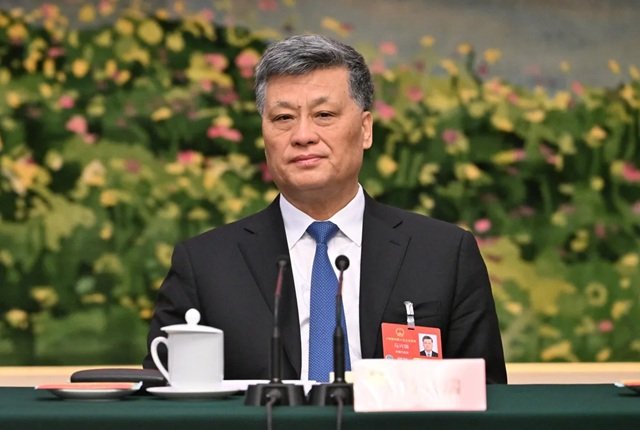
China’s political establishment has been shaken once again as President Xi Jinping expands his sweeping anti-corruption campaign, targeting another high-ranking member of the ruling Communist Party’s elite decision-making body. The investigation into Ma Xingrui, a prominent Politburo member and former party chief of the sensitive Xinjiang region, underscores the growing scale and intensity of Xi’s efforts to consolidate control and enforce discipline within the party’s upper ranks.
According to state media reports, Ma has been placed under investigation for “severe violations” of party discipline and unspecified laws. While no detailed allegations have been made public, such probes in China’s political system are often precursors to formal charges and removal from office. Although Ma technically retains his position on the Politburo for now, history suggests that few officials reemerge politically intact after being subjected to this level of scrutiny.
Ma’s case marks the latest in a series of high-profile investigations that have reached the highest levels of China’s leadership. In recent months, Xi has initiated probes into two of the country’s most senior military figures, He Weidong and Zhang Youxia, signaling that even the top tiers of the People’s Liberation Army are not immune from the anti-corruption drive. Together, these moves amount to one of the most significant purges of the Politburo in decades.
The scale of the crackdown has drawn comparisons to some of the most politically volatile periods in modern Chinese history. Analysts note that the number of top-level officials targeted in a single leadership term now surpasses the upheaval seen during the 1989 Tiananmen Square crackdown. Some observers have gone further, likening the breadth of the purge to the Cultural Revolution era, when the notorious Gang of Four faction was dismantled amid widespread political turmoil.
The impact of Ma’s investigation extends beyond individual accountability, reshaping the composition of China’s top leadership body. With his fall from favor, the Politburo has effectively shrunk to 21 members, its smallest size in more than two decades. The last time the body reached a similar number was in 1999, following the death of a senior official, making the current contraction particularly notable given its political context.
Ma, 66, was once considered a rising star within China’s political hierarchy. With a background in aerospace engineering and experience in academia as well as at the China Aerospace Science and Technology Corporation, he built a reputation as a technically skilled and capable administrator. His expertise helped propel him into senior government roles, including a vice-ministerial position, before he transitioned into regional leadership.
His tenure in Guangdong province from 2013 to 2021 further elevated his profile. During this period, he was involved in managing rapid economic growth as well as crises, including a deadly landslide in Shenzhen for which he publicly issued an apology—a rare gesture in Chinese officialdom. His subsequent appointment to Xinjiang placed him at the center of one of the country’s most politically sensitive regions.
In Xinjiang, Ma was seen as taking a somewhat more measured approach compared to his predecessor, whose policies included the establishment of controversial detention camps that drew international condemnation and sanctions from Western governments. While Ma did not fundamentally alter Beijing’s overarching strategy in the region, his tenure was marked by subtle shifts that some observers interpreted as an attempt to ease tensions.
However, his time in Xinjiang also coincided with a major moment of domestic unrest. In late 2022, a deadly fire in Urumqi sparked widespread protests that quickly spread across China, becoming one of the most significant public challenges to Xi’s leadership in years. The demonstrations were closely linked to frustrations over the government’s strict Covid Zero policy, which imposed lockdowns and movement restrictions nationwide.
Within weeks of the protests, Beijing began to roll back key elements of the Covid Zero strategy, signaling a rare policy reversal. While it remains unclear how Ma’s role in Xinjiang during this period influenced his political fortunes, the episode added complexity to his record as a regional leader.
Ma’s removal from Xinjiang in July last year initially appeared routine, with official announcements stating that he was awaiting a new assignment. However, subtle warning signs began to emerge in the months that followed. His absence from a key Politburo study session in November raised questions among observers, as such meetings are typically mandatory for members of the leadership body.
Further intrigue surrounds Ma’s connections to prominent business figures, including copper tycoon Wang Wenyin. Wang, once a major figure in China’s industrial sector, has largely disappeared from public view following the collapse of his business empire amid the country’s property market downturn. While no direct link has been established between Wang’s situation and Ma’s investigation, their association has drawn attention in the context of the broader anti-corruption campaign.
Reporting by Bloomberg highlights how the latest developments reflect Xi Jinping’s continued focus on rooting out perceived disloyalty and corruption within the Communist Party. The campaign, which has been a hallmark of his leadership since coming to power, has increasingly targeted senior officials, reinforcing his authority while reshaping the political landscape.