India, the world’s fifth-largest economy, is aiming for an energy investment boom despite facing recent economic slowdowns. With its economy having recently overtaken the United Kingdom and projected to rise to third place by 2030, the Indian government under Prime Minister Narendra Modi is pushing hard to expand its energy sector. However, this ambitious growth plan comes at a time when the country’s economic growth has unexpectedly decelerated.
After experiencing a robust 8.2% growth rate in the previous fiscal year, India’s economic growth slowed to just 5.4% last summer. With forecasts for this fiscal year at a modest 6.4%, the country’s stock market has also suffered significant volatility, with the rupee weakening and middle-class wealth taking a hit. Despite these economic headwinds, India is determined to position itself as a global energy player.
Central to India’s energy strategy is attracting foreign investment to meet its growing demand for energy, driven by both its expanding economy and population. The country, which currently imports about 90% of the oil it consumes, is increasing its energy security through partnerships with oil and gas exporters. This includes plans to boost imports from the United States, as India is expected to account for 25% of global oil and gas demand growth by 2025.
To support this demand, India has raised foreign investment caps across critical sectors like natural gas, petroleum products, and refining. The country hopes to secure $25 billion to $30 billion annually for natural gas exploration, recognizing it as a key “bridge fuel” in its transition to cleaner energy sources.
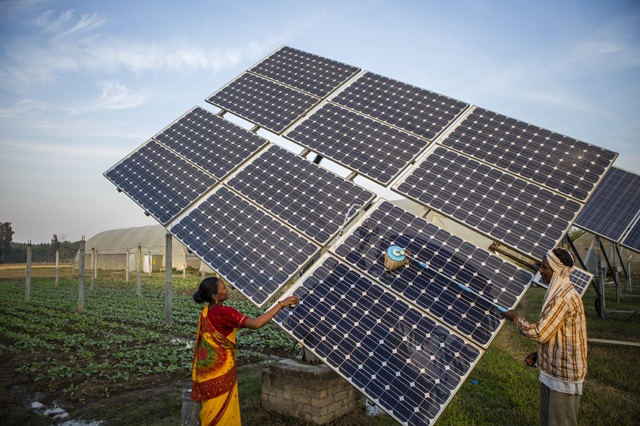
Simultaneously, India is setting its sights on renewable energy. Despite a heavy reliance on coal, the government aims to achieve net-zero emissions by 2070 and reach 500 gigawatts of renewable energy capacity by 2030. The scale of the challenge is enormous, requiring annual investments of up to $31 billion for renewable energy production, alongside additional funding for infrastructure and energy storage.
Experts indicate that while the investments required are substantial, there is growing optimism among foreign investors. If these investments materialize, they could have profound effects on global energy markets and emissions, as India’s choices will play a pivotal role in shaping the future of the global energy landscape.