by Our Correspondent in New Delhi
The Global Terrorism Index 2025 exposes a troubling yet familiar pattern in South Asia: terrorism is not merely a security challenge but a tool of manipulation, wielded by states, intelligence agencies, and global superpowers to serve their interests. While the region remains one of the hardest-hit by terrorism, the real question is not why terror persists, but who benefits from its continuation.
Afghanistan, now under Taliban rule, remains a battleground not just for insurgents but for the geopolitical games of superpowers. The Taliban’s so-called government is less an independent force and more a proxy balancing act between China, Russia, Pakistan, and an America that claims to have withdrawn but still pulls strings from the shadows. The return of terrorist factions like IS-KP suggests not a resurgence of ideology, but a convenient justification for continued drone strikes, intelligence operations, and foreign involvement. Afghanistan’s instability has become the perfect excuse for global players to maintain their presence in South Asia while pretending to have abandoned it.
Pakistan, long accused of harbouring militants, continues to play its double game. The state simultaneously battles and supports extremist factions, using them as strategic assets while maintaining plausible deniability. Groups like the TTP are not mere ideological extremists; they are instruments of statecraft, controlled and unleashed as needed to justify military operations, political crackdowns, and the constant funneling of international counterterrorism funding. Terrorism in Pakistan is not an enemy—it is a carefully managed asset that serves the ruling elite’s power plays.
India, meanwhile, presents a paradox. As one of the most affected countries by terrorism, its narrative is shaped by both external threats and internal insurgencies. While Pakistan-backed groups remain a significant concern, the greater threat to India’s stability may come from within. The rise of Hindu nationalist extremism, vigilante groups, and state-sanctioned violence against minorities has blurred the lines between counterterrorism and state-sponsored terror. Kashmir, a region long trapped in an unending cycle of violence, continues to be a pawn in the political machinations of both India and Pakistan. The GTI’s statistics on terror incidents in India do not account for the fact that the state itself, through its policies and actions, often contributes to the conditions that fuel insurgency.
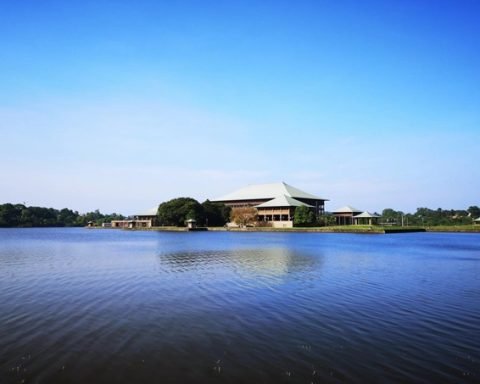
Bangladesh and Sri Lanka present further evidence of how terrorism is used as a tool for political control. The Sheikh Hasina government in Bangladesh has weaponised counterterrorism laws to silence opposition and suppress dissent, branding critics as extremists to justify arrests and media blackouts. Sri Lanka’s post-war counterterrorism approach has similarly been used to suppress Tamil and Muslim minorities under the guise of security. The Easter Sunday attacks of 2019, which shocked the world, have still not been fully explained—were they truly an intelligence failure, or a politically convenient event that allowed a return to authoritarian rule?
South Asia’s terrorism crisis is not a natural phenomenon; it is a manufactured reality, shaped by those who stand to gain from perpetual instability. Intelligence agencies manipulate extremist groups, governments exploit the threat to tighten control, and superpowers keep the region in a state of controlled chaos to justify their own strategic agendas. The real victims are the ordinary citizens, caught in a cycle of violence that benefits everyone except them.