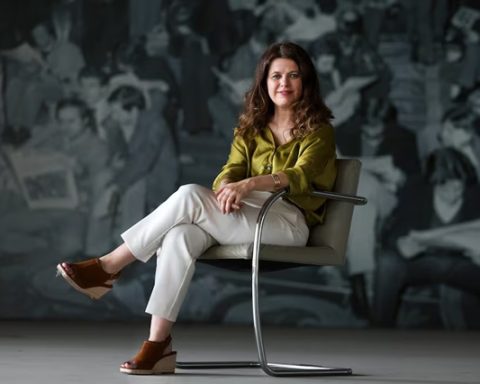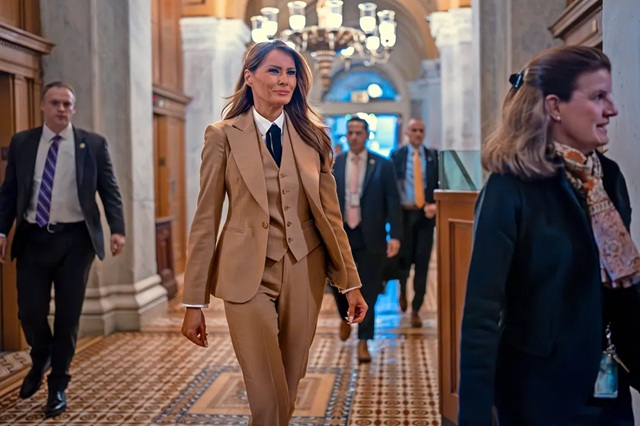
Melania Trump’s second term as first lady is being unveiled not through speeches or interviews, but through a $40 million documentary that she conceived, executive-produced and meticulously shaped herself. Premiering later this week, Melania offers a carefully curated portrait of a woman no longer content with ceremonial visibility, instead positioning herself as a strategic operator and the unmistakable power behind the throne.
The project’s scale is unprecedented. A black-and-white trailer was projected onto the Sphere in Las Vegas last week — an advertising move personally insisted upon by Melania and written into the contract with Amazon MGM, which outbid Netflix, Paramount and Disney for the film’s rights. According to her adviser and agent Marc Beckman, she was involved in every stage of production, from positioning cameras and adjusting lighting to editing footage and cutting the trailer herself.
The film had its first private screening at the White House over the weekend, complete with a live orchestra performing the original score. For now, the wider public has seen only the trailer: Melania moving between Palm Beach, Manhattan and Washington, delivering a composed, knowing line — “Here we go again” — before stepping into the inauguration, her wide-brimmed hat forcing the president to duck to kiss her cheek.
The documentary premieres on January 29 in dozens of US cities before rolling out to nearly 30 countries, followed later by a multi-part Amazon series. Melania, now 55, will attend the Washington premiere alongside President Trump at the Trump–Kennedy Center.
What emerges is a striking evolution from her first stint as first lady. Gone are the pastel palettes and traditional trappings of political spousehood. In their place is a sharply defined personal brand: monochrome visuals, architectural tailoring and a controlled mystique more reminiscent of a luxury fashion house than a White House social office. On Wednesday, Melania is scheduled to ring the opening bell at the New York Stock Exchange — a symbolic gesture underscoring her repositioning.
“The first lady’s office has historically been seen as static,” Beckman says. “Hosting dinners, organising the Easter egg roll. This time, she wants to be action-orientated.” He describes the shift as “Melania 2.0”.
The documentary itself reflects that ethos. Initiated just days after the November 2024 election, filming followed Melania through the transition back into the White House — packing, assembling her team and reasserting control over her role. She insisted on a full theatrical release, a demand that shaped both the studio deal and the hiring of director Brett Ratner, whose cinematic style matched her vision, despite his controversial return to Hollywood after years in exile following misconduct allegations he denies.
Behind the scenes, Beckman says, Ratner was struck by Melania’s command of production details, from lighting and camera placement to music selection and colour correction. The finished trailer includes a deliberately chosen exchange between the Trumps, with the president asking if she has watched it. “I did not,” she replies coolly. “I will see it on the news.” Beckman calls it the essence of the film: Melania as chief executive, Trump as the more emotionally exposed partner.
That dynamic extends beyond optics. While remaining selective about public appearances, Melania has pursued targeted policy initiatives largely independent of the West Wing. Her revived Be Best campaign has narrowed its focus, most notably with her backing of the Take It Down Act, bipartisan legislation criminalising the distribution of non-consensual explicit images, including AI-generated deepfakes. After quietly mobilising senators and advocates, the bill passed overwhelmingly and was signed into law by the president in May — with Melania also signing the document.
She has also secured $25 million in federal funding for housing and support services for young people leaving foster care, and has taken a personal interest in foreign policy, particularly humanitarian issues related to the war in Ukraine. President Trump has publicly acknowledged her scepticism during his conversations with Vladimir Putin, recounting how she challenged his optimism by pointing out ongoing civilian attacks.
In August, Melania sent a handwritten letter to Putin urging him to prioritise children’s welfare and referencing the abduction of thousands of Ukrainian children. Her office says the effort has contributed to dozens of reunifications, with further work ongoing.
Historians note that Melania remains less publicly accessible than many of her predecessors, but argue that this restraint is strategic. Katherine Jellison, an expert on first ladies, says the documentary signals a shift away from cultivated mystery towards controlled authority. “This is not a passive or victim-like figure,” she says. “It’s someone presenting herself as firmly in control of her destiny.”
That may be the documentary’s clearest message. Melania is not simply a portrait of a president’s wife, but an assertion of authorship — over image, influence and legacy. As the trailer suggests, this is Melania Trump on her own terms, and very much in charge.