A senior U.S. official warned on Tuesday that China is expanding its nuclear arsenal so rapidly that it could achieve parity with the United States within four to five years, intensifying concerns in Washington about global strategic stability. Christopher Yeaw, U.S. Assistant Secretary of State for the Bureau of Arms Control, made the remarks at a conference in Geneva, accusing Beijing of pursuing a deliberate and opaque nuclear modernization program while resisting President Trump’s demands to participate in arms control agreements.
Yeaw criticized the recently expired New Start treaty between the U.S. and Russia, saying its major flaw was its failure to account for China’s fast-growing stockpile. He alleged that Beijing is building its arsenal “without constraint” and without transparency regarding its purpose, highlighting what Washington views as a serious gap in global nuclear oversight. The U.S. claims that a small, previously undeclared nuclear detonation in 2020 at China’s Lop Nur test site supports concerns over the pace of the build-up, though the UN monitoring station recorded the results as ambiguous, and China has repeatedly denied conducting a nuclear test in violation of the 1998 Comprehensive Nuclear Test Ban Treaty.
Independent analysts broadly agree that China is modernizing and expanding its nuclear forces but dispute the likelihood that it will match U.S. or Russian arsenals in sheer numbers anytime soon. Current estimates put China’s nuclear warhead stockpile at roughly 600, with about 100 added each year, compared with more than 3,700 for the U.S. and over 4,300 for Russia, though a portion of America’s warheads are in the process of decommissioning.
Historically, China’s nuclear doctrine under Mao Zedong emphasized minimal deterrence, viewing its arsenal largely as a “paper tiger.” Today, under President Xi Jinping, China seeks a fully modernized military capable of matching U.S. technical capabilities and asserting global influence, deploying advanced missiles, drones, and nuclear systems. How far Beijing intends to push numerical parity with the United States remains unclear, as does the strategy for operational use of its growing arsenal.
China has also rejected calls to negotiate arms control on equal footing with Washington and Moscow, arguing that its comparatively smaller arsenal does not warrant identical treaty obligations. At the Geneva conference, Chinese officials urged the United States to take primary responsibility for disarmament and suggested exploring a new New Start treaty with Russia instead.
Yeaw’s warning comes ahead of President Trump’s planned visit to China at the end of March, where he is expected to meet President Xi Jinping. The growing U.S.-China nuclear dispute underscores mounting concerns about a potential arms race in the Asia-Pacific region and the challenges of ensuring transparency and stability in the nuclear domain.
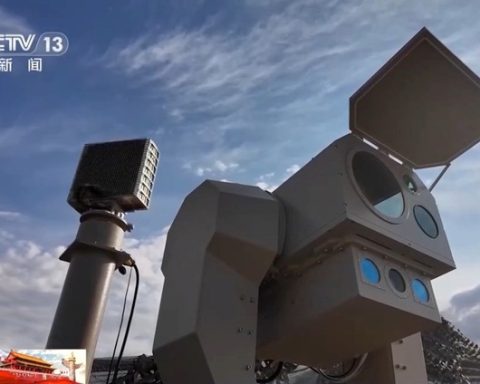
Analysts caution that China’s modernization efforts, combined with opaque testing and rapid deployment of advanced delivery systems like the DF-31BJ intercontinental missiles, could shift the strategic balance and complicate global non-proliferation efforts, making diplomatic engagement and verification measures more critical than ever.