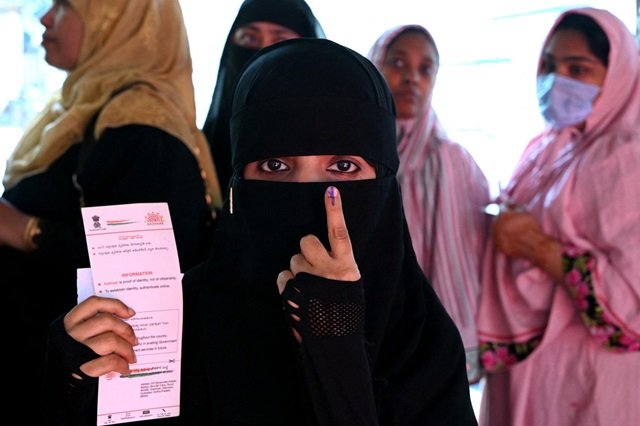
More than 53 lakh voters in Telangana have been placed on an electoral list of the absent, shifted, dead and duplicate — a bureaucratic classification that has become the centre of an increasingly contentious debate over who remains visible on the State’s electoral rolls.
The Special Intensive Revision, or SIR, of electoral rolls in Telangana, excluding Hyderabad, has produced the highest number of draft-roll deletions among the States undergoing the exercise so far, according to Election Commission of India data cited by Frontline India. A preliminary analysis by the Sabar Institute suggests that the deletions are not distributed evenly across communities, constituencies or demographic groups.
The findings do not establish that religion caused individual deletions. The Sabar Institute itself stresses that its analysis identifies statistical associations rather than causation. But the patterns it has identified have prompted questions about the verification process, particularly where large numbers of voters have been classified as “untraceable”.
The organisation’s statewide preliminary analysis covers 104 Assembly constituencies outside Hyderabad. According to its findings, the BJP is “the only party whose 2023 vote share rises with the Muslim share of deletions”. In the seven constituencies won by the BJP in the 2023 Assembly election, nearly 45 per cent of electors marked “untraceable” and 17 per cent of those marked dead are estimated by Sabar to be Muslims. In those constituencies, the number of Muslim voters classified as untraceable is 2.6 times the proportion classified as dead.
The pattern differs in constituencies won by the Bharat Rashtra Samithi, or BRS. There, according to Sabir Ahamed, lead researcher at Sabar Institute, the number of Muslim voters marked untraceable is 1.2 times the number marked dead.
These figures come from a research organisation that describes itself as a crowd-funded institution based in Kolkata, focused on public policy and evidence-based research, particularly involving disadvantaged communities. Its analysis relies on large datasets supplied by the Election Commission rather than a religion field within the electoral roll, since Indian electoral rolls do not record religion.
To identify Muslim names, Sabar used string matching and language-based cross-verification. A voter was classified as having a Muslim name only when both the Telugu and English, or Romanised, spellings supported that conclusion. Where only one spelling pointed in that direction, the voter was classified as “uncertain”. The organisation has also cautioned that its estimates should be understood as upper bounds rather than perfectly accurate measurements.
The scale of the revision is nevertheless striking. Telangana had 3.38 crore, precisely 3,38,26,448, electors when the SIR began on June 25. Following enumeration, 21.7 per cent of electors were moved from the existing rolls to the ASDD list: 16.99 per cent were recorded as absent or shifted, 2.73 per cent as dead and 1.98 per cent as duplicate.
Nearly 93 lakh voters, or 92,87,577 people, also received notices concerning logical discrepancies or because they could not be mapped to the 2002 special revision list.
The Sabar analysis examined the geographical distribution of deletions down to polling-booth level. Among 202 booths where more than 90 per cent of the names on the deletion list were identified as Muslim, nearly 87 per cent were concentrated in three constituencies: Rajendranagar, with 73 such booths; Nizamabad Urban, with 64; and Maheshwaram, with 38.
In 122 of those 202 booths, the predominant reason recorded for deletion was that the voter was “untraceable”.
That designation has become one of the most important questions surrounding the exercise. “A booth having mostly Muslim deletions is partly a reflection of who lives on that street. The more important question here is why such a large percentage were deemed ‘untraceable’ in one exercise. That can only be answered by ground-verification of those addresses,” Sabir told Frontline India.
The broader numbers show that the issue extends beyond Muslim voters. Nearly one in four Telangana electors outside Hyderabad who voted in the 2023 Assembly election were categorised as ASDD. Nearly 85.8 per cent of the deletions, representing 46.31 lakh people, were marked as shifted, untraceable or already enrolled elsewhere.
Muslim names account for 12.5 per cent of all deletions across Telangana outside Hyderabad in districts where Muslims constituted 8.8 per cent of the population according to the 2011 Census.
Women are also prominent in the deletion data. Around 50.2 per cent of names on the list are women, and in 91 of the 104 constituencies outside Hyderabad, Sabar found more women than men among those listed for deletion. About 71 per cent of the women concerned were married and their average age was around 45.
The figures for transgender voters are similarly notable. Telangana had 2,350 transgender voters on its 2023 electoral rolls, of whom 1,152 had their names removed from the draft rolls after enumeration.
Sabar examined data from 532 booths to investigate the reasons recorded for deletions. In 512 of those booths, more than 95 per cent of the deletions carried the same reason: “permanently shifted”. In 13 booths, according to Sabir, every deletion carried that designation, with “not one death, not one duplicate entry”.
The Election Commission’s side of the process is also part of the story. Telangana’s Chief Electoral Officer, Sudharsan Reddy, told Frontline India that the scale of the deletions was partly explained by the difficulties of verification in densely populated urban areas. “In congested urban pockets like Hyderabad and its surroundings, it has been a challenge. That is why the numbers have been huge,” he said.
The Election Commission has also instructed District Election Officers and Electoral Registration Officers to carefully verify the ASDD list, particularly cases in which electors submitted enumeration forms but their names did not appear in the draft electoral roll.
For voters placed on the ASDD list, the process does not necessarily end with deletion from the draft roll. They can submit Form 6, the form used for registration of new voters, together with the prescribed declaration. Appeals are also available before the district magistrate or appellate authority, and voters can appeal to the Chief Electoral Officer. The Election Commission’s voter services system likewise provides mechanisms for registration, updating electoral details and checking whether a name appears on the roll.
The deadline became a political issue. On August 29, Telangana Chief Minister Revanth Reddy wrote to Chief Election Commissioner Gyanesh Kumar requesting a four-week extension to the claims and objections period, arguing that voters missing from the draft rolls needed sufficient time to establish their status and submit Form 6 claims. The Election Commission subsequently moved the deadline from September 16 to October 7.
Civil society organisations had already raised concerns. On August 21, Telangana-based NGOs ASEEM and ADALAH wrote to the Chief Electoral Officer arguing that people who had been continuously enrolled in previous electoral rolls should not have to approach the system as though they were first-time voters simply because they had been classified as absent, shifted, dead or duplicate.
The Hyderabad figures provide another indication of the scale of the controversy. In its separate analysis of the 15 Assembly constituencies in Hyderabad, published in early September, Sabar found that 40.7 per cent of names on the ASDD list were Muslim. The figure varied sharply between constituencies, from 12.1 per cent in Secunderabad Cantonment to 85.9 per cent in Bahadurpura.
The most common reason for deletion in Hyderabad was “permanently shifted”, accounting for 69.3 per cent of cases. Sabar also found an apparent association between the proportion of Muslim voters and the proportion of voters classified as “untraceable”. In constituencies with higher Muslim populations, the share of deletions marked untraceable appeared to be higher than those attributed to death, shifting or duplication.
In two Hyderabad constituencies, Malakpet and Yakutpura, the number of deletions identified by Sabar exceeded the number of votes polled in the 2023 Assembly election. Across all 15 Hyderabad constituencies, deletions amounted to 89 per cent of the total votes cast in that election.
Sabar’s researchers have been careful about what these figures can and cannot establish. “We cannot say that a voter’s deletion was caused by their religion, gender, or other demographic indicator,” Sabir told Frontline India. “We can only say that the deletions are significantly correlated or associated with the relevant demographic indicator.”
That distinction is central to the controversy. The question raised by the data is not, on its own, whether every deletion was improper or whether religion determined individual cases. It is whether the concentration of particular categories of deletion — especially “untraceable” and “permanently shifted” — in particular communities and constituencies can be satisfactorily explained through verification on the ground.
The final electoral rolls are scheduled for release on November 9. Until then, the ASDD list remains both an administrative mechanism for revising the electorate and a test of whether voters removed from the draft rolls can successfully establish their continued place in the democratic register.