by Our Correspondent in Colombo
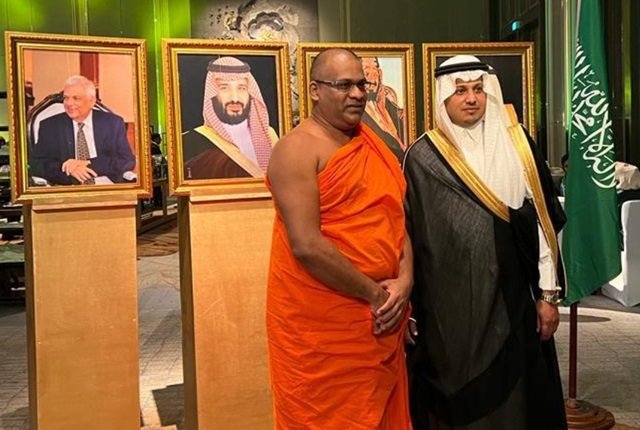
Galagoda Aththe Gnanasara Thera, whose arrest and imprisonment followed the confirmation of his prison sentence by Sri Lanka’s Court of Appeal on 5 October 2026, has spent more than two decades at the intersection of Buddhist activism, Sinhala-Buddhist nationalism, religious tensions and national politics. Born Nuwansiri Kumara on 4 March 1975 in Galagodaattha, Karandeniya, in Galle district, he grew up in a rural agricultural family as the youngest child of Walawwe Durage Gunawathie. He attended Yakkatuwa Junior School and later Bandula Senadheera Vidyalaya. He entered the Buddhist monastic order while studying in Grade Seven and subsequently became known as Galagoda Aththe Gnanasara. His monastic education began at the Wathuruwila Aranya Senasanaya in Galle, followed by studies at the Sarananda Pirivena in Anuradhapura and the Vidyodaya Pirivena in Colombo. He later obtained a BA based on Buddhist philosophy from the University of Kelaniya and an MBA, and served as principal of the Kalupaluwawa Pirivena.
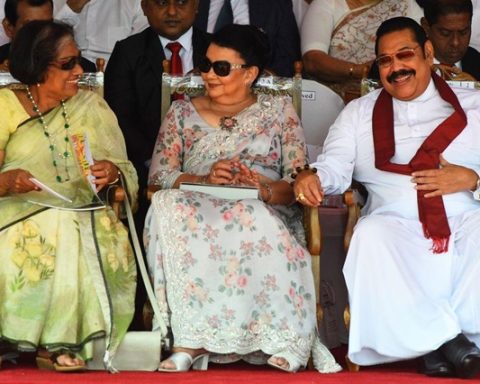
His emergence as a public figure coincided with a wider Sinhala-Buddhist nationalist revival in the early 2000s. The Jathika Hela Urumaya was established in 2004, and Gnanasara Thera worked closely with the movement. Over time, dissatisfaction developed among a younger generation of monks with established nationalist political parties, and he became one of the figures leading that tendency. The defeat of the Liberation Tigers of Tamil Eelam in 2009 produced both a sense of victory and a feeling of insecurity within sections of Sri Lanka’s Sinhala-Buddhist society, while the rise of the Islamic State organisation was taking place internationally. In 2012, Gnanasara Thera and Kirama Wimalajothi Thera founded the Bodu Bala Sena (BBS). Its headquarters at the Sambuddha Jayanthi Mandiraya in Colombo was opened by then-President Mahinda Rajapaksa, and Gnanasara Thera became the organisation’s secretary-general.
The BBS soon became associated with campaigns over religious and social issues. At a public rally in Maharagama on 17 February 2013, Gnanasara Thera presented a ten-point programme known as the “Maharagama Declaration”, focusing particularly on halal certification and the activities of the All Ceylon Jamiyyathul Ulama. In June 2014, clashes erupted in Aluthgama and Dharga Town after reports of an attack on a monk and a driver in Dharga Town. The situation escalated into widespread violence following a meeting in Aluthgama attended by Gnanasara Thera and other leading figures of the organisation. Several people were killed, while homes, shops and religious sites were burned. The organisation subsequently contested local government elections but failed to make a significant electoral breakthrough. After Maithripala Sirisena and Ranil Wickremesinghe came to power in January 2015, the government took a stricter approach towards nationalist organisations.
Gnanasara Thera’s activities also brought him into repeated conflict with the courts. In 2016, an incident was reported inside the Homagama court premises involving threats against Sandhya Eknaligoda and journalists. The Court of Appeal subsequently imposed a prison sentence on the monk in connection with contempt of court and evading court proceedings, although he was later released under a presidential pardon. During the same year, the government filed cases concerning a statement about the Kuragala sacred site and remarks about Islam made at a media conference in Kirulapone on 16 July. Those cases were later prosecuted under Section 291 of the Penal Code, concerning interference with national and religious harmony and insulting religious feelings.
The 2019 Easter Sunday attacks brought Gnanasara Thera’s public role into a new phase. On 21 April that year, suicide bombers linked to the National Thowheeth Jama’ath (NTJ), led by Zahran Hashim, attacked Christian churches and hotels, killing 269 people, including 49 foreigners. Gnanasara Thera and the BBS said they had warned intelligence authorities years earlier about Zahran’s extremist activities. The monk testified before the Presidential Commission of Inquiry established to investigate the attacks. He also defended former State Intelligence Service director Major General (Retired) Suresh Sallay against allegations that he had been involved in the attacks, allegations Sallay denied.
The commission’s final report stated that statements by organisations such as the BBS, together with incidents including Aluthgama, had contributed to a social environment relevant to the radicalisation of Muslim youth. It recommended that the BBS be banned and that legal action be taken against Gnanasara Thera. The recommendations were opposed by some political groups, including the Sri Lanka Freedom Party.
In October 2021, Gnanasara Thera moved from campaigning outside government to holding an official state position when President Gotabaya Rajapaksa appointed him chairman of the Presidential Task Force for “One Country, One Law”. The body was tasked with developing a common legal system applicable across the country in place of religious and regional laws including Muslim personal law and Kandyan law. The appointment prompted concern from the United Nations Human Rights Council, Human Rights Watch and Amnesty International, while Sri Lankan civil society groups also expressed objections.
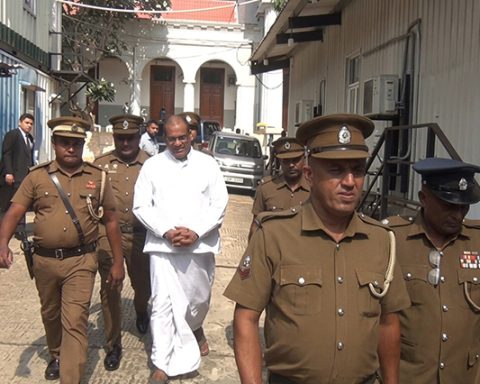
The legal proceedings arising from the 2016 Kuragala statement and Kirulapone media conference culminated in a Colombo High Court ruling in March 2024, when Gnanasara Thera was sentenced to four years’ rigorous imprisonment. Separately, the Colombo Magistrate’s Court imposed a nine-month prison sentence and a fine of Rs 1,500. His appeals against the sentences were dismissed by the Court of Appeal on 5 October 2026, confirming the original imprisonment. After warrants were issued, the Colombo Crimes Division arrested him in October 2026 while he was staying at Lenagiri Aranya Senasanaya in the Pitigala area of Kalutara, and he was taken into custody to serve the sentence. His career has also included a legal and political dispute with Athuraliye Rathana Thera over the national-list parliamentary seat of the Ape Jana Bala Pakshaya.