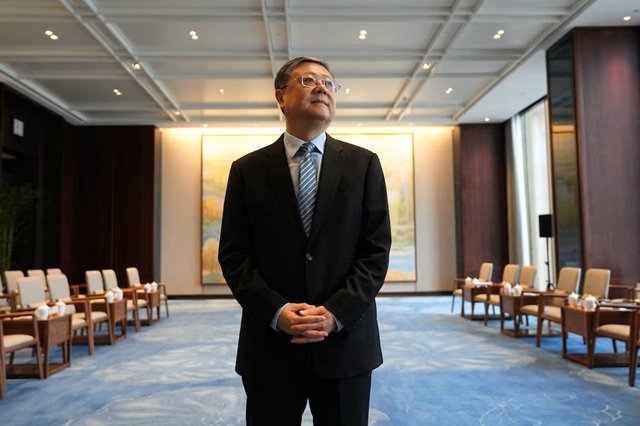
Chen Jining was still meeting business executives, discussing artificial intelligence and overseeing Shanghai’s ambitions as a global technology centre just days before his political downfall. His sudden removal has therefore sent a shock through China’s political and business circles, not simply because a senior official has been caught in President Xi Jinping’s latest anti-corruption investigation, but because Chen was widely regarded as one of the country’s most capable and internationally accessible political figures.
At 62, Chen presented an unusual profile within China’s senior Communist Party establishment. A scientist with a doctorate in environmental-systems analysis from Imperial College London, he spent much of the 1990s studying in England and became one of the most senior Chinese officials with an overseas academic qualification. Foreign executives who encountered him described an official who spoke fluent English, listened carefully and was willing to discuss operational difficulties without relying exclusively on conventional party rhetoric.
One encounter, approximately ten months before his downfall, illustrated that reputation. During a visit to an industrial park developing Shanghai’s artificial intelligence start-ups, Chen encouraged company executives to speak openly about the problems they faced in China. One participant recalled being surprised by his directness. Chen had asked those present to express their genuine views, rather than offer carefully prepared responses. His authority and apparent willingness to listen made news of his removal particularly difficult for those who had dealt with him to comprehend.
His reputation extended beyond individual meetings. George Chen of the Asia Group recalled accounts from multinational executives who had been impressed by Chen’s attention to specific business challenges and his willingness to instruct colleagues to follow up on concerns raised during discussions. One foreign chief executive had reportedly left a meeting impressed by how closely the Shanghai official had listened to the company’s operational difficulties. Such experiences helped establish Chen as a preferred interlocutor for international businesses seeking access to China’s political leadership.
That accessibility now sits uneasily alongside the circumstances of his removal. Unlike other senior officials whose political difficulties became apparent after prolonged absences from public life, Chen was reportedly seen publicly only days before the investigation was announced. His sudden disappearance from the political stage has intensified speculation about the reasons behind the investigation, although no definitive explanation has emerged from the available accounts.
The reaction within Chinese business circles has been equally revealing. Private WeChat groups involving hundreds of finance and business professionals became active with discussions about Chen’s fate. Some participants suggested that the reasons for his removal were obvious but could not be discussed openly. Other groups reportedly closed themselves down or disbanded amid concerns about scrutiny, while individual accounts were muted. The atmosphere reflected the sensitivity surrounding the investigation and the limits on public discussion of the political implications.
Several analysts have suggested that Chen’s growing international reputation and perceived political prospects may have contributed to his vulnerability. According to a Bloomberg Economics note citing sources, Chen had recently told visitors that he expected to join the national leadership, apparently referring to the seven-member Politburo Standing Committee, the Communist Party’s most powerful decision-making body.
Neil Thomas, a senior geoeconomics analyst, argued that such statements could have heightened Xi’s suspicions about Chen’s ambitions. His extensive corporate relationships and growing popularity among foreign executives might also have been interpreted as the development of an independent power base. Thomas noted that the perception among some foreign diplomats and business leaders that Chen could eventually become a successor may itself have increased the political risks surrounding him.
Chen’s age and professional background had made him a plausible candidate for advancement. He remains six years below China’s unofficial retirement age and is more than a decade younger than Xi. During a 2024 visit to China, Singapore’s former prime minister Lee Hsien Loong said he hoped to meet the next generation of Chinese leaders, subsequently shaking hands with Chen in an encounter captured on camera.
Shanghai’s political importance further strengthened the perception that Chen was being positioned for higher office. The city’s party secretaryship has historically been an important route into the Communist Party’s highest ranks. Xi himself held the position after his predecessor was removed in 2006. The identity of Chen’s replacement will therefore carry significance beyond the administration of China’s commercial capital, potentially offering an indication of the leadership qualities and political credentials favoured ahead of next year’s party congress.
His removal also raises questions about the declining influence of technocrats within China’s political hierarchy. Chen belonged to a generation of engineers, scientists and economists promoted under former leaders Jiang Zemin and Hu Jintao. Their professional qualifications and administrative experience had been viewed by sections of the financial community as evidence of increasingly sophisticated economic governance.
An investment banker in Shanghai said Chen’s downfall had dealt a serious blow to that perception. Of the eight technocrats Xi brought into the Politburo in 2022, two have now fallen from favour, following the earlier removal of Ma Xingrui, an aerospace specialist. The pattern has intensified concerns about the place of technical expertise in a political system increasingly shaped by ideological and personal considerations.
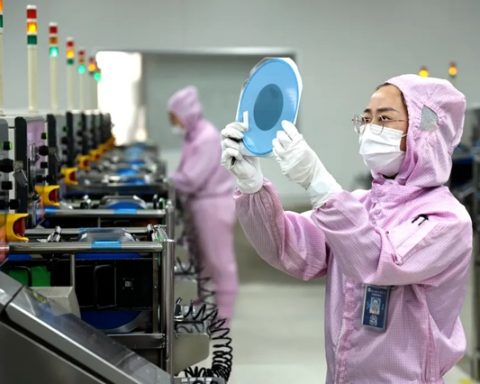
Chen’s record in Shanghai makes the implications particularly significant. Appointed in 2022, he was tasked with strengthening the city’s position in semiconductor manufacturing and artificial intelligence while restoring business confidence damaged by the COVID-19 lockdowns. Under his leadership, authorities directed substantial resources towards domestic semiconductor manufacturers, including SMIC and Hua Hong Grace Semiconductor, according to Paul Triolo, a former US government official specialising in Chinese technology policy.
Shanghai also recorded developments in emerging technologies during his tenure. Neuracle, a Shanghai-based brain-computer interface company, secured what was described as the world’s first regulatory approval for a commercial invasive brain implant. Formula One racing returned to the city in 2024 after a five-year interruption, adding to efforts to reinforce Shanghai’s international profile.
Jonathan Czin, a former CIA China analyst and now a fellow at the Brookings Institution, described Chen’s removal as another earthquake in Chinese politics. He argued that it raised questions about the quality of Xi’s leadership pipeline as the president moves towards a possible fourth term. Under existing age conventions, Chen was among only nine Politburo members eligible for promotion to the Standing Committee next year.
His removal leaves a difficult question for China’s political establishment: how does a system retain and promote officials with the international experience, technical qualifications and economic credibility required to manage an increasingly complex economy while maintaining strict political conformity? Chen’s downfall does not, by itself, establish the reasons for Xi’s decision. But it has exposed the uncertainty surrounding advancement at the highest levels of the Communist Party. In a political system where professional competence and international standing can establish an official’s reputation but cannot guarantee political security, even a rising figure in the country’s most important commercial city can disappear from the leadership equation with little warning.