Huawei’s audacious move to build its own mobile operating system, HarmonyOS, represents more than a corporate strategy—it signals the emergence of a formidable Chinese alternative to the global mobile software dominance of Apple and Google. With the recent unveiling of HarmonyOS NEXT, China now boasts its first fully homegrown mobile OS, one that could soon threaten to displace the established players and reshape the future of mobile technology. This moment is an inflection point not only in Huawei’s journey but in the broader geopolitical struggle for technological supremacy. If Huawei succeeds, it could trigger what many are now recognizing as America’s Sputnik moment on mobile technology—an event similar to the 1957 launch of Sputnik that stunned the U.S. into action, forcing the nation to rethink its dominance in space.
For Huawei, the path toward an independent operating system has been anything but smooth. The company has long relied on Google’s Android to power its smartphones, but the recent years of escalating tensions between China and the U.S. have left Huawei cut off from critical technologies, including Google’s services. Forced to innovate, Huawei turned inward, culminating in the development of HarmonyOS. Today, HarmonyOS NEXT is not merely an upgrade to its predecessor—it is a product of years of refinement, research, and bold decision-making. Unlike Android, which is built on a foundation of Linux and heavily dependent on Google’s services, HarmonyOS NEXT operates as an independent entity, designed to cater to the needs of multiple types of connected devices. With a vision of an interconnected ecosystem where smartphones, tablets, smartwatches, cars, and more seamlessly interact, HarmonyOS NEXT aims to challenge the monolithic hold that Android and iOS have had on the mobile ecosystem for over a decade.
The potential impact of HarmonyOS NEXT on global mobile software cannot be overstated. Huawei’s market share in China has grown steadily, and with HarmonyOS running on many of its devices, the company now finds itself in an increasingly strong position to convince developers to build for its platform. Currently, the operating system boasts a developer base of over 6.75 million, with more than 15,000 native applications and services already available on the platform. These numbers are projected to grow rapidly, with Huawei setting an ambitious goal of 100,000 applications within the next year. But HarmonyOS NEXT’s strength lies not only in its developer ecosystem but also in its design. Built from the ground up with the principle of an “all-scenario” system, the OS allows for applications to be developed once and deployed across multiple device types, a significant advantage over existing systems, which require tailored apps for different devices.
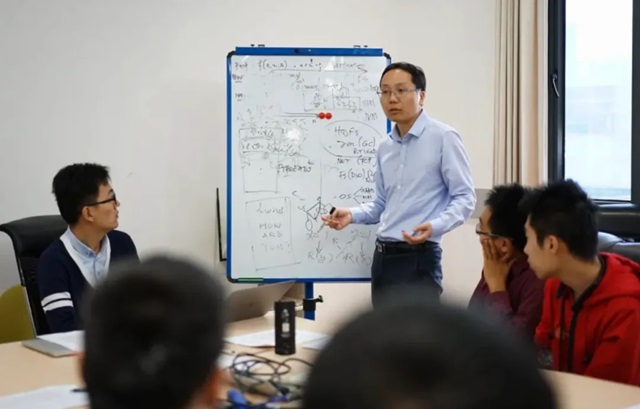
At the heart of HarmonyOS NEXT’s development is a deep commitment to technological innovation. This was underscored by a paper presented at the International Operating System Design and Implementation Conference (OSDI24) by Chen Haibo, a leading figure behind HarmonyOS and the Chief Scientist for Huawei’s Hongmeng initiative. Chen, along with his team at Fudan University, outlined the core features of HarmonyOS NEXT, emphasizing how the system’s kernel retains only the most essential functions while allowing each service to access only the kernel objects it needs. This streamlined approach ensures security and efficiency, particularly when running on diverse devices, including cars—an area where Linux-based operating systems often struggle due to the need for extensive customizations. HarmonyOS NEXT’s optimization allows it to support various terminals, from smartphones to smart devices, without compromising performance or compatibility. This is crucial in an era where connected devices, such as cars and home appliances, are becoming an increasingly integral part of daily life.
Chen Haibo’s work on HarmonyOS is a testament to Huawei’s dedication to creating a secure, efficient, and adaptable system capable of competing on the global stage. Through his team’s research, the HarmonyOS NEXT kernel has been designed with deep integration of AI, enabling smoother user experiences. For example, HarmonyOS NEXT supports real-time tasks such as automatically extracting key data from documents like financial reports, enabling tasks to be carried out more efficiently through the use of large models. The system can even identify critical information from images and tables, seamlessly incorporating AI tools like “Xiaoyi,” Huawei’s intelligent assistant. These intelligent capabilities elevate HarmonyOS NEXT’s potential, giving it a unique edge over competitors.
However, the real challenge for HarmonyOS NEXT lies not just in its technology but in the broader ecosystem it needs to build around it. The difficulty of ecosystem construction has long been underestimated. As the world witnessed during the development of Android and iOS, ecosystems are not created by merely launching software—they require years of investment, innovation, and most importantly, collaboration with developers. Just as the rise of iOS was inextricably linked to Apple’s hardware and A-series processors, HarmonyOS needs the support of both device manufacturers and developers to truly succeed. Huawei’s track record in securing partnerships within China has been impressive, but the company’s ability to expand this network to the global stage will ultimately determine the fate of HarmonyOS.
This drive to establish a new operating system is also underscored by Huawei’s broader strategic objectives. Unlike previous efforts by other tech giants to enter the OS market, such as Microsoft’s ill-fated partnership with Nokia or Amazon’s Fire OS, HarmonyOS is not a standalone software product. It represents a fully integrated ecosystem where chips, hardware, software, and applications work in tandem. Huawei’s efforts to develop its own chips, such as the Kirin processors, have complemented its operating system ambitions, allowing it to control key components of the device manufacturing process and reduce reliance on foreign suppliers. This integrated approach gives Huawei a significant advantage over competitors who rely on third-party suppliers for key hardware and software components.
However, Huawei is not alone in this race. As China’s technological capabilities continue to advance, the stakes in the global tech competition have never been higher. The U.S., historically the leader in mobile technology, now finds itself in the uncomfortable position of watching as China builds its own ecosystem that could rival or surpass the ones dominated by American companies. The geopolitical implications of this shift are profound, and the U.S. may soon find itself confronting a situation akin to the Sputnik moment of the late 1950s. Just as the Soviet Union’s successful launch of a satellite in 1957 forced the U.S. to rethink its position in space exploration, the rise of HarmonyOS NEXT and its growing influence in the mobile tech space may force the U.S. to reconsider its strategy for maintaining global leadership in mobile and other high-tech fields.
China’s progress in mobile operating systems is part of a larger trend of technological self-sufficiency. While China has long been a major player in manufacturing, its efforts to develop homegrown software, including operating systems and AI technologies, signal a shift in the global tech landscape. The country has poured significant resources into research and development, fostering a culture of innovation that is starting to bear fruit in the form of products like HarmonyOS NEXT. Huawei’s success in this endeavor could inspire other Chinese tech companies to follow suit, creating a more fragmented global tech ecosystem that challenges the dominance of U.S. companies.
The fact that Huawei’s move towards an independent OS has attracted significant attention from global developers is indicative of the growing seriousness of its ecosystem. While HarmonyOS NEXT has a long way to go before it can match the sheer scale of Android or iOS, it is making rapid progress. Huawei’s recent figures—6.75 million registered developers and over 15,000 native applications—are impressive considering the platform’s relative youth. As the company continues to refine its offering and expand its user base, HarmonyOS NEXT has the potential to disrupt the global tech order.
Ultimately, HarmonyOS NEXT represents a long-term strategic play by Huawei, aimed at gaining independence from U.S. technology giants. As the system continues to evolve and gain momentum, the world may witness a significant shift in the balance of power in mobile technology. Whether this shift will lead to a new era of competition or a new dominant player remains to be seen, but one thing is clear: China’s technological ascent is accelerating, and America’s dominance in mobile tech may soon face its greatest challenge yet. HarmonyOS NEXT is more than just an operating system; it is a symbol of China’s growing influence on the global stage and a reminder that the landscape of technological dominance is always in flux. The U.S. may find itself caught off guard once again, as it was when the Soviet Union launched Sputnik, marking a new chapter in the ongoing race for technological supremacy.