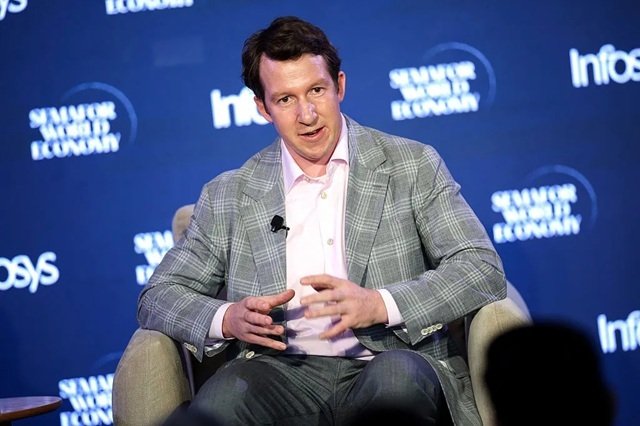
Anthropic has confirmed that it briefed the Trump administration on its new and highly restricted AI model known as “Mythos,” a system the company has chosen not to release publicly due to concerns over its advanced cybersecurity capabilities. The disclosure came from co-founder Jack Clark, who also serves as Head of Public Benefit at the company, during remarks at the Semafor World Economy summit this week.
Clark explained that despite ongoing legal tensions with the U.S. government, Anthropic continues to engage directly with federal agencies on national security-related issues. The company recently filed a lawsuit against the Department of Defense after it designated Anthropic as a supply-chain risk, a classification the firm disputes. The conflict stems from broader disagreements over whether the military should have unrestricted access to cutting-edge AI systems, including potential applications in mass surveillance and autonomous weapons development. The Pentagon ultimately awarded a related deal to a rival AI company.
At the summit, Clark downplayed the severity of the supply-chain risk label, describing it as a narrow contracting dispute rather than a fundamental breakdown in trust. He emphasized that Anthropic does not want legal disagreements to interfere with cooperation on national security matters, arguing that governments must be informed about powerful emerging technologies. He confirmed that Mythos was already discussed with U.S. officials and suggested that future models would also be shared in similar briefings.
The confirmation follows earlier reports that officials in the Trump administration had encouraged major financial institutions, including JPMorgan Chase, Goldman Sachs, Citigroup, Bank of America, and Morgan Stanley, to evaluate the Mythos system. While details about the model remain limited, its classification as too dangerous for public release has intensified scrutiny over how advanced AI systems are being developed and controlled.
Clark also addressed the broader societal implications of rapid AI advancement during the interview, particularly concerns over labor markets and education. Anthropic CEO Dario Amodei has previously warned that AI could drive unemployment to levels comparable to the Great Depression, though Clark offered a more cautious view. He said the company currently sees only limited signs of pressure, mainly in early graduate employment in select sectors, while acknowledging that significant disruptions remain possible.
On education, Clark stopped short of recommending specific academic paths but suggested that students focus on disciplines that emphasize synthesis across multiple fields and strong analytical reasoning. He argued that as AI systems increasingly provide access to vast pools of expert-level knowledge, human value will depend more on the ability to ask the right questions and connect insights across domains rather than on narrow specialization alone.