China’s Ministry of State Security (MSS) revealed on Saturday that a former employee of a military-linked research institute has been sentenced to life imprisonment for espionage, in a case that underscores growing concerns over foreign intelligence activities and internal security vulnerabilities.
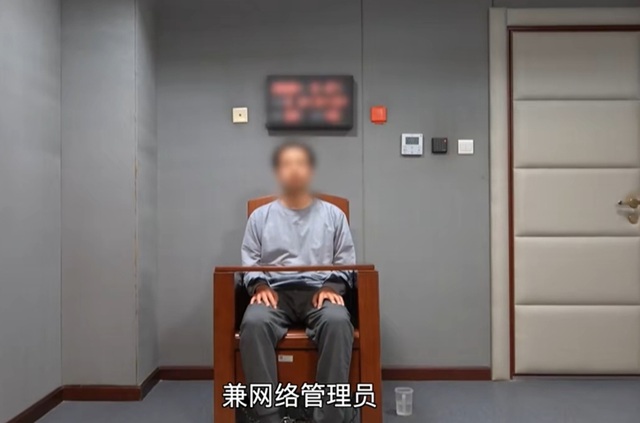
The individual, identified only by the surname Wei, worked as a network administrator at a research institute affiliated with a Chinese military industry group. According to the MSS, Wei was convicted of stealing and selling state secrets relating to critical technological research and practical applications. The court handed down a life sentence under espionage laws, stripped Wei of all political rights for life, ordered the confiscation of personal property, and mandated the return of all illicit gains.
The case comes amid heightened global trade tensions, particularly around U.S. tariff policy, and days after BRICS nations issued a unified condemnation of American “reciprocal tariffs,” warning of the policy’s destabilizing effects on the global economy. The exposure of the espionage case appears to add another layer of strain in an already tense geopolitical climate.
According to a detailed video posted by the MSS on its official WeChat account, Wei was recruited by a foreign spy posing as a tourist in a public park. The agent, linked to the intelligence services of a foreign country and employed through that nation’s embassy in China, used informal meetings and small gifts to build trust and assess Wei’s potential.
Due to a lack of counterintelligence awareness and personal discontent at work, Wei reportedly developed a relationship with the spy. MSS reports say Wei felt alienated and criticized by his superiors, and saw espionage as both an act of revenge and a way to earn money.
What followed was a campaign of theft and infiltration. Wei exploited security weaknesses to gain unauthorized access to sensitive materials, using a mobile hard drive to extract classified data, photographing secret documents with a personal phone, and even planting a recording device to capture internal meetings. Wei also duplicated office keys to enter supervisor offices during off-hours.
The MSS reported that Wei passed over 1,000 files to the foreign intelligence service, including six classified and more than 500 secret-level documents.
In its statement, the MSS warned that some sensitive work environments still suffer from lax security protocols—an issue that must be addressed urgently. “This case should serve as a sobering reminder to strengthen personnel, physical, and technical safeguards across all critical sectors,” the ministry said.
This high-profile espionage case follows closely on the heels of BRICS’ recent declaration opposing unilateral trade protectionism. BRICS members—Brazil, Russia, India, China, and South Africa—criticized the United States for its tariff strategy, which they argue violates WTO rules and threatens global trade norms. Chinese Commerce Minister Wang Wentao also spoke this week with Brazilian Vice President Geraldo Alckmin about deepening economic ties and coordinating multilateral resistance to the U.S.’s trade stance.
Together, the espionage case and ongoing trade disputes highlight the increasing complexity of China’s national security landscape, where external economic pressures and internal vulnerabilities are converging in unprecedented ways.