China’s new ethnic unity law has become the focus of a sharp dispute between Beijing’s critics in the West and a group of journalists, researchers and activists who say the legislation has been misrepresented.
The law on promoting ethnic unity and progress came into force on 1 July. During an international webinar hosted by the United National Anti-War Coalition, speakers argued that Western politicians and media outlets had portrayed the legislation as an instrument of forced assimilation, while overlooking provisions they said protect minority languages, cultures and economic development.
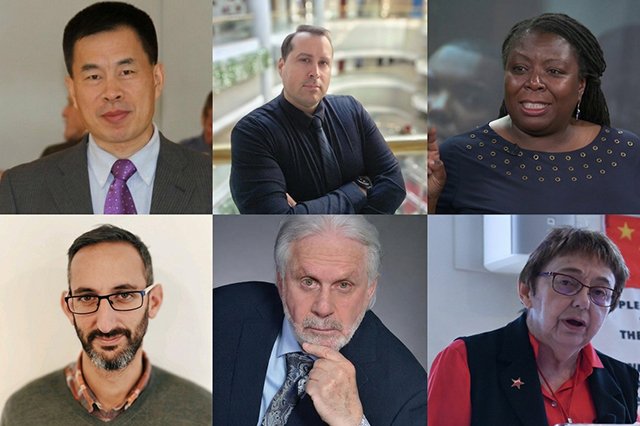
Carlos Martinez, a British independent researcher, political activist and co-editor of Friends of Socialist China, described the coverage as “this enormous distance between what the law says and what we’re being told it says in the West”.
He said the legislation was China’s “first comprehensive national law on ethnic affairs” and that within days of its introduction there had been “widespread denunciations from Washington and from Brussels”.
“There was a resolution in the European Parliament and a whole wave of headlines announcing that China had ordered its minority peoples to assimilate,” Martinez said. “And CNN put this argument most bluntly, saying that China tells its ethnic minorities to integrate or face consequences.”
Martinez said his reading of the law produced a different picture.
“The law itself makes national unity and ethnic solidarity the responsibility of all Chinese citizens,” he said. “It prohibits discrimination and suppression against any ethnic group. It explicitly reaffirms the right of all peoples to use and develop their own spoken and written languages.”
He added that the law required the government to strengthen “infrastructure, industry, public services, and environmental protection in minority regions so that no ethnic group is left behind in China’s modernization process”.
Martinez also pointed to policies that predated the new legislation, including “preferential university admissions for minority students, bilingual education, protected minority language broadcasting, autonomy arrangements, and substantial transfers of resources from central governments to the minority regions”.
“These are very strange foundations indeed for a programme of forced assimilation,” he said.
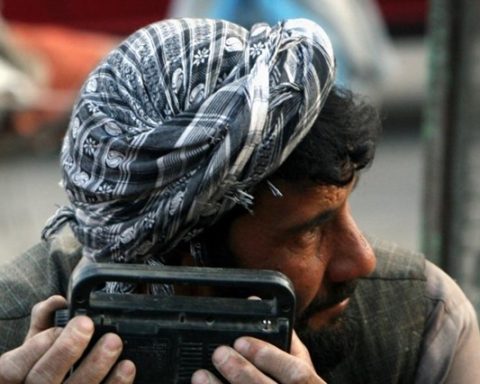
Chen Weihua, a veteran Chinese journalist who previously served as China Daily’s EU bureau chief in Brussels, chief Washington correspondent and chief New York correspondent, said he had travelled extensively through ethnic minority regions after returning to China following 16 years as a foreign correspondent.
He said he had been travelling in Tibetan regions of China in June and July when Western politicians and news outlets launched what he called “this new wave of vicious attacks” over China’s treatment of ethnic minorities.
“The smear campaign against China has reached a hysterical level,” Chen said.
During his travels, he said, he repeatedly asked Tibetans whether they felt their language, culture, religion or other aspects of their lives were being suppressed.
“Each and every one of them laughed off these accusations,” he said.
Chen described a conversation with a young Tibetan man named Ding Jun.
“He said those westerners simply don’t understand the reality on the ground,” Chen said. “There are no restriction in learning the Tibetan language or engage in cultural and religious activity.”
“The truth actually is that nearly all Tibetans speak their mother tongue,” he added. “That surely doesn’t look like a language being erased.”
Chen said he visited Tibetan monasteries during his travels, including the Jokhang Temple in Lhasa and other monasteries. He described the monks he encountered as friendly and said one monk at the former residence of the Seventh Dalai Lama invited him upstairs to see the rooms.
He also asked a young Tibetan man named Turin whether Tibetans were allowed to marry members of other ethnic groups.
“He said marriage was a personal choice that everybody is completely free to make,” Chen said.
Education was a central part of the discussion. Jason Smith, an American journalist and radio host who has lived in China since 2010, said he had visited schools in Tibetan regions and Xinjiang.
In 2023, he visited a primary school in a Tibetan area.
“I went inside and I observed the classes being taught and the classes I was observing were being taught in Tibetan in the Tibetan language and there were also classes there in Mandarin,” Smith said.
He said English was also visible in the school.
“So they were learning three languages at this particular school,” he said.
Smith said he tested two pupils after asking them to teach him a Tibetan phrase.
“I wanted to make sure they were able to read and write,” he said. “And I said, ‘Can you now write that down for me so I can learn it?’ And they wrote it down right then on a piece of paper.”
Smith said that in 2025 he visited about a dozen more schools at different educational levels.
“Every student is learning Mandarin and every student is learning Tibetan as well,” he said.
He said he had photographed textbooks, filmed classes and interviewed students, including students who taught him Tibetan phrases. He also described Tibetan calligraphy classes at schools and universities.
At the Xizang Agricultural and Animal Husbandry University, Smith said he initially believed he was watching Tibetan students studying basic Tibetan.
“I was a little confused,” he said. “I’m at a university. These are Tibetan people. Why are they studying?”
He said he later discovered that some of the students were from other parts of China.
“If you’re a Han person and you go to Xiang, you’re required to learn Tibetan,” Smith said. “It’s a required course for your whatever degree you’re getting.”
Smith said he subsequently saw advanced Tibetan language composition and classical studies.
“So it’s not actually the language is being erased,” he said. “The exact opposite of what they say in the western media is true.”
He also described bilingual public signage in Tibetan areas and Xinjiang.
“When you’re in Xiang, the signs are bilingual in Tibetan and they’re also in Hanza, the language of the Han majority Mandarin,” he said.
In Xinjiang, he said, public signs in southern areas appeared in Uyghur and Mandarin, while in northern areas where Kazakhs were predominant, signs appeared in Kazakh and Mandarin.
Smith also described minority villages where cultural traditions were being used as part of local economic development.
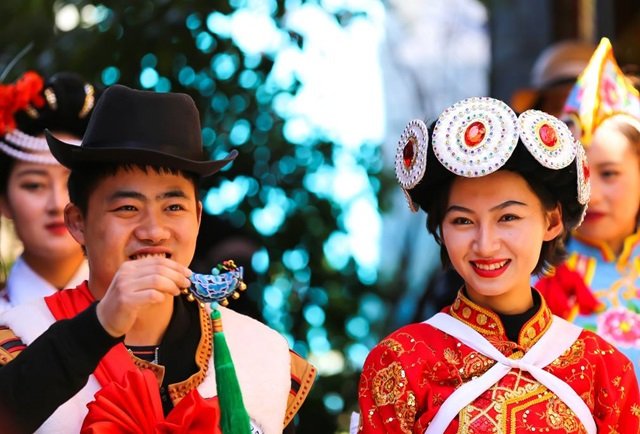
He cited the Dolan tribe, a subset of the Uyghur ethnic group, where cultural performances, traditional clothing and language were presented to visitors.
“They’re not erasing culture,” Smith said. “They’re exploding it all over.”
He described similar examples involving Tibetan opera and Miao communities.
Jacqueline Luqman, an organiser of Black Alliance for Peace and journalist who visited China in 2025 with Friends of Socialist China, said she had travelled through Shanghai, Xian, Dunang, Yanan and Giaan.
“What I noticed about all of those cities was the diversity of the population in those cities,” she said.
Luqman said she was particularly struck by the presence and movement of Muslims in the places she visited, given Western claims concerning Xinjiang.
She said China’s new ethnic unity law was being portrayed in the Western press as facilitating “cultural genocide and forced assimilation”.
But she said the legislation itself did not support that interpretation.
“China’s new ethnic unity law is far from being a mechanism for forced assimilation or the eraser of identity,” Luqman said.
She referred specifically to Article 6, saying it required the state to foster commonality while protecting differences.
She also said the legislation safeguarded “the study and application of minority languages and scripts” and funded “the preservation and research of ancient ethnic texts”.
For Luqman, the question of ethnic policy was also connected to housing and poverty alleviation.
She said she had seen housing developments in China herself and described the country’s housing programme as “a significant factor in the country’s remarkable progress in alleviating poverty”.
She said large-scale shanty-town redevelopment, old-community renovations and urban village transformation had improved living conditions and provided community services.
“It was and is being done for all people of all ethnicities all across China, whoever needs it,” she said. “No exceptions.”
The speakers also discussed economic development in Xinjiang and Tibet.
Martinez said that in Xinjiang, average life expectancy had risen from around 30 years in 1949 to 77 today. He said the Uyghur population had grown by 16% between 2010 and 2020, compared with 2% for Xinjiang’s Han population.
He also said all 420 poverty-stricken counties in China’s ethnic autonomous areas had been lifted out of absolute poverty during the targeted campaign that concluded in 2021.
In Tibet, Martinez said, the illiteracy rate had stood at 95% at the time of liberation and that today 98% of children completed nine-year compulsory education, with Tibetan taught as a core subject and widely used as a medium of instruction.
He said young people in Xinjiang and Tibet received 15 years of publicly funded education.
“Children also learn standard Chinese,” Martinez said, arguing that fluency in the common national language expanded access to universities, public institutions and employment throughout China.
He also highlighted the economic relationship between the central government and minority regions.
“Under colonialism, resources flow from the oppressed periphery to the imperial centre,” he said.
“In China, Xinjiang and Tibet are among the largest per capita recipients of central government transfers,” Martinez said, adding that Tibet received more than twice as much per person as any other province or autonomous region.
Arnold August, a Canadian scholar who has studied Chinese traditional and modern thought and visited Tibet in 2006 and 2023, focused on the question of religion and the Dalai Lama.
He argued that Western criticism of China’s policies toward Tibet should also be examined against the history of religious institutions and the succession of the Dalai Lama.
August said the Dalai Lama had fled to India after what he described as a failed US-backed uprising in 1959 and subsequently established a base from which Tibetan separatism was promoted.
He also discussed the process of selecting a Dalai Lama, arguing that the succession had historically followed religious procedures involving eminent monks and, later, the Golden Urn system.
“Never has the reincarnation of the Dalai Lama been decided by a living Dalai Lama,” August said.
He argued that the question of succession had therefore become an important part of the wider dispute between Beijing and the Dalai Lama’s followers.
August also addressed Western descriptions of Tibetan boarding schools.
“Boarding schools exist in most countries of the world,” he said, particularly in sparsely populated or rural areas where access to schools could be difficult.
He said he had visited a boarding school in a Tibetan-populated province where students studied “Tibetan language, Mandarin, English and all of the other subjects that people learn all around the world”.
August contrasted these schools with residential schools for Indigenous children in Canada and the United States.
“In Canada and United States, they are not boarding schools. They are residential schools,” he said, referring to institutions where Indigenous children were removed from their families.
The webinar also addressed allegations concerning Xinjiang, including claims of genocide and forced labour.
Sara Flounders, who chaired the event, said the United States Congress had voted unanimously in both the House and Senate to ban imports from Xinjiang based on allegations of genocide.
She said the allegations had not been supported by Muslim-majority countries that had visited the region.
Flounders referred to visits by the Organisation of Islamic Cooperation, representing 57 member states, and a later delegation from the Arab League. She said the delegations had praised China’s government policies and the relations and respect for religion and culture they observed.
She also challenged claims about forced labour in Xinjiang’s cotton industry.
“We travelled to China and found out they had the most mechanized agriculture in the world,” Flounders said. “The cotton fields don’t use anyone picking cotton. It’s all done by machine.”
The speakers repeatedly argued that people should visit China rather than rely exclusively on Western media reports.
Smith said he had travelled to every province in China, often with his wife.
“If you want to know what China is really like, just come to China,” he said.
“If you want to talk to ethnic minorities, just go to their villages,” he added.
He said visitors could stay in minority villages and homestays and speak directly with local residents.
Chen also urged people to visit Xinjiang.
“I mean, seeing believing,” he said. “If you don’t believe in those lies just come to China and see for yourself.”
Martinez addressed the wider question of Western media coverage.
“It’s very clear that the mainstream media in the west is full of anti-China propaganda,” he said.
He argued that the intensity of the coverage was likely to increase as China’s economic and political position developed.
But he also said the effect of that coverage was changing.
“The propaganda may be more intense, but people are paying less attention to it,” Martinez said.
He cited the growing number of people travelling to China, independent websites publishing material about the country and social-media users sharing their experiences.
Chen said the debate should focus on people who had not visited China and who might have been influenced by political and media coverage.
“Our target audience are people who are misinformed by those politicians,” he said.
The webinar ended with Flounders returning to the broader issue of China’s development.
“The US is pursuing hegemony by provoking conflict and China is promoting a human community with a shared future,” she said.
“And it’s two different concepts,” she added.
Her final message was directed towards those listening to the discussion.
“We’re very much for the shared future,” Flounders said. “We’re for a future that we’re all part of that we build together.”