A cross-strait media summit held in Beijing has triggered renewed scrutiny over China’s efforts to shape media narratives in Taiwan, with around a dozen Taiwanese media representatives attending an event organized by the Beijing Daily Group. According to reporting and analysis published by the Taipei Times, the gathering highlighted Beijing’s expectation that Taiwanese journalists align themselves with the Chinese government’s political messaging on Taiwan and broader cross-strait relations.
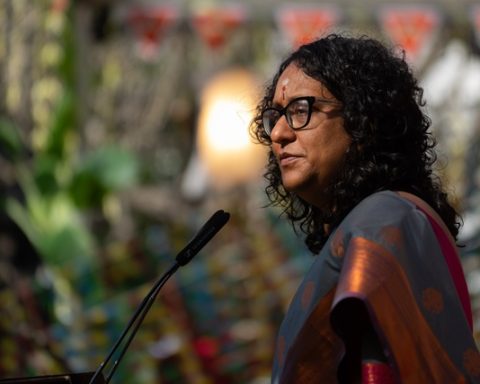
At the summit, China’s Taiwan Affairs Office Deputy Director Wu Xi reportedly urged media professionals from both sides to act as “cross-strait peacekeepers,” including by exposing what Beijing describes as “Taiwan independence separatist activities.” Wu accused pro-independence forces of spreading misinformation and hostility toward China, arguing that such narratives undermine stability in the Taiwan Strait. She called on media organizations to actively “expose the harmfulness and danger” of Taiwan’s independence movement and what Beijing labels as external interference.
Wu also outlined a broader ideological role for media, encouraging journalists to promote narratives centered on “Chinese culture,” shared identity, and what she described as a “shared bloodline” between people in Taiwan and mainland China. She further urged media outlets to highlight stories of cross-strait integration and to reinforce the Chinese Communist Party’s narrative of “national rejuvenation,” a framing frequently used by Beijing to describe its long-term political ambitions.
The Mainland Affairs Council in Taiwan strongly condemned the remarks, warning that any cooperation by Taiwanese media in efforts to target Taiwanese society or assist what it described as Chinese Communist Party infiltration would face legal consequences. Officials reiterated that Taiwan’s democratic system guarantees press freedom, but that this freedom does not extend to participating in foreign political influence operations.
The Taipei Times editorial emphasized that, despite being presented as a professional exchange platform, the summit reflected a media environment in China that is tightly controlled by the state and lacks independent press freedom. It argued that such gatherings function less as neutral forums and more as channels through which Beijing issues directives aligned with its broader “united front” strategy, which seeks to influence public opinion abroad and shape perceptions of Taiwan.
The editorial also referenced Reporters Without Borders’ World Press Freedom Index, noting that China ranks near the bottom globally in press freedom, at 178th out of 180 countries, while Hong Kong has experienced a steep decline in recent years following the introduction of the national security law in 2020. According to the index, Chinese authorities view media primarily as an instrument of state messaging rather than an independent institution, a characterization echoed in the Taipei Times analysis of Beijing’s approach to information control.
In Taiwan, growing skepticism toward Chinese state narratives has led Beijing to increasingly rely on indirect channels and local intermediaries to disseminate its messaging. The Taipei Times editorial described this shift as a strategic pivot, with China attempting to recruit or influence Taiwanese media actors to “rebrand” its political narrative, particularly around themes of unification, identity, and peace.
According to the analysis, Beijing’s messaging strategy emphasizes emotional and cultural appeals, promoting ideas of kinship, prosperity, and stability under Chinese leadership, while framing resistance to unification as destabilizing or provocative. Media outlets are encouraged to highlight selectively positive cross-strait stories while minimizing political tensions, effectively constructing a curated narrative of harmony and inevitability.
The editorial also pointed to controversial remarks made by Taipei First Girls’ High School teacher Alice Ou, who expressed support for “zero arms procurement” and suggested that peace would follow if Taiwanese people recognized a shared Chinese identity. Her comments, later broadcast by Chinese state media, sparked domestic backlash and were cited as an example of how Beijing amplifies voices within Taiwan that align with its messaging objectives.
In contrast, critics argue that such narratives overlook the political realities of Beijing’s governance, citing Hong Kong’s erosion of autonomy under the “one country, two systems” framework, as well as reported human rights abuses in Tibet and Xinjiang. The Taipei Times editorial used these examples to challenge the credibility of China’s assurances regarding peaceful integration and long-term coexistence.
International perspectives were also referenced, including comments attributed to US Secretary of State Marco Rubio, who suggested that Beijing’s preferred outcome would be a voluntary political alignment by Taiwan rather than military confrontation. The editorial used this to underline concerns that information influence campaigns may be part of a broader strategy to shape public opinion in Taiwan over time.
The piece further discussed internal political dynamics within Taiwan, particularly the role of the Kuomintang (KMT), which has historically advocated closer engagement with China. Critics argue that elements within the party echo Beijing’s terminology and policy framing, especially around the so-called “1992 consensus,” although the KMT maintains that dialogue with China is necessary for regional stability. The Taipei Times editorial cautioned that alignment with Chinese narratives risks undermining Taiwan’s sovereignty and defense posture.