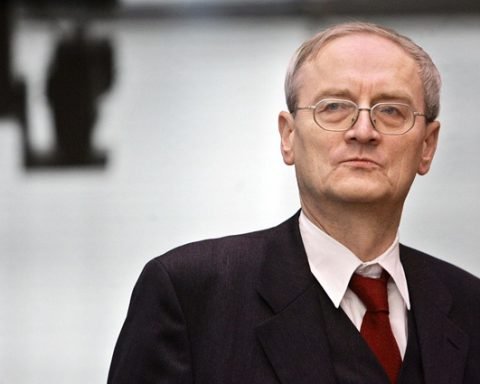
It is now beyond doubt: General He Weidong, once one of China’s most powerful military figures, has been purged. As reported by Nikkei, the general’s disappearance from public life in March was followed by weeks of intense speculation. His silent removal from China’s top military and political organs signals yet another dramatic chapter in President Xi Jinping’s sweeping consolidation of power within the People’s Liberation Army (PLA).
General He, 68, served as one of the two vice chairmen of the Central Military Commission (CMC), which commands China’s armed forces. As the second-highest-ranking officer in uniform—outranked only by fellow vice chairman Zhang Youxia—He also held a seat on the Chinese Communist Party’s powerful 24-member Politburo. His appointment to these prestigious posts had marked him as one of Xi’s trusted allies.
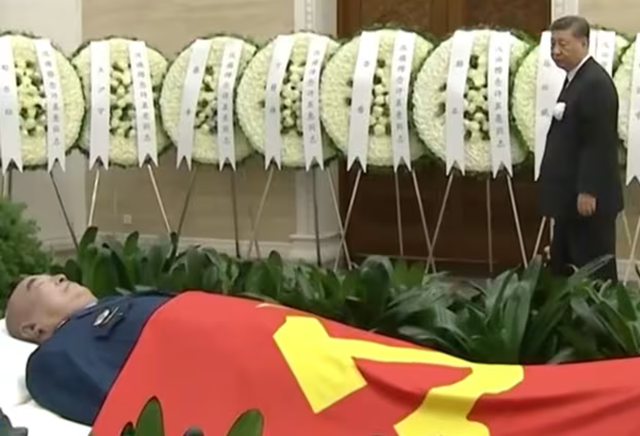
But as Nikkei highlights, He’s removal is now all but confirmed by a conspicuous absence during the June 8 state funeral for Xu Qiliang, a former CMC vice chairman. Xi Jinping attended the solemn ceremony at Beijing’s elite Babaoshan Revolutionary Cemetery, accompanied by wreaths from all key Politburo figures—except General He. The missing wreath, left unacknowledged by state media, spoke volumes in a political system where silence can be more telling than speech.
He’s fall from grace makes him the first sitting CMC vice chairman to be purged since the Cultural Revolution (1966–1976), when top general He Long was persecuted and ultimately died in detention. This parallel has not gone unnoticed, as it underscores the resurgence of factional purging in the highest echelons of the PLA.
Under Xi Jinping’s leadership, the Chinese military has undergone a relentless anti-corruption campaign that has doubled as a power consolidation drive. According to Nikkei, He Weidong is now the third of six uniformed CMC vice chairmen to be purged since the mid-2000s. Others include Guo Boxiong and Xu Caihou, both appointed during former President Jiang Zemin’s tenure, and both ultimately sentenced or detained under Xi.
In a symbolic echo of past internal strife, the PLA appears once again gripped by political chaos reminiscent of Mao Zedong’s Cultural Revolution. He’s disappearance comes on the heels of other high-profile downfalls within the military elite. These include Gen. Zhang Yang, who committed suicide while under investigation, and Gen. Fang Fenghui, sentenced to life in prison. Even figures closer to Xi, such as former defense ministers Li Shangfu and Wei Fenghe, have not been spared in recent years.
The purge of He Weidong reflects a broader upheaval within the Central Military Commission itself. After the 20th Party Congress in 2022, the CMC comprised seven members. Today, that number has shrunk to just four—Chairman Xi and three uniformed officers—following a string of unexplained suspensions, disappearances, and dismissals.
One especially jarring case is that of Miao Hua, former head of the CMC’s Political Work Department and once seen as Xi’s political envoy within the PLA. Miao was suspended in November and officially removed in May, without explanation.
Despite the shockwaves within military circles, observers cited by Nikkei suggest that He’s downfall is unlikely to alter China’s broader political trajectory. Rather, it is seen as a continuation of Xi’s drive to eliminate dissent, tighten discipline, and maintain total party control over the military—a defining feature of China’s unique political-military system.
As one veteran analyst noted, “The most dangerous battlefield for China’s generals isn’t the front line—it’s the internal party hierarchy.”
With nearly half of the PLA’s top leadership having vanished or been dismissed in under three years, the CMC remains in flux. While the full implications of General He’s purge are still unfolding, one thing is clear: under Xi Jinping, military power comes with increasingly high political risk.